
Battle Flag of the Army of Northern Virginia
Lost in all the kerfluffle over Charleston’s atrocious racial shooting recently, the insidious mindset of politicians (both stripes) came to life and determined something-anything- needed to be done to prevent this from ever happening again. Our President trotted out a long diatribe about how guns were at fault and, had the proposed law after Sandy Hook been implemented, this would not have occurred. That Bill was a “long gun ” bill as in Assault rifle. Dingbat used a .45 ACP pistol so that dog won’t hunt in Charleston. For those of you from St. Paulsburg or inside the Beltway, a pistol is a “short gun”.
And then we come to the real reason this chowderhead did it. The Confederate flag. Here lay the culprit all these years moldering in the grave. What an easy repair order. Simply rid ourselves of this racist throwback to an earlier era of slavery and white supremacy will go into decline. Whoda thunk it?
Flag Identification Day

Original combination govt. and battle flag in 1861.
Let’s take a gander at the original Battle flag first. As I was born and raised in Virginia, I’m more than familiar with it and all its iterations. I did a book report on this in Fourth grade (Williston Elementary -Seven Corners in Falls Church). I didn’t wear a KKK suit when I read it to my class. The “Stars and Bars” was never the official government flag of the Confederacy. In fact, it didn’t surface until later in the war when the original Battle Flag was determined to be too similar to the Stars and Stripes. General Beauregard had his Aide de Camp, William Porcher Miles fetch something that was not so confusing to his troops as the above. His choice was the famous emblem at the top of the article that is now causing so much angst and heartburn to millions… including Gov. Nicky Haley. Funny how this flag thing has been around for over a century and some bright fellow finally ascertained it as the root cause of all this dissention. Amazing.
Note that in 1863 they decided to change it yet again from the above to accessorize it, I guess. Either that or they were having an identity crisis and wanted to rebrand with something that made a fashion statement. Thus there were three follow on flags below that overlapped or were in dual usage from 1863-early 1865.


Also used as the Navy ensign on ships

The earlier ones had too much white for southerners and military commanders felt it might resemble a flag of surrender. For the record, the last one was the official flag at the surrender at Appomattox Courthouse in 1865. By rights, it is the one that should be flying over the Confederate Memorial in Columbia. Therein lies the error-if indeed there is one at all.
Touchstone or Incendiary Device?
I can speak succinctly about this as I was born and raised south of the Mason Dixon Line and spent my formative years between Fort Five Sides in DC all the way to Turner AFB in Albany, Georgia. I can remember going to see Cinderella and the twelve Dwarves when very young and getting the shush from Momma on why there were two water fountains. Things like this do not escape little people or at least it didn’t in 1955.
I have witnessed the Stars and Bars throughout the south and never had occasion to note its use to incite white folks to loot and burn or commit racist acts. On the other hand, I’ve seen it predominantly displayed in Idaho at White Supremacist parades in Coeur d’Alene. Of course they’re big on the Swastika too but when you think back, the Southerners didn’t gas their Jewish population during the war. Why so much opprobrium over the Battle flag? Nowadays, no entity can legitimately lay claim to the Battle Flag other than the Sons (and Daughters) of Confederate Veterans who, bless their hearts, merely wish to honor their relatives who fought and died for a lost cause. I severely doubt they harbor the idea that the South Will Rise Again, and with it, slavery.
 America went to great lengths to reincorporate Confederates back into the fold. They did not preclude them from being buried in Arlington National Cemetery as over two hundred that we know of are ensconced there. Hell, they even threw up a memorial for them down in the SE corner. There was some friction right after the war but the Spanish American War soon saw North and South fighting shoulder to shoulder against the Spanish. Boy howdy-nothing like a little war to turn old enemies into friends again. Maybe that’s why my Orbit® sprinkler timer says Made in Vietnam. War must be good for reconciling our differences.
Now we reach this new crossroads of relegating a symbol of loyalty and valor to the ash heap of history simply to appease a very small minority (most of whom don’t live there or have no roots) who suddenly claim to be offended. The offendees have no history with this flag and thus no grievance other than a vague feeling that it is politically incorrect. Relegating the Battle Flag to museums and striking the symbol from any flags still sporting it like Mississippi’s seems to be the order of the day. This brand of politics of exclusion is employed by the gun ban crowd, sadly. They have no constructive proposal to reduce gun violence and instead advocate for the complete ban on firearms period. Screw the Second Amendment. It was written for muskets. Muskets didn’t have thirty round clips. Now, about that flag…
Similarly, doing away with the Battle Flag simply because the Ku Klux Klan embraced it over a century ago is asinine. The same argument could be said for the White Supremacists. One thing we all know about America, and relish even if it makes us uncomfortable sometimes, is the right to remain stupid. You can’t fix stupid. The government foolishly outlawed prefrontal lobotomies so that one is off the table.
Rather than engage in the rhetoric of exclusion, I propose we engage in glastnost and embrace inclusive politics. What about putting up the last official flag of the Confederacy over the Confederate Memorial In Columbia? With all that white, it implies purity of soul and atonement for sins past. Why not have a broad conversation about racial harmony in 2015 without dragging the past into it? I’m surprised the Most Rev. Al Sharpton didn’t fly in for this (and simultaneously relieved he didn’t). Charlestonians seem to be handling their grief quite well without him and his Rainbow Coalition cheerleader squad.
The Stars and Bars is recognized at the Arlington National Cemetery without being flown. The dead of both sides were accidentally interred together early on and are inseparable to this day. We can no more divorce ourselves from the cataclysmic events that engulfed our country for five years than we can the imbroglio of Vietnam. For those of us born and raised in the south, the similarity between the two wars is eerie. While roaming around in Vietnam and Laos during the Boundary misunderstanding, I had occasion to see this symbol painted on aircraft, helmet liners, affixed as a decal to the butts of M-16s, thousands of tattoos-and more. To a man, not one of the gentlemen pointed to it as a symbol of white pride or racism. It was merely a talisman for good luck by some of our Sons of the South who were (and still are) extremely proud of their heritage. Why is that so hard to fathom or digest?
Politically Correcting the English Language
I wonder how many remember a certain politician uttering the word “niggardly” in reference to the paucity of spending on Veterans Affairs several decades ago. I also defy you to name him. You’d be hard pressed to as he is no longer a politician. But for that one error in speech, he might have gone far. Similarly, I fear the day when the wordsmiths will venture forth, emboldened by their successes in ridding us of obnoxious, racially divisive flags, to declare that the word ‘Confederacy’ is now verbatim non grata because it, too, evinces racism and drips with (old) thoughts of enslaving others. If the Confederate Battle Flag is such an incendiary visual statement as accused, it would seem that Chicago would be immune to racism-and thus gun violence. But how to explain 43 shootings (with short and long guns)and seven deaths in the last week in the virtual absence of any Confederate Flags of any stripe flying in the Windy City atop any edifice? Moreover, that was a good week for the populace. For the record, the only ‘racial aspect’ of this violence was black-on-black killings which makes the tenuous argument about the Flag fall rather flat. None were waving any flags (let alone Confederate ones) according to the press.
A flag elicits many emotions. The American Flag makes my heart swell and a lump to form in my throat after seeing so many draped over the coffins of my brothers. Had the South persevered and won at Gettysburg, that flag bedraped coffin would have been, in all probability, the one with the large red border- but not the Battle Flag. It would still provoke the same emotion in my breast nevertheless. Valor. Loyalty to a cause-however misguided. A touchstone to a distant relative who fell beneath it. In a word- a brotherhood born of arms on the field of battle. And if for even one moment, if I thought that removing a flag of any type would result in the saving of one life or the reduction of one racist organization anywhere in America, I would personally lead the fight to have it removed.
Sometimes it’s difficult to accept that there are warped minds in the world. They inhabit all walks of life, profess all manner of religion, and appear normal in all outward respects. To try to envision every possible permutation of insanity and pass laws against them all after the fact merely creates a tapestry of laws where there are no freedoms. You cannot legislate sanity. The politics of inclusion have always proven to be the most formidable and lasting when Americans gather to create law and vote on it. Chicago’s woes are a classic example of throwing more and more restrictions (read exclusion) at the populace and making no headway. In Illinois’ case, they compounded the carnage by depriving most of innocent the ability to defend themselves whatsoever.
In South Carolina, and all over the south, the wise politicians are preparing to emulate Chicago. If the Flag removal/restriction doesn’t quite work out as expected, well, then it’s time to have a conversation about doing away with guns. If it continues, then removal of all Battle Flags from museums should be the next logical step. The dictionary will be the inevitable last victim if that fails. I love politicians. They can fix anything…again and again and again.
I was born about two miles from ANC and I’ve already got a nice plot picked out there. What’s one more Confederate cum American Veteran in ANC? And that’s all I’m gonna say about that.
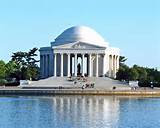 In a nod to the growing chorus of voices denouncing slavery and racism, President Obama signed an Executive Order yesterday directing the D.C. Parks Commission to begin immediate destruction and removal of the Jefferson Memorial. “Many feel the Memorial glorifies slave ownership and prevents us as a Nation from moving past our inglorious past.” the President said adding it stands for values Americans no longer respect or condone.
 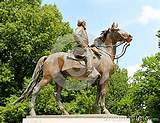 Memphis, Tennessee mayor A.C. Wharton and his city council made the first overture and voted to remove a statue of General Nathan Bedford Forrest who epitomizes racism via his participation in the Ku Klux Klan. Not satisfied with that, they also propose digging him and his wife up and moving them out of the town square. Where they will end up is anyone’s guess.
















 asknod
 Bethanie Spangenberg
 kcraveiro
 robinhoodesqvetsatty
 Wesley McCauley
