BVA– ACTING VLJ HOOKED ON PHONICS

WGM got the short end of the stick on this one but now I see why. vA just can’t bring themselves to accept the fact that getting Winky dirty isn’t willful misconduct. Listen to this Judge pontificate, bluster, chew her pencil eraser, have one conniption fit after another and finally accede that it’s the will of Congress that this is so.  She sure isn’t happy with it and lets everyone know it’s WRONG!…Wrong!……………..Wrong! as Sen. Byrd used to inveigh.

This is priceless. It goes on for three paragraphs. What’s amazing is that this VLJ actually understands you can’t say no hep in 75 if there wasn’t a test for it.

Citation Nr: 1220078
Decision Date: 06/07/12 Archive Date: 06/20/12

DOCKET NO. 09-22 952A ) DATE
)
)

On appeal from the
Department of Veterans Affairs Regional Office in Columbia, South Carolina

THE ISSUES

1. Entitlement to service connection for hepatitis C. 

2. Entitlement to a disability rating greater than 10 percent for a left eye maculopathy with headaches and blurred vision.

REPRESENTATION

Appellant represented by: The American Legion

The Board dismisses the blood transfusion as the source of the Veteran’s hepatitis C in this case. First, the Board notes that there is no objective evidence of any blood transfusion during military service. While the Veteran is competent to state that he had a blood transfusion, the Board concludes that such is not a credible statement in light of the lack of objective evidence of such in the service treatment records.

Instead, the Board focuses on the Veteran’s high-risk sexual activity in service. The Board notes the several instances of treatment for sexually-transmitted diseases during military service. The Board further observes that the May 2011 VA examiner specifically noted that the Veteran’s hepatitis C was more likely than not the result of his high-risk sexual behavior from 1975-1977, during which time he was treated for multiple different sexually-transmitted diseases. The Board cannot find any evidence of record at this time that the Veteran continued to engage in high-sexual practices after his discharge from service, nor is there any other evidence of record such as a blood transfusion after discharge from service but prior to 1989; any evidence of illicit drug use, particularly intravenous drugs or intranasal cocaine use; or, any other noted risk factors post-service. 

[In other words, they can’t screw him for après-service risks although they’d love to]

Moreover, the Board finds that such high-risk sexual activity during service is not willful misconduct and therefore is not a bar to compensation benefits. 

[But….. but….. but….]

The Board notes that no compensation shall be paid if a disability is the result of the veteran’s own willful misconduct, including the abuse of alcohol or drugs. 38 U.S.C.A. §§ 105, 1110, 1131; 38 C.F.R. § 3.1(n), 3.301. Willful misconduct is defined as an act involving conscious wrongdoing or known prohibited action. It involves deliberate or intentional wrongdoing with knowledge of or wanton and reckless disregard of its probable consequences. A mere technical violation of police regulations or ordinances will not per se constitute willful misconduct. 38 C.F.R. § 3.1(n). Residuals of venereal disease are not to be considered the result of willful misconduct. See 38 U.S.C.A. § 105; 38 .F.R. § 3.301(c)(1).

[Dang it. What can we use to deny… ah, the rule is fuzzy]

The general prohibition against service connection for disease or injury caused by a veteran’s own willful misconduct has been set forth above. The precise outline of this rule is somewhat unclear. There is no statute or regulation specifically prohibiting payment of benefits for any disease or injury incurred as a result of promiscuous sexual activity during service. It is debatable whether engaging in high-risk sexual activity constitutes an act “involving conscious wrongdoing or known prohibited action.” 

[ I think we can go out on a limb and deny this guy. It’s a stretch but let’s see where this line of thought goes…]

VA regulations specifically provide that residuals of venereal disease are not to be considered “willful misconduct.” See 38 U.S.C.A. § 105; 38 C.F.R. § 3.301(c)(1). The Board observes that “venereal disease” is defined as one “transmitted only or chiefly by sexual intercourse with an infected individual.” See Webster’s New World Dictionary. The Veteran has not contended that hepatitis C fits that definition. However, the Board does not believe that the definition applies, in that it may be transmitted in numerous ways other than sexual intercourse (including tattoos, intravenous drug use and needle sticks). However, while it is true that hepatitis C may be acquired in ways other than sexual contact, it is also true that it may be acquired through sexual contact. {Dick Tracy moment in 3,2, 1…}> The Veteran claims that such is his situation, and the medical opinion supports the Veteran’s contention.

[Shoot. what about this Congress thing? I think they tied my hands]

While the Veteran thus does not currently suffer from a venereal disease, it appears that there is clearly intent on the part of Congress and VA to remove from the definition of willful misconduct diseases which are the residuals of sexual contact. It would thus appear to be contrary to the spirit, if not the letter, of the law to allow service connection for say syphilis or HIV/AIDS but deny service connection for hepatitis C when it has been demonstrated that the latter has been incurred as a result of sexual contact. The Board therefore concludes that in this case the Veteran’s hepatitis C may be likened to venereal disease and therefore falls outside of the statutory misconduct prohibition. 
Accordingly, the Board finds that the evidence of record in this case supports the finding that the Veteran’s hepatitis C is the result of high-risk sexual activity during military service; therefore, by resolving all doubt in the Veteran’s favor, the Board finds that service connection for hepatitis C is warranted on the evidence of record. See 38 C.F.R. §§ 3.102, 3.303. In so concluding, the Board has appropriately applied the benefit of the doubt doctrine. See 38 U.S.C.A. § 5107(b) (West 2002); Ortiz v. Principi, 274 F.3d 1361, 1364 (Fed. Cir. 2001); Gilbert v. Derwinski, 1 Vet. App. 49, 55-56 (1990).

Well, I’m glad we allowed Congress to settle that one. I was beginning to think that the VLJ was going to say they simply were in error and he was going to right this wrong here and now. Now, look down at the bottom and what do we see?

APRIL MADDOX
Acting Veterans Law Judge, Board of Veterans’ Appeals

Well, helloooooooooooooooooo, April. Been deciding claims very long? Oh. That’s right. You’re just an acting VLJ No wonder you had to sound it out like phonics.

Posted in BvA HCV decisions, Uncategorized, Veterans Law | Tagged , , , , , , , , , , , , | 5 Comments

BVA DECISIONS BYPASS INFO

Trust Squidley to cut the Gordian knot. I think I might have solved the second half of getting in. It seems you need to do this in a particular order. First pull up the BVA site and then go to the tools function and pull up you browser history. Erase it all. Cookies, everything. When its clean go directly back to the bva site and click on a decision. It should work.  I use Google Chrome and I’ve done it twice today. If I close the BVA tab and try to reopen it, it goes to page not found. A browser scrub and it’s back.

Posted in BvA Decisions, BvA HCV decisions, vA news | Tagged , , , , , , | 1 Comment

BVA–20 +YEAR LIFER LOOKING FOR WELFARE

I’ve never read one of these.I’ve seen combat Vets and medics get HCV SC with all number of drug issues. I’ve seen guys who deserved it get denied a bunch, too. But this is a new one. On top of the fact that the DAV is his VSO, they convinced him to withdraw an appeal for HCV in 2006 that he had two years invested in. Now he’s back refiling. His legal help is in cahoots with the VA, for crying out loud. Who ever heard of suing someone then throwing in the towel? And come back again 6 years later? Will they talk him into giving up again until the backlog is solved?

Citation Nr: 1221619
Decision Date: 06/21/12 Archive Date: 07/02/12

On appeal from the
Department of Veterans Affairs Regional Office in Winston-Salem, North Carolina

THE ISSUES

1. Entitlement to an increased rating for chondromalacia patellae, status post debridement of the left knee, currently evaluated as 10 percent disabling.

2. Entitlement to an increased rating for chondromalacia patella, postoperative, right knee, currently evaluated as 10 percent disabling.

3. Entitlement to an increased rating for degenerative joint disease, right shoulder, currently evaluated as 10 percent disabling.

4. Entitlement to a separate compensable rating for residual scar, status post right shoulder arthroscopy.

5. Whether new and material evidence has been received with respect to a claim for service connection for hepatitis C.

6. Entitlement to service connection for hepatitis C.

REPRESENTATION

Appellant represented by: Disabled American Veterans

ATTORNEY FOR THE BOARD

J. N. Moats, Counsel

INTRODUCTION

The Veteran had over 20 years of active service ending with his retirement in March 1995.

The issue of entitlement to service connection for hepatitis C comes before the Board of Veterans’ Appeal (Board) on appeal from November 2006 rating decision of the Department of Veteran’s Affairs (VA) Regional Office (RO) in Winston-Salem, North Carolina.

The remaining issues come before the Board on appeal from a May 2009 rating decision by the RO, which continued the already assigned 10 percent disability ratings for the left and right knees, and granted a temporary 100 percent evaluation based on surgical treatment necessitating convalescence for the right shoulder until April 1, 2008, and then continued the already assigned 10 percent disability rating.

The issue of service connection for hepatitis C was originally appealed from prior September 2004 and October 2004 rating decisions. The RO issued a statement of the case in February 2006 and a substantive appeal was received the following month. Nevertheless, in a July 2006 statement as well as at a RO hearing that same month, the Veteran withdrew his appeal of this issue. The following month, the Veteran filed a claim to reopen. Thus, the Board must determine whether new and material evidence has been received with respect to this issue in accordance with 38 C.F.R. § 3.156.

An appeal had also been perfected on the issue of entitlement to service connection for PTSD. However, this issue was granted in a December 2007 rating decision. As this was a full grant of the benefit sought on appeal, this issue is no longer in appellate status.

The underlying issue of entitlement to service connection for hepatitis C is addressed in the REMAND portion of the decision below and is REMANDED to the RO via the Appeals Management Center (AMC), in Washington, DC.

FINDINGS OF FACT

1. The Veteran’s service-connected chondromalacia patellae, status post debridement of the left knee, is manifested by findings of pain, but without additional functional loss due to pain, weakness, incoordination or fatigue so as to limit flexion to 30 degrees or less or limit extension to 15 degrees or more, and without recurrent subluxation or instability, frequent episodes of “locking” and effusion into the joint or ankylosis.

2. The Veteran’s service-connected chondromalacia patella, postoperative, right knee, is manifested by findings of pain, but without additional functional loss due to pain, weakness, incoordination or fatigue so as to limit flexion to 30 degrees or less or limit extension to 15 degrees or more, and without recurrent subluxation or instability, frequent episodes of “locking” and effusion into the joint or ankylosis.

3. The Veteran’s service-connected degenerative joint disease, right shoulder, is manifested by findings of pain, but without additional functional loss due to pain, weakness, incoordination or fatigue so as to limit range of motion to the shoulder level.

4. The Veteran’s residual scar, status post right shoulder arthroscopy, is manifested by tenderness on examination.

5. In an October 2004 rating decision, the RO denied service connection for hepatitis C; the Veteran withdrew his appeal of this decision in July 2006.

6. The additional evidence received since the October 2004 rating decision denying the claim of service connection for hepatitis C relates to unestablished facts necessary to substantiate the claim.

CONCLUSIONS OF LAW

1. The criteria for entitlement to a disability evaluation in excess of 10 percent for chondromalacia patellae, status post debridement of the left knee, have not been met. 38 U.S.C.A. §§ 1155, 5107 (West 2002); 38 C.F.R. Part 4, including §§ 4.7, 4.71(a), Diagnostic Codes 5019, 5260, 5261 (2011).

2. The criteria for entitlement to a disability evaluation in excess of 10 percent for chondromalacia patella, postoperative, right knee, have not been met. 38 U.S.C.A. §§ 1155, 5107 (West 2002); 38 C.F.R. Part 4, including §§ 4.7, 4.71(a), Diagnostic Codes 5019 5260, 5261 (2011).

3. The criteria for entitlement to a disability evaluation in excess of 10 percent for degenerative joint disease, right shoulder, have not been met. 38 U.S.C.A. §§ 1155, 5107 (West 2002); 38 C.F.R. Part 4, including §§ 4.7, 4.71(a), Diagnostic Codes 5010, 5201 (2011).

4. The criteria for a separate evaluation of 10 percent, but no higher, for residual scar, status post right shoulder arthroscopy, have been met. 38 U.S.C.A. §§ 1155, 5107(b) (West 2002); 38 C.F.R. Part 4, including §§ 4.7, 4.118, Diagnostic Code 7804 (in effect prior to October 23, 2008).

5. The October 2004 rating decision denying the application for service connection for hepatitis C, became final. 38 U.S.C.A. § 7105(c) (West 2002 & Supp. 2011); 38 C.F.R. § 20.200, 20.201, 20.302 (2011).

6. The additional evidence presented since the October 2004 rating decision is new and material, and the claim for service connection for hepatitis C, is reopened. 38 U.S.C.A. § 5108 (West 2002 & Supp. 2011); 38 C.F.R. § 3.156 (2011).

So he gets the 10% knick knack bone. But what’s wrong with this DAV picture? Why, the confounded nexus is missing. It’s as if his legal help, who do this for a living, set him up for a fall. They burned up 3-4 years of this fellows time and purposefully let him get all the way here to lose everything.  The VLJ didn’t fall for it and remands for a nexus. vA is going to give this lifer a big Christmas present – his very own vA-supplied nexus free of charge. You can be sure it won’t be from Dr. Bash either. This is a classic example of that fabled VSO help that was designed to help Vets “navigate the system with confidence in the capable hands of a Veterans Service Officer who is well-versed in the law.”

Accordingly, the case is REMANDED for the following actions:

1. The RO should schedule the Veteran for an appropriate VA examination with a medical doctor to ascertain the etiology of his currently diagnosed hepatitis C. All necessary tests should be conducted. 
The claims file must be sent to the physician for review and the examiner should be informed that Veteran’s duties as a combat medic during the first Gulf War have been conceded.

After examining the Veteran and reviewing the claims file, the examiner should offer an opinion as to whether it is at least as likely as not (a 50 percent probability or more) that the Veteran’s hepatitis C is related to service, to specifically include the his duties as a combat medic. The examiner should also consider the Veteran’s contentions that he might have contracted the disease as a result of surgeries performed in service, to include a wrist surgery in 1985 at Fort Campbell, Kentucky. A complete rationale should accompany any opinion provided.
2. In the interest of avoiding future remand, the RO should then review the examination report to ensure that the above question has been clearly answered and a rationale furnished for all opinions. If not, appropriate action should be taken to remedy any such deficiencies in the examination report.
3. Thereafter, and any additional development deemed necessary by the RO, the issue on appeal should be readjudicated under a merits analysis. If the benefit sought on appeal is not granted, the Veteran and his representative should be provided with a supplemental statement of the case and afforded the appropriate opportunity to respond thereto. Thereafter, the case should be returned to the Board for further appellate consideration, if otherwise in order.

I guess twenty plus years in the service is no panacea, nor is being a combat medic. One would think his type would be the last to think about cheating and looking for a free ride on the government’s dime. I misjudged him. He must be a goldbricker. VA has an 86% accuracy rate, remember? I can hear his rep: “Hey, come on, man. You won the 10% on the scar. Let’s go home and come back in six years. We can give it a fresh look and they’ll probably grant. For sure we can get you a pension then when, I mean, IF we lose. This hep thing is mighty skinny, you know”.

Posted in BvA HCV decisions, Veterans Law | Tagged , , , , , , , , , , , | Leave a comment

BVA–CLEOTIS WINS

Squidly cracked the safe. The 2012 decisions are available if you know the secret handshake and the password.


Obviously we aren’t going to use any names here. A while back I was putting up BVA cases and showing how (or how not to) be successful at it and a gentleman who identified himself as “Cleotis” left us a veiled threat that he “better not see his name up here”. Since I didn’t know who Cleotis was at the time, I felt powerless to prevent publication of his particular case. I wasn’t even sure he had continued to pursue it after he became angry with me for my perceived failures.

While strolling through the new 2012 cases I came across this one of a fellow I helped for over two years in an attempt to get him service connected. After many losses, and much work on getting the proper nexus letters, I was accused of being inept, unwilling to help him and generally an asshole for even pretending to know what I was doing. We parted company on less than happy terms. Then it dawned on me who Cleotis was. Damned if he hadn’t won. Why he never told me is a mystery. Most would be happy to share. Perhaps he’s too proud to apologize for his rudeness.

When I spotted this, my heart jumped for joy. I had gone to great lengths to push him to redevelop his evidence properly and present it anew. At some point I took over and rewrote his NOD for him. He apparently completed the appeal process because he won. vA says this is the benefit of the doubt but the preponderance of the evidence was in his favor from the beginning. Reading through his files was a litany of the typical vA justifications for denial and a purposeful ignoring of the facts needed to prove it. So, of all the cases I’ve ever taken on, this will probably be my finest hour. I don’t want to take credit for it completely because Cleotis and his wife carried the water. I wrote many a letter for them to file over the years. Much of it was done from my hospital bed when I was a guest of the Seattle VAMC in 2009.

God, there’s nothing finer than realizing this system for winning claims works. Cleotis, if you’re reading this, forgive me for publishing it. I don’t care if you never thank me for all my hard work, either. That isn’t why I do it. As I point out to each and every one of you- If the shoe was on the other foot, I’m sure you’d do it for me if you had the wherewithal.

Here is my most stunning assist in my four years of doing this. I’m saddened that it took so long and required going to D.C. Unfortunately Cleotis’ earlier legal help had made a complete hash of it and even failed to file his substantive appeal causing him to have to start over. Congratulations Cleotis. Hell, if you can win anyone can.

Citation Nr: 1206365
Decision Date: 02/21/12 Archive Date: 03/01/12

DOCKET NO. 10-28 394 ) DATE
)
)

On appeal from the
Department of Veterans Affairs Regional Office in Oakland, California

THE ISSUE

Whether new and material evidence has been submitted to reopen a previously denied claim of entitlement to service connection for hepatitis C.

REPRESENTATION

Appellant represented by: Richard E. Geyer, Attorney at Law

ATTORNEY FOR THE BOARD

B. Diliberto, Associate Counsel

INTRODUCTION

The Veteran had active service from March 1965 to February 1968.

This matter comes before the Board of Veterans’ Appeals (BVA or Board) on appeal from an October 2009 rating decision of the Department of Veterans Affairs (VA) Regional Office (RO) in Cleveland, Ohio, that denied the benefit sought on appeal. The Veteran appealed that decision, and the case was referred to the Board for appellate review.

In January 2012 the Veteran, through his representative, submitted additional evidence without a waiver of RO consideration. See 38 C.F.R. § 20.1304 (2011). However, in light of the positive determination below, there is no prejudice for the failure to remand the appeal back to the RO for issuance of a Supplemental Statement of the Case (SSOC).

FINDINGS OF FACT

1. The RO, in an October 2006 rating decision, denied entitlement to service connection for hepatitis C. The Veteran did not timely appeal that rating decision and it is now final.

2. The evidence received since the October 2006 rating decision relates to an unestablished fact necessary to substantiate the Veteran’s claim of entitlement to service connection for hepatitis C and raises a reasonable possibility of substantiating that claim.

3. The competent and probative evidence of record is in relative equipoise as to whether the Veteran has hepatitis C that is related to his military service.

CONCLUSIONS OF LAW

1. The October 2006 rating decision, which denied entitlement to service connection for hepatitis C, is final. 38 U.S.C.A. § 7105 (West 2002); 38 C.F.R. § 3.104 (2011).

2. The additional evidence presented since the rating decision in October 2006 is new and material and the claim of entitlement to service connection for hepatitis C is reopened. 38 U.S.C.A. § 5108 (West 2002); 38 C.F.R. § 3.156(a) (2011).

3. Resolving reasonable doubt in his favor, the Veteran has hepatitis C which is related to his active service. 38 U.S.C.A. §§ 1110, 5107 (West 2002); 38 C.F.R. §§ 3.102, 3.303, 3.304 (2011).

REASONS AND BASES FOR FINDINGS AND CONCLUSIONS

Before addressing the Veteran’s claim on appeal, the Board is required to ensure that the VA’s “duty to notify” and “duty to assist” obligations have been satisfied. See 38 U.S.C.A. §§ 5103, 5103A (West 2002); 38 C.F.R. § 3.159 (2010). In connection with a claim to reopen on new and material evidence and in accordance with Kent v. Nicholson, 20 Vet. App. 1 (2006), the RO must satisfy the duty to notify with a letter defining new and material evidence, advising the Veteran of the reasons for the prior denial of the claim of service connection and noting the evidence needed to substantiate the underlying claim of service connection. However, given the favorable disposition in this adjudication, and the fact that no prejudice to the Veteran could result from the Board’s decision, no further notice or assistance is required. Mayfield v. Nicholson, 19 Vet. App. 103, 115 (2005); Conway v. Principi, 353 F.3d 1369 (Fed. Cir. 2004); Pelegrini v. Principi, 18 Vet. App. 112, 119-120 (2004); Bernard v. Brown, 4 Vet. App. 384 (1993); VAOPGCPREC 16-92.

The Veteran first claimed entitlement to service connection for hepatitis C in May 2006. The RO denied entitlement to service connection for that condition in October 2006, finding that there was no evidence linking that condition to service. The Veteran submitted a Notice of Disagreement (NOD) with that rating decision in April 2007. The RO issued a Statement of the Case (SOC) in March 2008, but the Veteran did not file a timely Substantive Appeal. Accordingly, that decision is now final. 38 U.S.C.A. § 7105; 38 C.F.R. § 20.1103.

In October 2008 the Veteran filed to reopen his previously denied claim of entitlement to service connection for hepatitis C. The RO issued a rating decision in October 2009, finding that new and material evidence had not been presented and declining to reopen the Veteran’s claim. The Veteran submitted a Notice of Disagreement (NOD) in January 2010. The RO issued a Statement of the Case (SOC) in May 2010 and the Veteran filed a Substantive Appeal (VA Form 9) in June 2010. Regardless of how the RO ruled on the question of reopening the Board as the final fact finder within VA must initially determine whether new and material evidence has been submitted. Jackson v. Principi, 265 F.3d 1366 (Fed. Cir. 2001).

As a general rule, a claim shall be reopened and reviewed if new and material evidence is presented or secured with respect to a claim that is final. 38 U.S.C.A. § 5108; 38 C.F.R. § 3.156. When a veteran seeks to reopen a final decision, the first inquiry is whether the evidence presented or secured after the last disallowance is “new and material.” Under 38 C.F.R. § 3.156(a), new evidence means evidence not previously submitted to agency decision makers. Material evidence means evidence that, by itself or when considered with previous evidence of record, relates to an unestablished fact necessary to substantiate the claim. New and material evidence can be neither cumulative nor redundant of the evidence of record at the time of the last prior final denial of the claim sought to be reopened and must raise a reasonable possibility of substantiating the claim. 38 C.F.R. § 3.156(a).

Furthermore, “material evidence” could be “some new evidence [that] may well contribute to a more complete picture of the circumstances surrounding the origin of the veteran’s injury or disability, even where it will not eventually convince the Board to alter its rating decision.” Hodge v. West, 155 F. 3d 1356, 1363 (Fed. Cir. 1998). If it is determined that new and material evidence has been submitted, the claim must be reopened and the VA may then proceed to the merits of the claim on the basis of all the evidence of record.

When determining whether a claim should be reopened, the credibility of the newly submitted evidence is presumed. Justus v. Principi, 3 Vet. App. 510 (1992). In order for evidence to be sufficient to reopen a previously denied claim, it must be both new and material. If the evidence is new, but not material, the inquiry ends and the claim cannot be reopened. Smith v. West, 12 Vet. App. 312 (1990).

The evidence submitted since the October 2006 rating decision consists of VA treatment records, letters from both VA and private physicians and numerous statements from both the Veteran and his spouse. The Board has determined that this evidence is both new and material. Specifically, the Board finds that the VA and private physician letters are competent evidence indicating a likelihood that the Veteran was exposed to hepatitis C while in service. New and material evidence having been submitted, the claim of entitlement to service connection for hepatitis C is reopened.

Having been reopened, the Veteran’s claim of entitlement to service connection for hepatitis C must be reviewed on a de novo basis. Service connection will be granted for a disability resulting from an injury or disease incurred in or aggravated by active service. See 38 U.S.C.A. § 1110; 38 C.F.R. § 3.303. If there is no showing of a resulting chronic disorder during service, then a showing of continuity of symptomatology after service is required to support a finding of chronicity. 38 C.F.R. § 3.303(b). Service connection may also be granted for any disease diagnosed after discharge, when all evidence, including that pertinent to service, establishes that the disease was incurred in service. 38 C.F.R. § 3.303(d).

Generally, to prevail on a claim of service connection on the merits, there must be medical evidence of (1) current disability; (2) medical, or in certain circumstances, lay evidence of in-service incurrence or aggravation of a disease or injury; and (3) medical evidence of a nexus between the claimed in-service disease or injury and the present disease or injury. Coburn v. Nicholson, 19 Vet. App. 427 (2006); Shedden v. Principi, 381 F. 3d 1163, 1166 (Fed. Cir. 2004). If the Veteran fails to demonstrate any one element, denial of service connection will result.

The Veteran’s service treatment records are negative for any findings of treatment pertaining to hepatitis C. The Veteran’s entrance examination indicates that he entered service with a tattoo on his right upper arm and his discharge examination indicates scars on the right forearm and tattoos on the right forearm and right arm. Other injuries are also noted, including a closed fracture of the right ankle due to an assault by unknown assailants.

VA treatment records dating back to August 2002 indicate findings of hepatitis C. VA treatment records from January 2003 note that the Veteran had many tattoos on his body. The Veteran denied any intravenous drug use or blood transfusions. He reported a history of snorting cocaine in the late 1970s and early 1980s. He indicated that this was done in a group with common straws passed around. He also reported a history of multiple fights with other people where he was exposed to blood in the 1960s, a history of driving needles into his right thigh as part of a bet and a history of sharing razors and toothbrushes. He stated that each of these events occurred in service.

In a December 2006 statement the Veteran stated his belief that he contracted hepatitis C from unsanitary jet injectors. He also reported other blood transfers from fights and injuries suffered in service, relating these events in detail. He stated that he received a tattoo to his right forearm while in the field and that the needle was used by several individuals. The Veteran has subsequently submitted numerous additional statements which are largely reiterative.

The Veteran submitted a December 2006 letter from a private physician, wherein the physician stated that the Veteran’s hepatitis C was related to service based on a history of extensive unprotected blood exposure through multiple situations.

In March 2007 the Veteran submitted a letter from a physician at the VA Medical Center in Martinez, California. In that letter the physician stated that the Veteran did not have any identified civilian means by which his hepatitis C could have been acquired. He related the Veteran’s history of in-service fights and stated that the Veteran’s military blood exposure offers a plausible explanation for his hepatitis C infection.

In May 2009 another physician from the VA Medical Center in Martinez, California, submitted a letter in support of the Veteran’s claim. This physician discussed the Veteran’s reported history in detail. He also evaluated the Veteran’s service treatment records. He provided an opinion that the events related by the Veteran are at least as likely as not related to his current hepatitis C infection. In so stating the physician stated that the Veteran’s reported history was credible and that the medical history documented in his service medical records supported his contentions. The physician also noted that the Veteran’s liver biopsy suggested a much earlier date of infection than the late 1970s.

A June 2009 letter from the same physician who wrote the March 2007 letter indicates that physician’s opinion that the Veteran’s hepatitis C infection was most likely acquired during his period of military service in the 1960s.

After weighing the evidence of record and resolving all reasonable doubt in favor of the Veteran, the Board finds that the evidence is in relative equipoise as to whether he has hepatitis C that is related to his military service. For the Veteran to be successful in his claim, he needs to show only that it is at least as likely as not that his current disability is related to service. See 38 U.S.C.A. § 5107(b). The Board finds that standard has been met in this case. In so finding, the Board notes that the Veteran has been diagnosed with hepatitis C and that numerous physicians have stated that it is at least as likely as not that the Veteran contracted hepatitis C while in service. In this context, the Board also finds that the Veteran is competent to relate events in which he has been involved, namely fist fights and assaults in service. See Charles v. Principi, 16 Vet. App. 374-75 (2002).

In making this determination, the Board is not attempting to make an independent medical determination; rather, it is weighing the evidence of record and making a determination as to the probative value of such evidence. See Evans v. West, 12 Vet. App. 22, 30 (1998).

ORDER

New and material evidence having been presented, the claim of entitlement to service connection for hepatitis C is reopened.

Entitlement to service connection for hepatitis C is granted.

____________________________________________
V. L. JORDAN
Veterans Law Judge, Board of Veterans’ Appeals

I notice that the date of the win is 3/01/2012. I also notice Cleotis’ reminder not wishing to see his name in lights was dated 3/15/2012.  Oh, well. Sometimes you can’t please the customer no matter how hard you try. I also notice Cleotis followed my advice and retained a lawyer to carry the water. Smart man.

Posted in BvA HCV decisions, Veterans Law | Tagged , , , , , , , , , , , | 1 Comment

BVA–GENOTYPE 3A, VIETNAM MEDIC AND HE LOSES

Trust Squidley to find the back door to the BVA decisions. The second one in disturbs me. Here’s a Vietnam Vet, combat medic with a tattoo in country. Now throw in Genotype 3A and you have the perfect storm for a win. Right? Not. Willful misconduct rears its ugly head and no matter what his risks, he’s toast. This is the classic example of “What benefit of the doubt?”

If he picked this up before he willfully misconducted himself, then he’s scot free. That’s the asknod legal theory that if you’ve done nothing wrong (up to a point)and contract the disease before misbehaving, the vA should not be allowed to make the willful misconduct retroactive. Apparently you’re guilty before you actually committed the crime by this reading of the regulation. I think it would make for a great case before the CAVC.

Since we know this will evaporate if I simply attached the link, I’ll cut and paste in its entirety the juicy parts:

Citation Nr: 1222166
Decision Date: 06/25/12 Archive Date: 07/02/12

DOCKET NO. 06-10 740A ) DATE
)
)

On appeal from the
Department of Veterans Affairs Regional Office in Portland, Oregon

THE ISSUES

1. Entitlement to service connection for hepatitis C.

2. Entitlement to an effective date earlier than October 15, 2004 for the grant of service connection for PTSD.

REPRESENTATION

Appellant represented by: Veterans of Foreign Wars of the United States

ATTORNEY FOR THE BOARD

L.M. Yasui, Associate Counsel

INTRODUCTION

The Veteran served on active duty from February 1966 to September 1968.

This matter comes before the Board of Veterans’ Appeals (Board) on appeal from a June 2005 rating decision of the Department of Veterans Affairs (VA) Regional Office (RO) in Denver, Colorado. Jurisdiction over this claim is currently with the RO in Portland, Oregon.

In December 2011, the Board remanded this matter to the RO via the Appeals Management Center (AMC) in Washington DC. for compliance with the April 2010 Board Remand. Those actions completed, the matter has properly been returned to the Board for appellate consideration. See Stegall v. West, 11 Vet. App. 268 (1998). A complete analysis of the RO’s compliance with the Board Remands is included in the Duties to Notify and Assist section below.

In evaluating this case, the Board has not only reviewed the Veteran’s physical claims file, but has also reviewed the Veteran’s file on the “Virtual VA” system to ensure a complete assessment of the evidence.

The issue of entitlement to an effective date earlier than October 15, 2004 for the grant of service connection for PTSD is addressed in the REMAND portion of the decision below and is REMANDED to the RO via the Appeals Management Center (AMC), in Washington, DC.

FINDING OF FACT

The Veteran’s hepatitis C did not have its onset in service and is not otherwise etiologically related to his active service.

CONCLUSION OF LAW

The criteria for service connection for hepatitis C have not been met. 38 U.S.C.A. § 1110 (West 2002); 38 C.F.R. § 3.303 (2011).

REASONS AND BASES FOR FINDINGS AND CONCLUSION

In this case, the record shows that the Veteran served as a medic in Vietnam. Therefore, he is presumed to have been exposed to blood and other bodily fluids in performing his duties. The Veteran has also indicated that he used recreational intravenous drugs during his service. In this regard, while the Board fully respects the problems associated with service as a medic in Vietnam, the law states that direct service connection may only be granted when a disability was incurred or aggravated in the line of duty and was not the result of a claimant’s own willful misconduct. In addition, for claims filed after October 31, 1990, as in the present case, direct service connection may not be granted for a disability that is the result of a veteran’s abuse of alcohol or drugs. 38 C.F.R. § 3.301(a) (2011).

The Veteran’s service treatment records are negative for a diagnosis of hepatitis C or any complaints of, or treatment for, symptoms of this disability. Indeed, a separation report of medical examination from September 1968 indicated that the Veteran had normal clinical evaluations of all his systems.

VA treatment records indicated that in June 2004 the Veteran tested positive for hepatitis C. At a January 2005 physical examination conducted in conjunction with a Social Security claim, the Veteran reported that he had not had a liver biopsy and did not think he was having many symptoms of hepatitis C. The Veteran’s diagnoses from the examination included hepatitis C, not currently in medical treatment, using nutritional supplements.

The Board notes the lengthy period between the Veteran’s separation from service and when he was first diagnosed with hepatitis C. Indeed, there were no complaints of, or treatment for, any hepatitis C or symptoms of such a condition in post-service treatment reports. This long lapse of time (approximately 36 years after separation from active service) is some limited evidence against a finding that any current hepatitis C had its onset during service or is related to his service. See Maxson v. Gober, 230 F. 3d 1330, 1333 (Fed. Cir. 2000) (holding that it was proper to consider the veteran’s entire medical history in determining if service-connection is warranted, including a lengthy period of absence of complaints).

Beyond this fact, the Board must note that the Veteran, in multiple, sometimes conflicting statements throughout the record, has indicated recreational drug use both during his service and post-service. As discussed in further detail below, drug use, as noted in the record, constitutes a strong risk factor for this disability, providing factual evidence against this claim.

Nonetheless, based on the Veteran’s assertion that as medic in Vietnam, he was exposed to blood on active duty, he was afforded a VA examination to determine the etiology of his current hepatitis C.

The Veteran underwent a VA examination in May 2005. It was noted that he had a long history of alcoholism and drug abuse, which continued to the present. He currently reported using cocaine. He was not receiving any treatment for hepatitis, although he felt that his general fatigue and weakness were due to hepatitis C. He denied chronic liver disease. In addition to the clear use of intravenous drugs in service and exposure to blood as a medic, it was noted that the Veteran had received a tattoo during his active service, although the examiner felt that the intravenous drug use and exposure to blood were more likely to have caused hepatitis C. The examiner felt that physical examination showed no signs of liver disease and that, based on the examination, it could not be said that the Veteran has any chronic liver disease.

Although the May 2005 VA examiner felt that the physical examination showed no signs of chronic liver disease, the examiner did not offer an opinion as to the etiology of the positive hepatitis C test. Indeed, more recent treatment records indicated abnormal liver function tests.

In a December 2008 hepatitis C risk factor questionnaire, the Veteran wrote that he had used intravenous drugs in and out of service, that he received one tattoo in Vietnam and two in the United States, and that he was exposed to contaminated blood or fluids as a medic in Vietnam.

Liver function tests from June 2009 VA treatment indicate that the aspartate aminotransferase and alanine aminotransferase readings were high. August 2009 VA treatment records indicate that the Veteran had genotype 3a, with chronically elevated transmissions but no cirrhosis. He had not received any treatment for this, because of his alcohol use.

Based on the above and the May 2011 VA examiner’s failure to opine on the etiology of the positive hepatitis C test, the Veteran was afforded another VA examination in January 2012, pursuant to a December 2011 Board Remand.

In this regard, the Board must note the fact that one part of a medical opinion may be inadequate (or arguably “insufficient”) does not make the entire examination report “void”, particularly dealing with the Veteran’s relevant history (to include his admission of intravenous drug use during and post-service and cocaine use post-service), reported by the Veteran at the time of the May 2011 examination.

The January 2012 VA examiner indicated his review of the Veteran’s claims file two days after his physical examination of the Veteran and prior to rendering his medical opinion.

At that time, the Veteran reported that he underwent alcohol rehabilitation in September 2009 and upon repeated questioning, he was clear that this was the only alcohol treatment he had ever undergone. As to risk factors for hepatitis C infection, the Veteran reported that his record originally indicated that he was “shooting up and getting tattoos in Korea, which he never did.” The Veteran also reported that he was incarcerated in the mid-1980s for six months. The examiner noted his in-service exposure to blood as a medic in Vietnam for two tours. He admitted getting three tattoos, all acquired post-service and again denied getting any tattoos anywhere overseas.

The examiner noted that the Veteran “says (and confirms on repeat questioning) that he NEVER DID ANY [INTRAVENOUS DRUGS] IN THE MILITARY.” The Veteran reported using heroin only once in 1971, after service, and began using cocaine in the early 1980s. The examiner again questioned the Veteran about his drug use in the military and at that time, admitted that he had smoked marijuana but did not like it. He denied sharing toothbrushes, razors, or other personal items and did not have piercings.

The examiner confirmed the Veteran’s diagnosis of hepatitis C and provided a list of risk factors, including accidental exposure to blood by health care workers (to include combat medic or corpsman), intravenous (IV) drug use or intranasal cocaine use, and other direct percutaneous exposure to blood, such as tattooing. The examiner also noted that the Veteran had been married five times and recalled once having sex with a prostitute in service.

The January 2012 VA examiner ultimately opined that the Veteran’s hepatitis C was less likely than not (less than 50 percent probability) incurred in or caused by the claimed in-service event. His rationale, in its entirety, is as follows:

C-file was received and reviewed 2 days after the veteran was examined.

First, note is made that the [veteran’s] reported history on examination today is considerably different than that found in the VA records. He denied IV drug use in the military to me yet the record seems replete with heroin use in [Vietnam]. He stated only using heroin once as well, and didn’t like it. He stated on exam that he always used IV cocaine while the record seems to indicate snorting as well. He indicated on exam today that he never had any kind of alcohol treatment prior to 2009 at Boise VA, yet a Jan 14, 2004 Pueblo VA note indicated he wasn’t interested in alcohol treatment programs because “I’ve done that before and it never helped me.” As well, there appears to be some discrepancy on the extent of legal difficulties over the years.

The Veteran has multiple risk factors for Hepatitis C.

The risk factor most strongly associated with Hep C in this veteran is IV drug use. Other less strongly associated factors are blood exposure either by remote transfusion or mucosal contact, snorting cocaine, incarceration [more than] 48 hours, sex with multiple partners, or sex with a prostitute. Less strongly associated are tattoos, piercings, sharing of razors or toothbrushes. The risk of acquiring hepatitis C from tattoos is controversial but generally felt in the literature to be quite small, and perhaps related to number of tattoos, size of tattoos, and acquiring of them in prison. The veteran indicates that he acquired his tattoos after the service, and separation exam seems to confirm this.

Regarding [veteran’s] combat blood exposure as a risk factor for hepatitis C, a study at the San Francisco VA indicated that combat vets do indeed have a higher risk of hepatitis C compared to the regular population. In that study of veterans from 1999 the relative risk of having hepatitis C as compared to a population WITHOUT the specific risk factor was:

history of IV drug use…24.7 times higher
incarceration [more than] 48 hours…3.37 times higher
combat blood experience…2.47 times higher

A separate study of veterans done in 2000 at the Palo Alto VA found that 81% of veterans positive for Hepatitis C (60% of who were Vietnam era) was associated with IV drug use. Other risks were “unknown” 11%, blood transfusion 3%, sexual/household contact 2%, and tattoo 1%. They concluded that intravenous drug use was the major risk factor for hepatitis C in veterans in their study.

The weight of the medical literature regarding veterans as well as non-veterans is that IV drug use is the largest risk factor for transmission of hepatitis C. Based on likelihoods, the veteran appears about 12 times more likely to have acquired his hepatitis C from IV drug use [than] from combat blood exposure in the military. It appears that his risk of hepatitis C was 50% higher from his post-service incarcerations then from his combat blood exposure. His risk from his single encounter with a prostitute in the service is unknown but appears generally felt to be quite small (2% of veterans from the Palo Alto VA study, compared to 81% with IV drug exposure).

The veteran denies IV drug use in the service to me. He denies getting a tattoo in the service. The totality of the [veteran’s] exposure to IV drugs occurred after the service per his history given to me.

I found one meta analysis of the effect on hepatitis C infection after the provision of clean needles. It appears that even among a population of IV drug users ostensibly using clean needles (not sharing), the incidence of hepatitis C only drops by about 50%…[i.e.] they remain at approximately 12 times as much risk of getting hepatitis C as non drug users, and by inference would remain approximately 6 times as likely to have hepatitis C as veterans with only combat blood exposure.

The evidence does NOT support the contention that the [veteran’s] hepatitis C was caused by or etiologically related to his active service excluding the [veteran’s] illicit drug use (which the veteran currently denied using in the service).

This opinion weighs heavily against the Veteran’s claim for service connection for hepatitis C as it not only fails to establish the requisite nexus between his current hepatitis C and his active service, it contradicts that relationship with clear facts that do not support this claim.

In this case, the Veteran has repeatedly argued that his hepatitis C was incurred in active duty as he was directly exposed to blood as a medic in active duty during Vietnam. As such, the Board notes that the Veteran is competent to make such an assertion as he has demonstrated some limited medical expertise. Thus, the record contains two medical opinions (one favorable and one unfavorable to the Veteran’s claims), which address whether the Veteran’s current hepatitis C is related to his service. In cases such as this, where there are conflicting statements or opinions from medical professionals, it is within the Board’s province to weigh the probative value of those opinions. In Guerrieri v. Brown, 4 Vet. App. 467, 470-71 (1993), the U.S. Court of Appeals for Veterans Claims (Court) stated:

The probative value of medical opinion evidence is based on the medical expert’s personal examination of the patient, the physician’s knowledge and skill in analyzing the data, and the medical conclusion that the physician reaches…As is true with any piece of evidence, the credibility and weight to be attached to these opinions [are] within the province of the adjudicators.

So long as the Board provides an adequate reason or basis for doing so, the Board does not err by favoring one competent medical opinion over another. See Owens v. Brown, 7 Vet. App. 429, 433 (1995). Greater weight may be placed on one examiner’s opinion over another depending on factors such as reasoning employed by the examiners and whether or not, and the extent to which they reviewed prior clinical records and other evidence. Gabrielson v. Brown, 7 Vet. App. 36, 40 (1994). Additionally, the thoroughness and detail of a medical opinion are among the factors for assessing the probative value of the opinion. See Prejean v. West, 13 Vet. App. 444, 448-9 (2000).

Here, the Board has taken the medical opinions, both favorable and unfavorable to the Veteran’s claims, into consideration and finds that the opinion provided by the January 2012 VA examiner is more probative than that provided by the Veteran himself.

The record reflects that the January 2012 VA examiner is a medical doctor and that the Veteran was a medic in service, suggesting that the VA examiner has a higher level of medical expertise than the Veteran. In addition, the Veteran undoubtedly has a self-interest in asserting that his hepatitis C is related to his blood exposure in service. The Veteran provides no rationale for his conclusion, only to argue that the only time he was directly exposed to a significant amount of blood was during active service.

As previously mentioned, this is contradicted by the Veteran’s own conflicting statements. The May 2005 examination report explicitly indicated the Veteran’s use of intravenous drugs during service from 1966 to 1968 while in Vietnam and his current use of cocaine, while he denied any such use during the January 2012 examination. The Veteran’s reports, as found during the January 2012 examination, are incredible given the earlier dated evidence, indicating his report of in-service IV drug use and current cocaine use. Indeed, the Veteran’s credibility is challenged by his contradicting statements, providing factual evidence against his own claim for VA benefits.

In this regard, the Board must emphasize that there is a question regarding the Veteran’s reliability as an historian of his exposure to blood and risk factors for hepatitis C. Caluza v. Brown, 7 Vet. App. 498, 510-511 (1995) (credibility can be generally evaluated by a showing of interest, bias, or inconsistent statements, and the demeanor of the witness, facial plausibility of the testimony, and the consistency of the witness testimony.)

In contrast, the January 2012 VA examiner’s opinion was supported by a detailed rationale and he relied on current medical literature in his analysis. He took the Veteran’s entire history into consideration, including his extensive history of intravenous drug use, snorting cocaine, sex with a prostitute, sex with multiple partners, incarceration, and tattoos.

In short, the VA examiner’s medical opinion evidence is based on a more comprehensive review of the Veteran’s medical history and considered the Veteran’s high-risk factors for hepatitis C infection. As such, his medical opinion is more probative than the opinion given by the Veteran. Indeed, the Board has not ignored the Veteran’s medical qualifications; it is simply finding that his medical opinion regarding the etiology of his own condition is entitled to lower probative weight. The Veteran’s opinion is clearly outweighed by that of the January 2012 VA examiner and the post-service treatment records.

Beyond the above, based on the facts of this case, the Board finds that the risks factors that cannot form the basis of a grant of this claim are more likely than not the cause of the Veteran’s disability. When one considers the risks factors caused by service, as oppose to the risk factors caused by factors outside of service, the Board must note that there are clearly many more factors outside of service that make it more likely that these factors were the cause of the problem at issue. The post-service treatment records are found to fully support this finding.

Accordingly, for the reasons detailed above, entitlement to service connection for hepatitis C is denied. The evidence in this case is not so evenly balanced so as to allow application of the benefit-of-the-doubt rule. Gilbert v. Derwinski, 1 Vet. App. 49 (1990); 38 U.S.C.A. § 5107(b); 38 C.F.R. § 3.102 (2011).

Significantly, the Veteran and his representative have not made the RO or the Board aware of any additional evidence that needs to be obtained in order to fairly decide this appeal, and has not argued that any error or deficiency in the accomplishment of the duty to assist has prejudiced him in the adjudication of his appeal. Mayfield v. Nicholson, 19 Vet. App. 103 (2005), rev’d on other grounds, 444 F. 3d 1328 (Fed. Cir. 2006). Hence, no further notice or assistance to the Veteran is required to fulfill VA’s duty to assist the Veteran in the development of the claim.

ORDER

Entitlement to service connection for hepatitis C is denied.

______________________________________________
JOHN J. CROWLEY
Veterans Law Judge, Board of Veterans’ Appeals

Department of Veterans Affairs
Posted in BvA HCV decisions | Tagged , , , , , , , , , , | 5 Comments

SEPTEMBER PUBLIC SERVICE ANNOUNCEMENTS

A few of the good ones I receive from you:

Thank goodness we got that straight. Thanks Tom.

Posted in Humor | Tagged , , , , , | Leave a comment

Quotes that made me smile today

These classic quotes are still fun.  (Mencken’s quote reminded me of the continuing ILP greenhouse saga.)

At my age flowers scare me.
George Burns

What does it mean to pre-board? Do you get on before you get on?
George Carlin

I went to a bookstore and asked the saleswoman, “Where’s the self-help section?” She said if she told me, it would defeat the purpose.
George Carlin

Puritanism: The haunting fear that someone, somewhere, may be happy.
H. L. Mencken

Everybody complains about the weather, but nobody does anything about it.   
Charles Dudley Warner

Pain was something we were expected to endure.  But I doubt very much if you would be entirely happy today if a doctor threw a towel in your face and jumped on you with a knife.
Ronald Dahl

Groucho’s birthday is coming up: October 2!

Who are you going to believe, me or your own eyes?
Groucho Marx

I’ve got the brain of a four year old. I’ll bet he was glad to be rid of it.
Groucho Marx

One morning I shot an elephant in my pajamas. How he got into my pajamas I’ll never know.
Groucho Marx

Posted in Guest authors, Humor | Tagged , , , , , , | 2 Comments

WGM–VERTEX CRASH & BURN

I received a note from WGM down in Texas. He apparently overestimated the Power Of Interferon. At 60, we all do. What’s even stranger is that he lasted two weeks. I’m a wimp. I only did the dirty deed once and experienced the joys of a 104.5 fever, hallucinations, chills, an ice bath and more. I’m not into total immersion Baptism. According to the nurses, I wasn’t very cooperative with their attempt on ice chips, either. I don’t remember that part.

I’m willing to bet WGM won’t recall a few things when he gets over this. Just for any of you who’ve done the “cure” before,  can you recall the:

1) Ride to the Emergency Room?

2) What vehicle took you (yours or an ambulance)?

3) Nurses getting you kidneys and other organs turned back on again?

4) Really neat “halo vision” ?  balance issues?

5) Cognitive brain disorder? confusion? unable to understand simple concepts like going to the bathroom or eating?

6) Extreme depression and an indifference to living?

Boy, wasn’t that a hoot? I enjoyed it so much I decided to lay back for two years. Tonight,  after you throw the cat out and cut off the lights, say a prayer for W. He needs a lot of help to get back in the saddle. A little Hi from on High, assuming there is One, would be in order. I expect that’s why I’m still here. Certainly many will say I’m an asshole but I doubt I’m a big enough asshole to  convince a disease to lighten up or bug out.

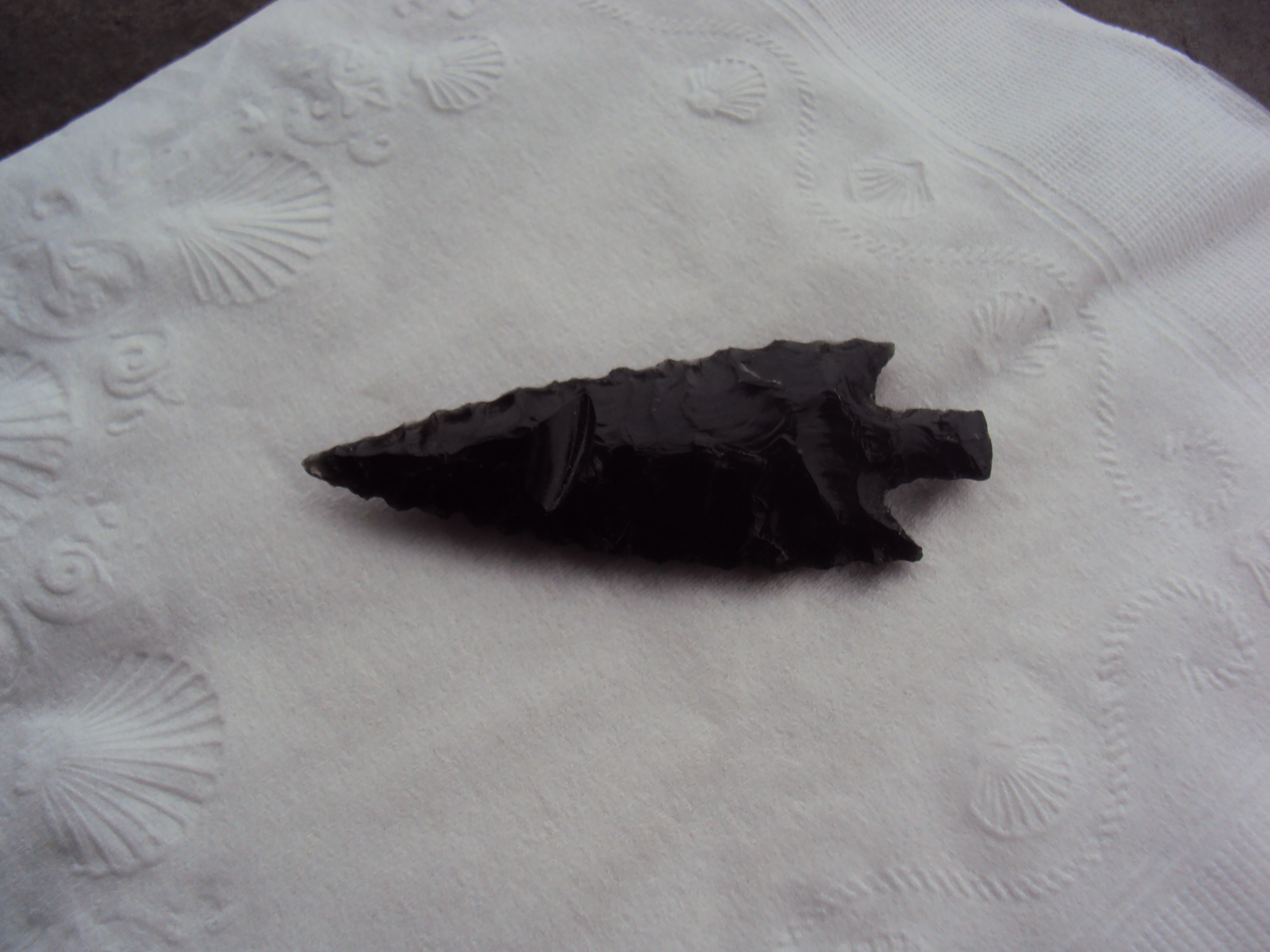
W’s good doctors have thrown napalm on a well-developed house fire. If it wasn’t burning before, it most certainly is now. Putting out the Interferon fire is a dicey proposition if it turns on the autoimmune disorders.  But we won’t talk about that because you all will pray and we won’t have that problem. Sometimes your whole body decides it suddenly doesn’t like you anymore. As a postscript, check out this too cool for school arrowhead W knapped from obsidion. I told him I couldn’t receive anything for my help but he wouldn’t listen.

I’ll probably have to declare it on my income tax as a priceless gift.

Posted in HCV Health, Medical News | Tagged , , , , , , , , , | 8 Comments

CAVC–THINGS YOU NEED TO KNOW–I

Recently, a member arrived here with advice she had received on another Veteran’s help site. It was not encouraging news on her current claim for her husband who is severely disabled. While I strongly advocate Vet’s should seek the widest possible range of advice possible, I predicate that on premise that said advice is viable and well-reasoned. Without going into the particulars, the gist of the advice was to give up and go home. This from a man who claims to have worn many hats all the way from military service through VSO. I’m sure he thinks his advice is sage and germane but it is tainted by the union-mentality of “We do it this way and if you want to work here, you’ll do the same.”

As we all know, such a myopic and narrow brand of thinking results in what I can best describe as “railroad logic”. You’re stuck between two steel rails and cannot venture off them to sample other directions. This medical condition is incurable. The patient is forever condemned to think in one plane of existence and be ignorant of others’ opinions and advice. Consequently, when confronted with a situation where a Vet has been given contradictory advice prior to his/her query, he is forced by that union mentality to defend his advice and in the process, eviscerate the advice of the Vet who raised it. This would all be well and fine if the advice were sound.

Advice, when offered, should come with a few codicils rather than be fired from the hip. In particular, advice that suggests Vets should stick with VSOs rather than hire attorneys is poorly thought out if you plan to file a jetgun claim for HCV or bent brain box  (3B)syndrome. [As an aside, doesn’t 3B sound better than PTSD?] If you have no legal acumen, you need help. Since VA prevents you from having an attorney at the most important phase, you need to rethink your legal strategies. A good self-help site like this one can guide even the most legally challenged through the process until they hit the concertina wire and can actually hire one.

One thing I’ll be writing extensively about here soon, is the Court Of Appeals For Veterans Claims (CAVC or Court) and how it pertains to you. Many of you will be denied initially simply because that is what the VA does. There is no balanced and thoughtful, insightful investigation of your claim. It’s torn into 6 different sub-parts and prosecuted piecemeal. When finally reassembled, the parts don’t fit together and bingo! The reject bin. The reject bin is fairly large. 85% of the claims large.  Think PODS large, guys. Think Omaha Beach in the first wave large.

People seem to think that everyone appeals or that a large majority do. Think 5 percent. Why that happens is a constant source of amazement to me. “No” is not in my vocabulary. If only 50,000 appeal each year out of over one million claims filed, there must be somebody or something throwing a lot of water on the fire. I’m not going to cast stones but after three forays against Victor Alpha in the capable hands of VSOs, I am underwhelmed with their enthusiasm. This is the advice problem that the young spousal member approached me with. To appeal or not to appeal. Do we have to even ask this question? I trust each and every one of you who served America to come here in good faith with the honest belief that your ills are the product of your service. Some will be goldbricks but as a percentage, they are minute and statistically inconsequential. There may be an uptick during hard economic times such as these but no one can fairly legislate a law preventing a bum’s rush to the bar for a free drink. VA attempts to and politely removes any rugs you may trip on en route but it is lip service. The reality is Claymores w/ trip wires and well-disguised punji pits for the FNGs.

vA fortunately publishes much of the results of their adjudications, breaking it down by VSOs, attorneys, and self-represented Veterans. This advice reflects that on average, 22 percent of you somehow win at the BVA. This puts a fork in the notion that you got an 86% accuracy rate in the decisions at the RO. vA  views it much differently. I guess they surmise that only the truly worthy cases were appealed in the first place so it’s no anomaly that 22 percent were successful. So, 50K appealed. 850K didn’t. What’s wrong with this picture? If the greatest majority are represented by VSOs, it’s assumed that the represented Vets acceded to the advice of their representative. That is disturbing news.

As published also, apparently only five thousand of you are brave enough to venture into the CAVC each year. Since VSOs only wear rubber boots just so tall, they are not allowed into the Court. Hip waders are in order there. Real law degrees are needed, not certificates of attendance to 38 CFR lectures or pictures from the trophy wall in the VSO’s bar. No one discusses this when you sit down and fill out the 21-22 shoveled under your nose at the beginning of your Odyssey.  Why ask at this stage when they are twisting your arm for the POA? If you know full well that you are going to have to move your flag from one ship to another somewhere down the road, the smart money says to prepare well ahead for it. VSOs do not. They have an infrastructure that is heavily dependent on a Veterans pro bono consortium set up by several of the VSOs and a willing bunch of altruistic attorneys. I do not mean to denigrate them but they are well-meaning and new to the game. After gaining experience and schooling in the art, they are snapped up by other firms or go out on their own. Many are on loan from large firms that use them to satisfy the requirement of offering pro bono services as part of a neighborhood or national commitment to under-represented, indigent souls. Vets comprise a larger number of those and not just at this Court.

Back to the brave 5,000. Oddly, these souls walk away with a phenomenal 60 percent of wins in the form of remands, reversals and (hold your breath) admissions of misfeasance (no blame attached), stupidity on the part of VLJs( no names), and mutually agreed upon contracts where VA barters, grants or partially fulfills your claim with no admission of guilt. This is what you never hear. This is the dirty little secret in the closet that vA will never admit to. They screw up. A lot. And this is where It finally gets fixed.

Before I’d ever heard of the Veterans Benefits Manual (VBM), and even before I knew how the system worked, I noticed that remands from the Court seemed to disappear. It stands to reason that when the Court sends something down to BVA for a do over, it would resurface like a bobber after a bass strikes it. No bobber equals fish on.  I surmised (rightly) that an accommodation had been made by the parties. If you had 5 years invested into an appeal and you got a remand back to the BVA (purgatory for a while), it’s not likely you’d throw in the towel this late. Of course there is the distinct possibility that you died, but we won’t discuss that today.

While studying up on why and how I’m going to kick ass and take names, I have been hitting the VBM heavily and now I see a chasm between what I hear at some of these other Veterans websites and what is written by the same pro bono attorneys who will be representing any of you who arrive there without one (and no desire to pay one the going rate of 20%). It is common knowledge at 625 Indian Ave. NW and down at 810 Vermin Ave. NW that the practice of horse-trading is alive and well in 2012. If this is so prevalent, why is it such a well-kept secret that it requires the secret handshake and a password to get in? We will be studying this phenomenon in next few weeks to acquaint you with it. We are going to reveal the password and handshake and expose the truth.

Unfortunately, I have to go to my grandson Conner’s soccer game right now or I would splash the exposé. I’m a closet soccer Granddad. News and film at Six.

Whoa! These just in from our cameraman on-scene at the game.

Posted in CAVC Knowledge, CAVC/COVA Decision, Veterans Law | Tagged , , , , , , , , | 3 Comments

CURCUMIN–BREAKFAST FOR YOUR LIVER

Over a year ago, I started taking this ingredient which derives from the Indian spice Tumeric. We see it mostly in  curry powder and on deviled eggs. Cupcake, in her contunuing desire to keep me on this side of the grass, searches far and wide for liver supplements that don’t involve quackery. My naturopath initially suggested it but after more study, it’s obvious this spice derivative has more on the ball than even milk thistle.

I’ll put a few links to this here and leave you to your own devices. What I really want to communicate about it is elementary. Everything you eat has to be filtered through your liver. Everything. Drugs, food, alcohol, tylenol, filet mignon, the whole panoply of things that disappear down the piehole. With that in mind, you have to be selective about what enters in. When you hit stage 4 and are staring cirrhosis in the face, it’s even more daunting because of a lifetime of habits.

The hardest thing I ever did was give up my affliction for fast food. Burger King and McDonald’s stock fell precipitously when I realized they were my liver nemesis. I’ve never been back even once. Have you ever seen the movie  Supersize Me? Its an Indie film with very little advertising  but extremely educational . A gentleman ate exclusively at McDonald’s for a month and was given liver function tests prior to and subsequently thereafter. His AST/ALT results, the two main indicators of liver health, were dramatically different. Healthy numbers would be 20 and 25 respectively. The healthy range is between 5-40 generally for both. Both of his climbed up to almost 100.

To put that in perspective, my liver numbers are usually 100 and 200. My ALT has gone as high as 605 when my autoimmune hepatitis was competing with the HCV for ascendancy. That was six months after my one and only dose of Interferon. I’m happy as a clam when I can get my ALT down in the 150 range where it is right now. 

Back to curcumin.   Here’s the medical aspect in fancy words. Several studies have illustrated curcumin’s hepatoprotective effects, leading researchers to suggest its use in protecting the liver from exogenous insults from environmental toxins. Curcumin also has the capacity to increase both the flow and solubility of bile. Curcumin’s hepatoprotective effects are due in part to direct free-radical scavenging; but curcumin also enhances the body’s natural antioxidant system, which increases glutathione levels, thereby aiding in hepatic detoxification and inhibiting nitrosamine formation.

Even I can can glean the important words out of this to know that curcumin is probably a good thing for liver-challenged heppers. What’s more, it’s on the shelf at most, if not all, health food stores. I can’t say it’s helping me because I don’t see any improvement. I guess its an article of faith that I’ll live longer if I do use it though. The benefit will probably be at the other end when I succeed in living longer than my doctor predicted. For those of us who are precluded from Interferon/Vertex/Ribavirin avenues, the choices are limited. Naturopathic remedies are our only respite and they are few.

Here are some articles you may find useful.

http://www.naturalnews.com/029872_curcumin_cirrhosis.html

http://www.liversupport.com/wordpress/2010/12/could-curcumin-help-your-liver/

http://www.naturalnews.com/023287_turmeric_curcumin_disease.html

I’m not a doctor or lawyer but I am capable of reading and making fact-based choices. It’s fairly obvious to me that aeons history have recorded that something is afoot with curcumin that promotes liver vitality. In light of the vast usage of this in food in one of the most hepatitis-prone areas of the world leads me to believe the witch doctors know whereof they speak. Even if they were full of hooey, its one foodstuff that can’t hurt you.

Posted in HCV Health | Tagged , , , , , , , , , , | 4 Comments