CAVC–WHAT YOU NEED TO KNOW-2

In CAVC 1 I began the introduction to what all of you who come after me will go through. In my book, I suggested all Vets do the mirror test. Make sure you’re positive on this and you know you’re right. If you had the stamina and endurance to withstand a gruelling two year wait for the BVA, you are now entering the beginning of Phase three. Another mirror test, please.

This time you are going to do the triage test, or for lack of the mot superior, quadrage test. Step one is the preliminary to this. How badly did the BVA hamburger this decision? If you had a VSO, was there some inadvertent complicity in the loss-say, lack of a nexus letter from a doctor that everybody neglected to mention at the VFW bar? It’s salvage time but is this salvageable?

After that analysis, move into quadrage. Is your evidence so blatant, so over the top that you can (or should) ask for reversal? For the uninitiated, reversal is an extreme bitch slap. The Court tells Uncle Eric that he was raised by wolves, knows nothing of law, and orders your case be sent back for an immediate rating in your favor and to be quick about it. This happens about 12% of the time. Sometimes the VA gets stuck on their inimitable, stupid setting and then begins inventing unique, unheard of interpretations to explain what is indefensible.   This is the legendary post hoc rationalization advanced for the first time on appeal of all places. Baaaaaaaad idea. Make the word “bad” sound like a sheep saying it. It’ll make you smile. So will a reversal.

Vacate for Remand is one step down.  Judges are lazy. They hate to make decisions. They would rather find legal fault with a decision and remand it for vA to fix it. This can have some really evil effects for guys like Leroy Macklem. For most of us, it is an admonition from the Court to the BVA that they screwed up yet again for the umpteen gazzionth time and, if they’d done it right, you wouldn’t be here in the first place. Some might see this legal tool as a deficit. In most cases, you will have been doing this either yourself or with a VSO for a representative. If you’re here reading this, we won’t get into how that worked out for you. The beauty of a remand is that your attorney can often fix it by getting that nexus nobody told you about, the medical C&P exam the RO never gave you, and any other odds and ends the VA overlooked in their rush to the Texas necktie party.

A partial remand is a conjunctive ruling that affirms some items you appealed and remands others that will live to see another day. If you have multiple issues you are contesting, some may be weak and others may have substance. The Judge may pick and choose between them based on their strengths or weaknesses. Thus the age-old argument for 10 or 20% for hearing loss is going to fall on deaf ears there if you can still hear out of the other one. We’ve all been there. Hell, I wager 80 % of Vets have a 0% hearing rating. As my DAV guy said in 92 ” Way cool! Now you get free hearing aids!”

An affirmation of the denial is what you do not want. and that is the last phase of quadage. Is it simply a no brainer? Were you led down this primrose path by a VSO like mine? Was he/she infused with boundless enthusiasm when receiving the POA and then suddenly invisible as though you’d contracted Ebonic plague?  Many’s the Vet who gets to this doorstep and finds himself with no sage advice. Worse, his case is such a hash no self-respecting attorney wants it due to the poor handling from the outset. This is a harsh mirror test. If you thought your VSO was hard to get in touch with before, honey you have not even seen the tip of the iceberg.

You will get last gasp, Code Blue legal help from the NOVA, other kindred pro bono attorneys, and  the NVLSP. They are the Lone Rangers on the White Horses at this point. They wrote the VBM for us. They can help but… Your claim is sealed upon denial at the Board. No more evidence may be admitted. The Court decides this from a standpoint of law. If VA violated it in their pursuit of a denial, the Court will usually find it and remand back for the do over. Here is the golden moment we spoke of above. Many a Vet finds the VA has lost their taste for this fight when they get caught out. The whole rationale for the denial up to this point has been dissolved. They will have to come up with a whole new alien abduction theory. They have too many fish to fry so chances are if you are even close to a win, you’ll get here. The trick is in finding the remandable defect.

The very last, unspoken, behind closed doors, aspect that isn’t part of this is a JMR (Joint Motion for Remand). I do not include it in the vacate and remand section because that is not where it goes. These are cases that effectively evaporate. They’re gone-invisible to the judicial eye. They arrive in Court and suddenly beat a hasty retreat never to be heard from again. They do not become Court statistics in the decisions-adjudicated column. They are decided outside on the Courthouse steps with a handshake and a follow-up on paper later that week. No powerpoint presentation, no apologies for the 8 years of denial, and  no admission of stupidity will be forthcoming. VA is cheap. Not even a good Stolychnaya 104 proof (stirred, not shaken) martini with the obligatory obeisance of Vermouth eastward towards Paris.

This concludes the “Should I send in my Notice Of Appeal?” part of the discussion. Vet Warning. If you file pro se to protect your 120 day window to do so, you will be inundated in solicitations for attorneys. Many old growth trees are sacrificed for this noble endeavour so be forewarned. It’ll cause problems finding space in the recycle bin.

On a final note, I will say this. If the claim is dead in the water and has no chance of new life, admit as much.  On the other hand, if you honestly believe you were disenfranchised, don’t cave in. You know who you are. A mirror test might let the next Vet in line get a shot at justice sooner and save us all some time. Your consideration of this is appreciated.




Posted in CAVC Knowledge, Veterans Law | Tagged , , , , , , , | Leave a comment

DOUBLE SECRET RESTRICTION

Remember Dean Wormer on Animal House putting the Fraternity on “Double Secret Restriction”? Well, the same appears to be happening here. Detective Eric always gets his man and he’s appointing a panel of senior officials (unnamed at present) who will finally get to the bottom of this. Unfortunately what the Ericmeister neglects to mention is that it will consist of Good Ol’ Boys from within his merry band. Now how can you fix it if you’re part of it? Stay tuned.

Posted in vA news | Tagged , , , , , , | 2 Comments

BVA–SINGLE JUDGE COURT DECISIONS DO SET PREFERENCE

While I have constantly railed at the uselessness of quoting single Judge decisions at the BVA in your appeals, it appears I have been less than forthright. I ran across the decision here this morning and was taken aback. As often as the BVA and the CAVC have denigrated our efforts when illustrating what passes for justice, they now take another tack and use this same logic against the Vet. So what is it? A BVA decision or a SJD (single judge decision) from on high is not precedent or it can illuminate a legal tenet? The VA attempts to have its cake and eat it too.

Of further note is that the Veteran’s belief that his current hepatitis C is related to his service amounts to a conclusory declaration. In a single judge Memorandum Decision issued by the Court, it was noted that “in the absence of any medical evidence, the record must provide some evidence beyond an appellant’s own conclusory statements regarding causation.” Richardson v. Shinseki, No. 08-0357, slip. op. at 4 (Vet. App. May 10, 2010). While the Board recognizes that such single judge decisions carry no precedential weight, they may be relied upon for any persuasiveness or reasoning they contain. See Bethea v. Derwinski, 2 Vet. App. 252 (1992). 

I do not need to tell you how many times I’ve read a BVA decision where the VLjudge says “The decision the Veteran quotes is a non-precedental decision involving another Vet and has no bearing on this decision. Decisions issued by the BVA are unique to each Veteran and can not be applied generally.”

Memorize the language to get this important bye.

Single judge decisions carry no precedential weight but they may be relied upon for any persuasiveness or reasoning they contain.

Now you can take anything and mold it to fit your arguments secure in the knowledge that it will have to be considered. Since it appears that the BVA decisions site is back up and running and you don’t need a degree in computer science to get in, I’ll start putting the links back up again to them.

Posted in BvA HCV decisions, Tips and Tricks | Tagged , , , , , , , , , , , , , , , | 2 Comments

WINNING IS ALSO ABOUT LEARNING HOW NOT TO LOSE

I note with satisfaction that a new voice lends itself to the discussion. I welcome that. Nothing gets looked at better than when someone comes along and analyzes how you do it. Fortunately, after building houses for forty years, the quickest way to get them up correctly is always welcomed, no matter the source. If you’ve only been doing it for four years and offer some unusual insight like “Gee. How come you always do it like that? If you cut the plywood when it’s down here, isn’t it easier than doing it after you jack the wall up?” This is the essence of learning. I’m lazy. If it made the job go faster, that meant I didn’t have to pay out so much for labor.

Robert K comes to our site and asks equally pertinent questions. Why this or Why that?  A picture is worth a thousand words-as is a  BvA decision. Every decision shows what ROs have done (or not done) on any given disease or injury. The reaction of the Veterans Law Judge is of interest to determine which way another Vet’s claim will be decided. If something terribly unique is found and disseminated for other DIYers, it becomes a way to win. Teaching a man to fish is an apt analogy.

vA does not volunteer the info needed to succeed. They do not suggest a new ploy or gambit that may result in you winning. It’s up to you to find the can opener and do it. My stock in trade here is to show others the technique vA uses to defeat you. That it happens 85% of the time is no coincidence. By looking carefully at the denial, I  analyze how he could have done it differently. Many’s the time in these decisions where the VLJ gets shoe in mouth disease and gleefully divulges that a Vet did this, but not that. He or she cannot conceal the glee in their comment to my way of thinking. Nevertheless, the knowledge is exposed and their hand tips forward enough to see their cards.

VA constantly reinvents the denial process. We are all familiar with that. Reading a 1992 hep or back decision reveals that. Since their technique constantly evolves, it behooves Vets to learn these new tricks and avoid them. The ex parte system demands it. If you submit everything you have with no knowledge of the process, you might be taken aback that you lost. If you were unschooled in the process, you wouldn’t see an age-old semantic argument and realize how easy it would have been to counter it by closing off the loophole and using different phrases.

The beauty of BVA decisions are that they are numerous and very predictable to me now. I do see a quirk every once in awhile and note it.  You who are new to this gain some insight. Those of you who have experienced it firsthand can begin to see the pattern and perhaps help others avoid it. What is apparent also is that there are innumerable web sites for Vets that teach nothing more than the age old “claim bone connected to the denial bone; denial bone connected to the NOD bone; Nod bone connected to the SOC bone; SOC bone connected to the DRO bone, etc. This teaches you how to be a VSO/mailman  but does nothing to increase your acumen for winning.

Winning is all about reconnaissance. Success is increased by knowing what your opponent is going to do (or is famous for) and preparing adequately to deflect it. Since the VA is so predictable in their denials, a BVA decision gives you the perfect teaching moment. What it also give you is an avenue to explore the legal concepts that support it. If the Vet wins, you see the precepts that supported the successful claim.  When a Vet loses, one observes the detritus.

I have a host of claims under Frivolous filings to show you why you shouldn’t file. These are, for the most part, Vets who made life choices that have now come home to roost. Virtually none will succeed at this. Conversely there are a number that demonstrate losses that should have won. There are examples of claims that shouldn’t have won but did. Each one is unique and contains its nugget of knowledge. I add humor or personalize them to embody what I feel the Vet emotes via his claims motions and arguments. The decisions are like dry dog food if I don’t add medical or legal insight that illuminates what’s ensuing.

For you, Robert K, it seems that is over the top or spoils the dry legalese. I can’t help you. If I changed the blog to accommodate you and removed all the running commentary  other readers would complain. If I posted wins with no accompanying discussion of how or why, I’d just be plagiarizing the BVA site and serving no purpose other than cut and paste.

Why a Vet wins or loses is paramount to how you approach your claim. As an example, I do not often advocate DRO reviews due to their abysmal success rate. That is not to say a Vet should never entertain one, but that each case is unique and evidence is what we win or lose on here. If you have new exculpatory evidence that they haven’t seen yet, it may be that a well-reasoned explanation in person with the new evidence in hand will carry the day. What few know is once you are denied and file the NOD, a DRO is going to review it for legal sufficiency anyway. If you bring up some major flaw, he will spot it or should. The important thing to know is you do not have to wait a year for a DRO review to get that closer examination. Simply filing the NOD provokes it. When money is tight, a win at the RO can be the difference between home and homeless. A long, drawn out legal battle of three years is death to your marriage and you finances. Its often  a pyrrhic victory to finally win a decade-long battle at the CAVC and realize you’re almost too old to enjoy it.

That’s what this site is about. Dissect and discuss. Examine why Vet A got a bye and Vet B the circular file. Granted, a majority of the cases I read are ones where the Vet has no nexus. What is so egregious is that they are almost all defended by the ones Congress appointed (read chartered). If that many are not getting good advice, it stands to reason that sites like this are needed to provide that knowledge. Denials often teach more that wins.

If I had not studied up on Porphyria Cutanea Tarda (PCT), I would have never known I could get 40% for it (phlebotomies) rather than 10% (scarring). VA sure didn’t volunteer that when they rated me. I happened to read it in a 1997 PCT ratings increase. I found three examples, put in for it and won.  Soemhow I don’t see a VSO coming up with that for me. Finding the optimum reading for your circumstances, the most liberal interpretation for a DM2 rating or SC for bent brain have one thing in common-the legal technique employed. vA has 500 or more lawyers arrayed against you and your VSO if you have one. Take a page from their playbook and learn how not to lose.


Posted in Tips and Tricks | Tagged , , , , , , , , , , | Leave a comment

BVA–JETGUN WIN IN ST PETE

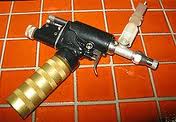
Rarely do we feast our eyes on this. I’m sure the fellow who won this didn’t read our site but he dialed it to a T. He got a bulletproof nexus from a top drawer Hepatologist. He had good post-service records and  supportive medical personnel who backed him up. vA couldn’t hang anything on this fellow but we notice it had to go to DC for resolution. This begs the question of why in Sam Hill they denied it at St. Pete.

A clean jetgun win is unique. vA is loathe to just grant on this alone. Usually they want some other risk they can ascribe it to so that it  dilutes the win.  WGM’s decision this year was a classic example of this. They didn’t even want to go there so they took the misguided (and illegal) approach of willful misconduct via STDs.

Vets might do well to look up attorney Carol J. Ponton in the St. Pete’s phone book or google her name to find out more about how she managed to pull off this stunning win.


Citation Nr: 1214128
Decision Date: 04/18/12 Archive Date: 04/27/12

DOCKET NO. 09-22 157 ) DATE
)
)

On appeal from the
Department of Veterans Affairs Regional Office in St. Petersburg, Florida

THE ISSUE

Entitlement to service connection for hepatitis C.

REPRESENTATION

Appellant represented by: Carol J. Ponton, Attorney
The service treatment records do not show any complaints, findings, treatment, or diagnosis of hepatitis C or any liver abnormalities.

Post-service medical records include clinical records of Ronnie Pimental M.D., who treated the appellant for hepatitis C in 2004-2005. It is significant to note that the appellant told this physician that he was a “lab tech” while in the Coast Guard during the 1970’s. He reported having an episode of hepatitis in about 1972, but did not know when he was infected. He denied having any past drug use.

The appellant currently maintains that he worked in a medical facility during ADT service. His service personnel records only show that he was a Seaman, with no other information regarding his duties. When the appellant told Dr. Pimental that he had been a lab tech, he was seeking treatment for hepatitis C, was exploring his medical history, and had no claim for VA benefits pending with VA. As such, his report of his history to this physician is highly credible and probative. The Board therefore accepts that he did work in a medical environment during ADT, as he has reported.

Two medical opinion letters have been received from Philip N. Styne, M.D., in which he indicated that he reviewed the appellant’s medical records and had interviewed the appellant. This physician provided his credentials, which are extensive, and include experience with hepatitis C. Originally, Dr. Styne stated that he thought that the appellant was a phlebotomist during service. He later corrected this statement and indicated that the appellant worked cleaning in a medical laboratory. Dr. Styne stated that the appellant had exposure to blood products during that time. In addition, Dr. Styne indicated that the appellant had been inoculated via jet gun during service. The service treatment records document that the appellant was vaccinated on two occasions during his ADT service. The physician provided an opinion that the appellant’s hepatitis C was related to the jet air gun inoculations as well as possibly from laboratory cleaning work exposure. He cited to various medical research articles in support of his conclusion that the jet air gun inoculations likely caused the hepatitis C. It was also noted by this physician that the appellant did not otherwise have any exposure to hepatitis C.

As noted, the Board finds the appellant ‘s statements credible regarding his inservice job duties and experiences. The Board also accepts that his job duties and the inservice vaccinations occurred while he was performing ADT. The appellant provided his hepatitis risk factors which are uncontradicted in the record. The assessment as to the etiology requires a complex medical impression. The private physician provided an opinion to determine the etiology of the appellant’s hepatitis C. The records were reviewed, the appellant was questioned, and the risk factors were explored. The physician provided his own curriculum vitae which showed experience with hepatitis C diagnoses and he also cited to medical research. The Board attaches significant probative value to this opinion, as it is well reasoned, detailed, consistent with other evidence of record, and included an access to the accurate background of the appellant. See Prejean v. West, 13 Vet. App. 444, 448-9 (2000) (Factors for assessing the probative value of a medical opinion include the thoroughness and detail of the opinion). 

Posted in BvA HCV decisions, HCV Health, Jetgun BvA Decisions, Nexus Information | Tagged , , , , , , , , , , , , , , , | 5 Comments

BVA–BAD BACK+IVDU=SC

Follow this twist of logic. You have a painful back. You use drugs to alleviate the pain. Lots of drugs of all different flavours. As many drugs as you can get your hands on. For many, many years until one day you discover all that shooting up to kill pain has some consequences. You file for SC for bad back with HCV as a secondary. You win.

Yep. Those Nashville cats are back again and this time even I reread this again and again in a vain attempt to follow the logic. I’m still not sure I do. Someone either removed the page on willful misconduct or they came to a new conclusion about what the meaning of “is” is.

I’ll cut and paste the header but I’m going to paste the meat and ignore the “I was born in 1951” part.

Citation Nr: 1214243
Decision Date: 04/19/12 Archive Date: 04/27/12 

DOCKET NO. 08-20 316 ) DATE 
On appeal from the 
Department of Veterans Affairs Regional Office in Nashville, Tennessee 

THE ISSUES 

1. Entitlement to service connection for hepatitis C. 

2. Entitlement to an initial disability rating in excess of 10 percent for degenerative joint disease, lumbar spine (low back disability). 
FINDINGS OF FACT 

1. Service connection is in effect for low back disability. 

2. Resolving all reasonable doubt in the Veteran’s favor, hepatitis C had its onset in service. 

CONCLUSION OF LAW 

Hepatitis C was incurred in service. 38 U.S.C.A. §§ 1110, 1154(a), 5107(b) (West 2002); 38 C.F.R. §§ 3.102, 3.303, 3.310 (2011). 
 

The service treatment records show that the Veteran was treated for his low back problems and at separation his spine was found to be abnormal. Indeed, the Report of Medical Examination at service separation reflects that the Veteran reported, “My back bothers me from an injury when I fell last summer. Especially when I do hard work [sic].” The examining physician noted that the Veteran had injured his coccyx and was treated for continuous symptoms. The examiner added that the Veteran’s treatment had “fair results.” 

In November 2011, the Board requested the opinion of a medical specialist from the Veterans Health Administration (VHA), which was received in January 2012

Service connection may be granted for a disability resulting from disease or injury incurred in or aggravated by service. 38 U.S.C.A. § 1110; 38 C.F.R. § 3.303(a). Service connection generally requires credible and competent evidence showing: (1) the existence of a present disability; (2) in-service incurrence or aggravation of a disease or injury; and (3) a causal relationship between the present disability and the disease or injury incurred or aggravated during service. See Davidson v. Shinseki, 581 F.3d 1313, 1316 (Fed. Cir. 2009); Hickson v. West, 12 Vet .App. 247, 253 (1999); Caluza v. Brown, 7 Vet. App. 498 (1995). 

Additionally, under section 3.310(a) of VA regulations, service connection may be established on a secondary basis for a disability that is proximately due to or the result of service-connected disease or injury. 38 C.F.R. § 3.310(a). Establishing service connection on a secondary basis requires evidence sufficient to show (1) that a current disability exists and (2) that the current disability was either (a) proximately caused by or (b) proximately aggravated by a service-connected disability. Allen v. Brown, 7 Vet. App. 439, 448 (1995) (en banc). 

In Allen v. Principi, 237 F.3d 1368 (Fed. Cir. 2001), the United States Court of Appeals for the Federal Circuit (Federal Circuit), interpreting 38 U.S.C.A. § 1110 in light of its legislative history, held that VA compensation benefits are available for alcohol or drug-related disability, here hepatitis C, that arises secondarily from a service-connected disorder, here low back disability. Id. at 1370.

There you have it. I shot up in service because my back hurt. I continued to do so for years. I have hep. You SC’d me for my back. If I hadn’t hurt my back in service, I would never have been forced to self-medicate and run the risk of getting Hep. You owe me.

I don’t for a minute think the DAV dreamed up this defense. It has more holes in it than O.J. Simpson’s.

VA treatment records dated from 2005 to 2007 show treatment for hepatitis C. A hepatitis C risk assessment in October 2005 includes risk factors of multiple sexual partners, past or present; tattoo or repeated body piercing; and intemperate alcohol use. VA treatment records in March 2007 show that the Veteran reported at that time that he was diagnosed with some kind of hepatitis in the 1970s; and that in 1995 he stopped drinking alcohol and stopped intravenous drug use (cocaine) that had included sharing of needles. 

In November 2011 the Board requested a medical expert opinion from the Veterans Health Administration (VHA) to determine whether it is at least as likely as not that any hepatitis C is related to or had its onset during service, to specifically include whether it is due to a right upper arm tattoo obtained in service or in-service immunizations. In a January 2012 responsive advisory medical opinion letter, a medical specialist physician who reviewed the Veteran’s medical record history, provided an opinion as to whether there was an etiological relationship between the Veteran’s claimed hepatitis C and his active service. The specialist reviewed the clinical history during service and thereafter. The specialist noted that hepatitis C was diagnosed in about 2005, that the records showed that the Veteran had stopped intravenous drug use in 1995 and that there had been sharing of needles as reflected in a March 2007 gastroenterology physician note. A January 2006 psychiatry physician note stated that there was a “25 year cocaine habit.” The examiner noted that the Veteran stated that he used intravenous drugs and shared needles while in service and noted that he had received a tattoo while in service. 

The specialist noted that the first symptoms of hepatitis C, if they appear at all, will usually be many years after the infection. The specialist opined that the Veteran’s risk factors for hepatitis C were his tattoo, intravenous drug use, and possibly, though not proven as a cause, vaccinations with contaminated injectors while in service. The specialist opined that the Veteran’s strongest risk factor for hepatitis C was his long-standing history of intravenous drug use with sharing of needles, which was documented in the medical record as a 25 year history of intravenous cocaine use that ended in 1995. 

The specialist opined that it was likely that the Veteran’s hepatitis C was related to the drug use but opined that it was less likely than not related to service because the long-term drug use involved only 2 years of in-service drug use as opposed to 23 years of post-service drug use. 

Here, the Veteran’s competent statements, which the Board finds to be credible, indicate that during service and for a long time thereafter he used drugs to self-medicate for the low back pain associated with his service-connected low back disability. In light of that factual background and the VHA specialist’s opinion linking the Veteran’s 25-year use of drugs to the onset of his hepatitis C, the Board finds that the evidence supports the Veteran’s claim. As such, given the opinion offered by the VHA specialist, the Board finds that the Veteran’s hepatitis C is proximately due to his service-connected low back disability. 

See what happens when you train these VHA specialists to say “Yep. He did it in the military. That’s what happened. ” The intended result was the Willful misconduct etiology and ensuing denial based on it. Seeing where the Judge was headed, the VA examiner came out with the  “Nope. It occurred somewhere in that twenty three years after service, not during the two years during service. ” This was a forlorn attempt to get the IVDU on the proper side of the fence so as to preclude having to pay.

Now who among you doctors or aduccers of chicken entrails can tell me the exact moment the dragon entered the syringe and traveled up the needle to his veins? Anyone? Just to throw gas on the fire, what would have happened if they said they didn’t believe he shot up while in the military?

“It appears the Veteran is a poor historian and no one can remember what they were about 40 years ago. We believe the claimant contracted it shortly after service separation. There is no history of IVDU or drug abuse in his SMRs therefore his testimony is unsupported.”  Now keep in mind if you even mumbled in your sleep that you smoked dope or drank booze to avoid picking up dysentery, you’d get tarred and feathered as a junkie and it would be all over. No, this reeks of everybody being on the wrong page at the wrong time and trying to reinvent the wheel.  Absent that my second theory is that the guys was some Senator’s son.


Those VLJs. You just can’t figure what they’ll do next. I fully expected an Acting VLJ with 4 days under his belt to whistle this one or our latest Phonics winner April Maddox.

Posted in BvA HCV decisions, Vietnam Disease Issues | Tagged , , , , , , , , , , , , , , | 7 Comments

THE GOSPEL OF ORLANDO ACCORDING TO VAOIG (REDACTED)

This will eventually be sanctioned, all will be pardoned and some will be promoted. Uncle Eric will move over to the State Dept. and change his name. It will be republished with the “Once upon a time in a land far away ” format. Soon they will deny it happened like the Holocaust.

Posted in vA news | Tagged , , , , , , , | 1 Comment

DOTTIE’S LATEST POST

Member Dottie left this on my page for contacting me as a comment. It makes me very happy to see these show up. They are starting to appear far more frequently.

Dottie says:

Just received news today that hep c is service connected at 30% …so it’s a win. Definitely having a nexus helps and haven’t been to the BVA yet.:)

That’s what we live for. maybe I can coax her into sending me the particulars to share with all you wonderful Veterans.

Posted in vARO Decisions | Tagged , , , , , , , , , , , , , | 3 Comments

ORLANDO WON’T GO AWAY

Kiedove just sent this to me this evening and will be inveighing on it tomorrow. I thought Vets might like to know that they now have the best-trained Human Resources folks that money can buy. Unfortunately they are all being let go so that won’t be true for too much longer.

Posted in Complaints Department, vA news | Tagged , , , , , | Leave a comment

MARINE- IT’S MORE THAN A WORD

Tom (a Marine) sent me this. He embodies what Marines are even now. It’s a disease that you never get over nor would want to. I find this very close to unnerving.


Every now and then, in the middle of the constant barrage of crap that’s just pissing us all off these days, we come across a story, a feat, an event that just makes us stop in our tracks.

This was one for me.
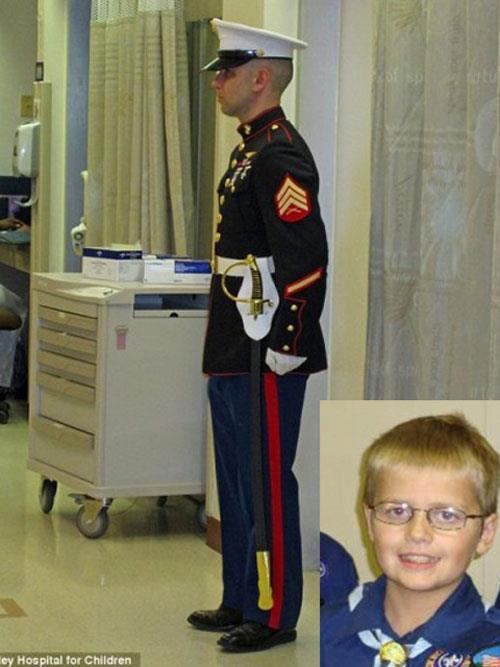
 Cody Green was a 12-year kid in Indiana who was diagnosed with leukemia at 22 months old. He loved the Marines, and his parents said he drew strength and courage from the Marine Corps. as he bravely fought the battle into remission three times. Although he was cancer-free at the time, the chemotherapy had lowered his immune system and he developed a fungus infection that attacked his brain. Two weeks ago, as he struggled to fend off that infection in the hospital, the Marines wanted to show how much they respected his will to live, his strength, honor and courage. They presented Cody with Marine navigator wings and named him an honorary member of the United States Marine Corps.
 For one Marine, that wasn’t enough … so that night, before Cody Green passed away, he took it upon himself to stand guard at Cody’s hospital door all night long, 8 hours straight.
 Nowhere on the face of this planet is there a country so blessed as we to have men and women such as this. I wish I could personally tell this Marine how proud he makes me to be an American.
Posted in All about Veterans | Tagged , , , , , | 2 Comments