CALL ME BOB– BUT DON’T CALL ME

McBob 3

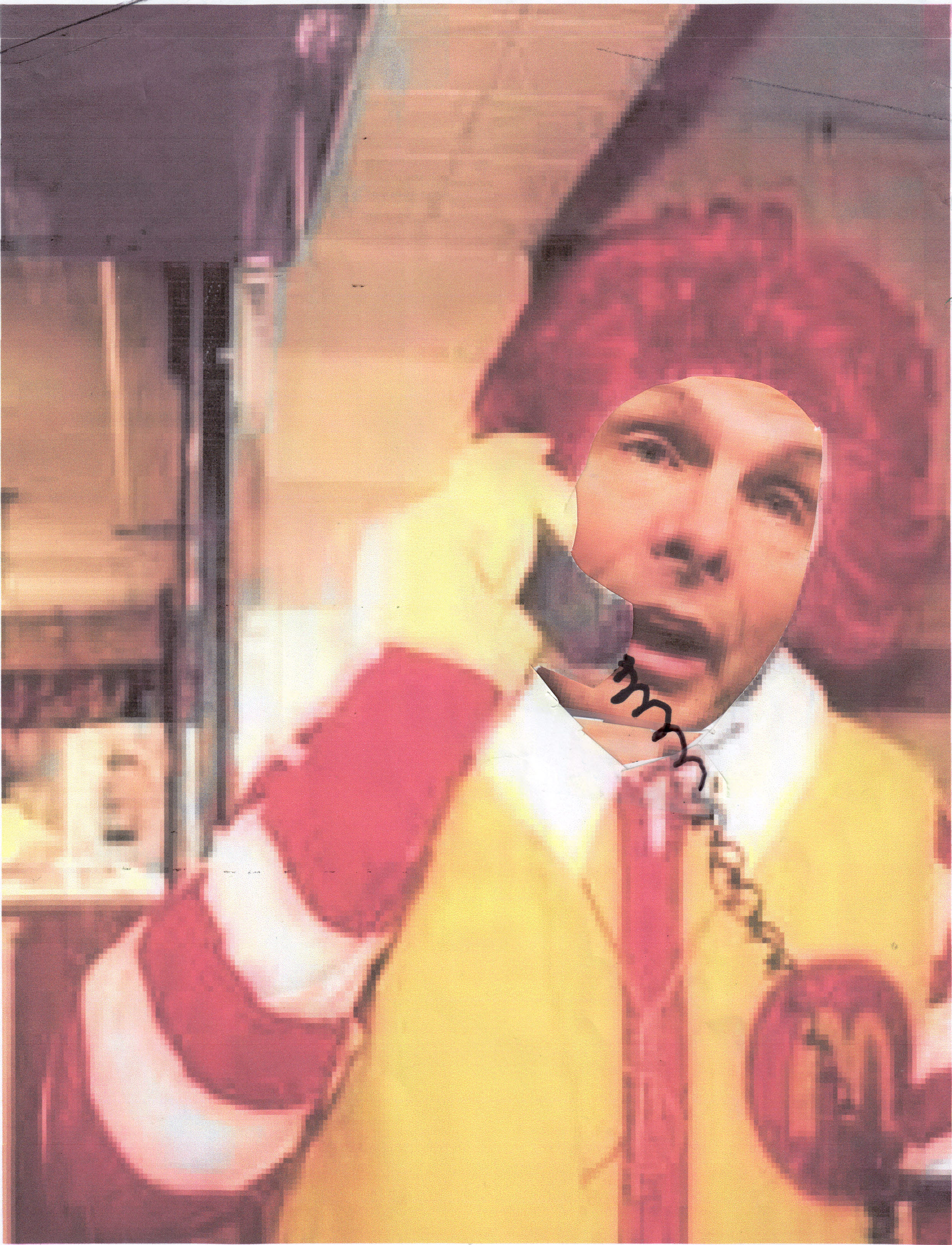
Hi, this is Bob Mc D. We’re sorry but the mailbox is all filled up. Try again later, hear?

I rest my case. Remember, I too reached out to “Bob” last fall. I never did get to talk to him but I got his email and opted for that route. He pawned me off on Seattle’s DRO Cheryll-Anne Mackey-Rivas (note that’s a personal best-two hyphens) who graciously called me first before sending me a brand new SOC. 

http://video.foxnews.com/v/4609149800001/fox-amp-friends-calls-va-secretary-robert-mcdonald/?#sp=show-clips

The smart money these days seems to be the Extraordinary Writ of Mandamus. Secretary Bob is required by law to answer those. Looks like I’ll be preparing yet another one to enforce the BVA decision for my greenhouse. I share this poignant vignette from VR&E’s residentura apologist at Seattle’s Famous Fort Fumble. He freely admits he’s no longer my “Counseling psychologist” or Vocational Rehabilitation Counselor in VAspeak, but nevertheless has the the disagreeable task of being the go-between. Apparently, being a untermenschen, I am not allowed to communicate directly with the VR&E hierarchy.

In three days, (May 4th, 2016), we will mark eight months since my BVA grant. Seems like a propitious date to file anew:


Posted in Extraordinary Writs of Mandamus, Humor, Independent Living Program, KP Veterans, Lawyering Up | Tagged , , , , , , , , , , , , , | 3 Comments

THE SEARCH CONTINUES

downloadI apologize for not posting this sooner. I wish to thank all those who have sent me get well reminders. After five days in the hospital, even less is apparent about what has happened. After my Tuesday morning rush to the operating room for a Cardio catheterization to determine the cause of my malady, my doctors are in an even deeper quandary. Everyone expected to see thick sheets of plaque in my arteries and slam me full of stents. No such luck.

The IHD diagnosis turned out to be a dog that didn’t hunt. No clogged arteries. Just a heart that has decided to mimic the old Maxwell House® coffee percolator commercial. It was disturbing to watch the sinus rhythm on the monitor. In terms of heartbeat, it looks frightful. If 1, 2, 3, 4, 5, 6, 7 etc. represented a normal rhythm, imagine 1, 2, …3456, 7, 8, 9, ………10, 11, 1213141516, 17, 18 etc. I have no conscious feeling of a 2-second delay between beats. Similarly, there is no adverse, uncomfortable feeling when Mr. Heart engages the hyperdrive motivator. I woke up this morning completely refreshed with a BP of 107/70. The problem was that I was blowing a 99 on the heartbeat.

In the interim, the doctors have decided to hose me with Metoprolol and Lasix in a desperate ploy to slow the heart down. I get the beta blocker application and the Lasix is great for ridding the fluid buildup in the lungs/congestive heart failure. The problem is the side effect of my blood pressure falling dangerously low- like 88/56. I guess I shouldn’t complain. I’m still here typing this.

I am generally uncomfortable talking about my problems with others. Too many of you suffer far more insidious medical maladies than I. It almost seems inconsequential when I consider what some of those I have helped endure. Therefore I won’t expend any more HIPPA time on that subject.

tumblr_n6qyoi6z7O1s7e6fno1_500Of far more import, I wish to point to Congress’ impending legislation to open up the VA caregiver program to all of us regardless of what period we served. As most of you know, my east coast compadre Bruce McCartney and I have railed ceaselessly for inclusion of all Veterans in this valuable SMC entitlement. As we have so vociferously argued over the last six years, how is an at-risk Veteran suffering horrific bent brain from the Iraquistan Olympics any different from one who was extremely successful in arranging beer summits between God and gooks in Vietnam 45 years ago? The George Orwell Animal Farm analogy that some pigs are more equal than other pigs in the VA barnyard comes to mind. Apparently, our illustrious Senators on Capitol Hill finally “get” it. Or we hope they will soon.

Wars have measurable consequences. The human fallout is never programmed in to the front end of the formula. That repair order is usually a decade out from the end of hostilities. In that respect, also, the VA is always a score or more of years behind the eight ball. Certain Veterans Charities whom we will not identify, who have the collective ear of their congressfolk, tend to drive policy and decision making re benefits. Bruce and I have long protested this inequity to any congressmen we could corner with little or nothing to show for it.

Bruce g-house 2

Bruce’s greenhouse

Likewise, most of you are aware of Bruce’ and my shared perseverance in the field of the VR&E Independent Living Program. Severely disabled Veterans- and I do emphasize ‘severely’- were granted a lovely program in 1980 to enhance our lives somewhat. It was clearly and unmistakably aimed at avocational (read hobby) pursuits in lieu of our ability to be productive, working members in society. It was never designed as a sop for prior shoddy treatment even though that is what it subtly purported to address. The immediate effect was to give us more independence and a feeling of self-worth in the face of an otherwise bleak future.

In 1996, VA began to disassemble this safety net and put more obstacles in our path toward attaining the goal. By 2001, it had effectively corralled the entitlement into one where a Veteran had to obtain his own Independent Medical Opinion from a Vocational Rehabilitation specialist (at his/her own expense) stating as much. In fact, the process began to take on the aura of a compensation claim that required the three Caluza/Shedden/Hickson elements demonstrating a correlation between the severe disability and potential for improvement with an IL program. In spite of the clear intent of Congress, the ILP as a program is rapidly becoming a mere shadow of its original intent. On March 31, 2014, VA remodeled the ILP aspect in M-28 (Revised) and accomplished by nonjudicial fiat what they could not do by law. As expected, the program now offers little more than gewgaws and Fat Tuesday trinkets. Gone are the photo studios, wood working shops, riding lawn mowers and snow blower attachments for your tractor.

Each succeeding year since 2004, when VA began recording ILP statistics, has witnessed a shrinking of this valuable entitlement with an increasing emphasis on independence in everyday living. “Independence” being defined as a grab bar next to the water closet to aid in standing up. “Independence” being defined as a cordless phone for when you have fallen down and can’t get back up. “Independence” defined as sock puller-uppers due to debilitating lower back pain. “Independence” as in an electric can opener to ameliorate your symptoms of peripheral neuropathy.   Redefining “independence” has gradually metamorphosed into denying Veterans anything of or having to do with avocational pastimes. This is tantamount to the Orwellian analogy I raised above. Why, asking for a Tempurpedic bed now results in your request being sent down to the local VAMC where their prosthesis gurus parse the wisdom of issuing you one of their cheapo depot hospital beds-sans heat/vibrator attachments.

ILP Case Record Rpt04-FY 15

In that same vein, Congress was inveigled into creating a new Special Monthly Compensation (T) in 2010 that would provide for the slew of Veterans returning home with severe traumatic brain injury and/or debilitating bent brain syndrome. The concept of the entitlement was long overdue. Throughout the last century and the beginning of the twenty first, hundreds of thousands of extremely disabled Veterans have come home from conflicts and saddled their spouses with extraordinary challenges in caregiving. VA never felt a need to reimburse us equitably until 2010. When they did make the commitment, it was only half-hearted and relegated to post-2001 Veterans.

The divisive nature of the entitlement has rankled many of us who strive to help our fellow Veterans who had the misfortune not to have served post 9/11. Therefore, it is with great joy and expectations that we welcome this unfolding change in philosophy. It certainly outweighs any of my problems in importance. Should the House decide to go along with what the Senate is proposing, a great weight will be lifted off our chests. My fear is that the sentiment will be greeted with derision and a veto. I won’t beat a dead horse named Swale, but it seems there is always an endless pot of money for indigent immigrants and little, if any, left for those of us who have borne the battle.

This is also all the more incomprehensible in light of the administration of the Independent Living Program. Imagine a targeted entitlement (much like SMC T, I might add) that allots up to $180,000 per Veteran to a lucky 2,700 severely disabled which VA insists they cannot find enough of who qualify. Has anyone considered that they set the bar too high? If I am 100%+100%+60%+40++30%+10%, would that not suffice to be considered “severely disabled”? I had to fight 5 years to prove my worthiness.  Ambiguously parsing 38 USC § 3120, to extract an interpretation of “necessary and vital” as the prescribed entrance fee, is incongruous to say the least. By that metric, virtually no one, regardless of even those with the longest laundry list of severe disabilities, can qualify. Perhaps the spectre of this going before the CAVC induced Ronald McDonald to grant my greenhouse? Who knows? Anonymous sources at 810 Vermin Ave. NW have acknowledged as much.

Similarly, any of you who have attempted to scale the VA caregiver mountain in search of SMC T have discovered a similar ‘necessary and vital’ codicil in your path. In order to qualify, the VA demands an in-depth examination of the proposed Veteran seeking it. Following that, the designated spouse/caregiver must attend classes to be taught the art. If and when all these hurtles are accomplished, only then is the entitlement awarded. Additionally, during the award of entitlement, the Veteran must attend the VA’s Kumbaya classes to move her/him towards normalcy. Keep in mind, the VA never intended this entitlement to be permanent. It is a transitory aid to parachute you back into society as soon as possible. Woe betideth those of you who opt to take a volunteer position at the food bank or your local library. That will sound the death knell to your SMC T instantly. You will have demonstrated your miraculous ability to reintegrate back into society. Likewise, if your spouse takes even so much as a part-time job outside the home-again you have demonstrated ( by his/her absence) you are now far more independent and no longer in need of a “minder”.

The teaching moment here is not in looking a gift horse too closely in the mouth so much as it is trying to locate said gift horse. Ofttimes this in nothing more than a fig newton of the imagination-much like God. We know He exists. It’s just that no one has ever seen Him.

Nodster


Posted in Independent Living Program, SMC | Tagged , , , , , , , , , , , , | 10 Comments

Veterans and Agent Orange: final update released

ao

Click cover to go to contents page with a search inside the book box. Image: NAP

Frank (VT) has sent us a link to the article Vietnam Vets Push VA to Link Bladder Cancer to Agent Orange (LINK).  It concerns the newest update on the government research series called, “Veterans and Agent Orange.”  The 1000-page book can be read online or can be downloaded for free (LINK); over 2,700 DLs so far. This is the “tenth and last congressionally mandated biennial update.”  As such, it behooves us to be aware of its existence and how its conclusions may effect veterans’ claims going forward. 

(A 2014 study (LINK) linking AO to bladder cancer (and other diseases) in Korean veterans was influential in the judgement of these researchers.)

Book blurb:

“Based on the entire body of evidence, the committee Update 2014 changed the categories of association with exposure to the herbicides sprayed in Vietnam for three health effects.  Bladder cancer and hypothyroidism were moved from “inadequate or insufficient” evidence of association up to “limited or suggestive” evidence of association, while the birth defect spina bifida in the offspring of Vietnam veterans was demoted from “limited/suggestive” down to “inadequate/insufficient.”

The committee clarified that Vietnam veterans with “Parkinson-like symptoms,” but without a formal diagnosis of Parkinson disease, should be considered eligible under the presumption that Parkinson’s disease and the veterans’ service are connected. For this last volume in the Veterans and Agent Orange series of reports, the committee distilled “lessons learned” into recommendations for the continued monitoring of the health of Vietnam veterans.”

A Google Agent Orange image search displays heartbreaking images of bodily malformations these toxic chemicals have caused in populations that have been constantly exposed to them since the 1960s.  This cannot be the end of research and our duty to deal with the harm done by AO.

A recent Military.com article (LINK) provides these figures but how many Vietnam veterans have already died from AO diseases?

Roughly 1 million Vietnam veterans are enrolled in the VA health system, according to the department. Based on a review of data for one year, 5,484 of these veterans have been diagnosed with bladder cancer, 15,983 suffer from hypothyroidism and an estimated 1,833 have Parkinson’s-like symptoms.

hands-walking-stick-elderly-old-person

The article also says the VA will act on the updated research in about two years. Image: Pixabay

Hmmm.  It’s going to take the VA two years to read the report?

Posted in Agent Orange, All about Veterans, AO, Food for thought, Future Veterans, General Messages, Guest authors, research, Uncategorized, VA Health Care, vA news, Vietnam Disease Issues | Tagged , , , , | 3 Comments

Comparing hospitals

Alex’s previous post was written from a private hospital.  His medical team had no knowledge of AO.  So frustrating.  (Would it be too much to ask medical schools to hold required seminars on military exposures to toxins, etc..?)

Ambulanza-300px

“Where to?” Image: Open Clip Art

“How to pick a good hospital” and “medical transparency” are hot topics today.  Some online rating tools are available now–even for VA hospitals.  

In emergencies, we get help wherever we can.  Later one may have the luxury to study the hospital compare sites to pick the best follow-up care for one’s condition.  These tools are useful to find the best doctors for second opinions.   If an insurance company doesn’t pay for second opinions outside of their network, there are services like Medibid to turn to. (LINK)

Consumer Reports Free Hospital Tool for Safety scores/compare (LINK)

U.S. News Best Hospitals 2015-16  (LINK)

Medicare Hospital Compare (LINK)

va search

Click for basic VISN info with star ratings

VHA VISN Quality of Care Measures  (LINK); Advanced data in online excel format which I cannot decipher or understand the statistics.  (Can you figure it out?)

VA Quality of Care Homepage (LINK)

This site, Why Not the Best (LINK), has some VA hospitals in their database–use “veteran” as the keyword.  They also have an awesome interactive map. Good video tutorial (LINK).  Created by a The Commonwealth Foundation.  Really useful.

Any others you like or have used?

Posted in Agent Orange, Guest authors, Medical News, non-va care, Uncategorized, VA Health Care | Tagged , , | 4 Comments

IHD–ANOTHER ONE BITES THE DUST

downloadWho woulda thunk it? I’m immortal or so I thought. Saturday morning at 0400 I woke up and discovered I couldn’t breathe. Imagine being under water for several minutes and struggling to reach the surface to take a large, overdue breath. Now imagine not being able to reach the surface. Boy howdy, if that doesn’t get your undivided attention then you’re really out to lunch. 

Being the quintessential male, I got up and took a shower. Showers have immense therapeutic value to men. I’m almost positive that Mr. Einstein stumbled upon relativity in the rain locker. Standing also seemed to be the trick. Lying down was right out. Having learned back in 1996 about how delaying medical care sometimes makes you immeasurably worse, I decided to make coffee and analyze this. I let Cupcake sleep in because I correctly figured this might involve a meat wagon run.

At 0600, I spilled the beans. Females catastrophize everything. As men, we all know this and anticipate the downstream fallout. Thus it behooves you to make the coffee in advance and have the car warmed up before you hit the Claymore plunger. Wise I am, yessssssssssss. Born of many a ride in a meat wagon, I find sirens to be too ostentatious. I’m just not a parade kind of guy.

Therefore, due to my tardy announcement,  at 0614 Hours we proceeded to Saint Anthony’s Hospital at an unsafe speed.  I was chided quarter-hourly thereafter for delaying the inevitable expedition for two hours. As some of you know, I spent a year in the VAMC in Seattle with a few medical misadventures. That creates a bow wave of resistance to going near one. The flip side to tardiness is the endless recriminations I will suffer for the brief two-hour procrastination.

As expected, it’s ugly. Congestive heart failure with a side of pneumonia and a tentative diagnosis of Ischemic Heart Disease. The doctor asked me if I had any risk factors or a family history of this. Other than two years in-country with a breakfast diet heavy on  AO/ABlue, I told him I, too, was drawing a blank on risk. That’s when the doctor drew his blank. He had never heard of Agent Orange. Neither had the nurses.

download (1)I would never believe our country’s collective memory of Vietnam and all the attendant, subsequent fallout could fade into oblivion in one generation. Consider this. The true nature of  the rainbow defoliants didn’t even pop up on the radar of public opinion until a decade or more after the Vietnamese boundary dispute had been settled to everyone’s satisfaction in 1975. Beverly Nehmer’s 1989 class action lawsuit  was the culmination of years and years of  VA refusal to honor Congress’ unequivocal 1984  edict on the subject.¹

I had always considered myself lucky in some respects that I only suffered Porphyria Cutanea Tarda when all my fellow Vietnam Veteran friends were coming down with Parkinson’s, DM2, prostate cancer and worse. Somehow, I felt bulletproof. I’m an optimist in the truest sense of the word. Being physically active always seemed the panacea for avoiding the host of ills associated with AO. I’m not dumping on Vietnam Vets with DM2 when I say this but  honestly, when your body mass index is off the charts for your size, it might be appropriate to venture farther afield to consider other possible etiologies. This is why I never even considered I’d have corroded arteries.

So, goodbye to salt, Brad. You’re off the hook for smoking any more for us. If the ‘cardiac’ diet they have me on here in the hospital is any future indicator, life is going to have a boring menu. But that is minor. I feel lucky that I got the 0400 wake up call early on and not a full blown heart attack as the initial exclamation point. However, the suddenness of it all did take my breath away (pun intended).

So now we sit and wait, Cupcake and I. We’re on day 3 and have yet to see a designated Cardiologist of any stripe-let alone my regular one. Let this be a lesson. Never fall ill on a weekend in this new world of Obamacare. Nobody wants to sign off on a heavy diet of IV Lasix or Levaquin to nip this in the bud. Instead, caution is the watch word with a heavy dose of “Let’s wait for the cardio doctor.”  Waiting may have its own set of dangers. I have a hard time sleeping while standing up. Well, that and such an intense dislike of hospitals that I am half-tempted to blow this Popsicle stand and just make an appointment expressly to see the good doctor the old-fashioned way (by landline).

And yes. I did consider the idea that the VA’s Vocational Rehab counselor that came out last week might have salted the ILP forms with Ricin or Cesium 137.

News and film at six.

13043548_1271798009515401_2877022999304576953_n


¹”Veterans’ Dioxin and Radiation Exposure Compensation Standards Act,” 98 Stat. 2725 (1984)

Posted in Agent Orange, AO, DM II, KP Veterans, Vietnam Disease Issues | Tagged , , , , , , , , , , , | 14 Comments

First non-VA care denial letter received

Although there is no mention of the Veterans’ Choice program in my husband’s recent non-VA care denial letter, our “geographical hardship” plea fell on deaf ears at the White River Junction VHA.  They received a pulmonary consult and treatment request from his sharp PC doc at the Burlington Clinic. We were able to specify (using secure messaging) exactly which local pulmonary specialist we wanted to see at UVM; that request was forwarded to WRJ–but all for naught.

WRJ VA works with Dartmouth (NH) and has good doctors.  That is not the issue.  The issue is accessibility. Why should we drive 200 miles round-trip? We’re talking an all-day proposition.  Here’s the text since my scan isn’t too good:

“This letter is in regards to denial of the recently submitted consult for VA payment of non-VA medical care. VA Regulations require that VA facilities must be utilized whenever possible unless there is a valid medical reason why they cannot.” 

va denial

We are not going to appeal this decision but we will call and find out if this denial letter is a blanket Veterans’ Choice denial, as well as a non-VA care denial. It was a test case since we felt it more prudent to use Medicare given that the VA is ruining veterans’ credit scores by paying slow.

I suppose we should complain to our senators, Leahy and Sanders, and to our one lonely representative, Peter Welch, about this on-going barrier to local non-VA care. Add our voices to the choir.  They got rid of the “as the crow flies” rule but local specialized care is still a pipe dream. (In fact, some VT vets have to travel to the Boston VHA for care–a congested traffic ordeal.) And as for the appeal option–it takes years to figure out their crazy methodologies as we have learned here.

Then there is the matter of the travel allowance.  It has been reported to only cover one way versus round-trip mileage in VT.  If that is true, the trip is simply not affordable for some vets.  And if a veteran is working, he/she will miss a whole day of work, probably without pay. Another hardship.

To their great credit, VT DAV volunteers provide transportation to the WRJ VA and there is a DAV shuttle from the Burlington area.  A veteran can be picked up at his/her residence (LINK) and then must wait in the lobby for a return ride.  This could be stressful depending on a vet’s condition.  A vet with PTSD may have to skip riding with a well-meaning stranger for a host of reasons.  But without other healthcare options, the DAV transportation is a welcome practical service.

Need_A_Ride_image

Thank you DAV for your free transportation program. Click image for informtion

Posted in All about Veterans, Complaints Department, Food for thought, General Messages, Guest authors, Medical News, Medicare for VETS, VA Health Care | Tagged , , , | 6 Comments

HADIT.COM BLOG TALK RADIO SHOW @1600 HRS ON LEFT COAST TODAY

haditlogo2007Jerrel called me up last night and asked if I wanted to do a show on the new VA shredder scandals. I said Loyal (BroncoVet) would be the go-to Vet to have on as well. Loyal caught them in Dayton back in 2008 remodeling his c-file. The show starts on the East Coast at 1900 Hrs because they are always behind the times. We’re better time managers on the Left coast and that allows us to be three hours earlier. 

The call in number is still

347-237-4819

Dial a one (1) if you wish to speak to us.

ss-call-me

The Regional Offices were in Atlanta, Chicago, Houston, New Orleans, Philadelphia and Reno, Nev. At least two of the 69 documents headed to the shredder directly affected benefits and nine had the potential to, according to the website. This means, with 56 VAROs, that 50 other offices were lucky there aren’t more VAOIG investigators running around.

Posted in Uncategorized | Tagged , , , , , , , , , , , , , , , | 8 Comments

BVA–LONG COOL WOMAN IN A BLACK DRESS

Capture

Jeany Mark Esq.

What could be better than a long cool Veterans Law Judge in a black robe than a red hot Vet’s law dog  on your team named Jeany Mark Esquire. Ms. Mark is one half of the tag team of Lieberman and Mark. The VLJ is no other than Ursula R. Powell. Imagine. An all-woman production with no testosterone involved. Given another day or two, they could probably solve Global Warming. I respect women for what they can accomplish unimpeded. No wasted words during work. Cupcake is a shining example. So is Ms. Powell here.

Several months ago, I had a query about who was a better Veterans Law Judge versus another. With about 78 to pick from, that’s a tall order. The Honorable Ms. Powell’s name came up and she was being cast as a hanging judge. I looked for myself on the BVA site and found her to be remarkably well-grounded when someone representing the Veteran actually shows up with the ingredients (Caluza/Shedden/Hickson) for baking the pie. Sadly, too many walk to the hangman’s noose oblivious to fact that their VSO representatives let this get in front of judge without an IMO. Service reps are taught

Kumbaya §3.102 (a)

Benefit of the doubt will carry the day.

They rhyme it so the reps won’t forget it. Anyway, I ran into this gem which illustrates a couple of really fancy ways to get around not the Hanging Judge but the Hanging RO RVSRs, DROs and VSCM “Judges” who deny this because they are forced to. Roger that. download-13It’s a jetgun decision. You could have the signed and notarized Buddy Letter from Jesus F. Christ. You could have service med recs that said you got Hep while you were in country in 68. If you blame the jetgun, all that flies out the window. 4th and long. Punt to BVA automatically. This is another Whacko RO, Texas decision. Caluza? Never heard of him.


About a year into this Johnny Vet figures out the password and the secret handshake and hires Dr.  K. Gutta M.D. to write his IMO. It’s a good one.

In a letter dated in February 2009, K. Gutta, M.D., wrote that the Veteran has been diagnosed with hepatitis C and cirrhosis, and has been stable. Dr. Gutta opined that it is more than likely that the Veteran obtained the Disease in 1971 at Fort Polk, Louisiana. As a rationale for the opinion, Dr. Gutta noted that a number of the Veteran’s colleagues also developed hepatitis C and, hence, there appears to have been cross contamination of a number of soldiers from that time. Furthermore, the Veteran does not have any other obvious sources of acquisition for the infection.

That should have rung the RO’s bell and provoked a grant right there. No. VA dawdles another four years and finally calls for their C&P/VA Examiner to read the tea leaves.

The Veteran was provided a VA examination in August 2013 for hepatitis, cirrhosis, and other liver conditions. The VA examiner interviewed the Veteran, and acknowledged the Veteran’s belief that he contracted hepatitis C through injections administered through air gun injectors during active service. The examiner indicated that the Veteran had “no known risk factors.” The examiner opined that it is as likely as not that the Veteran’s hepatitis C was incurred in or caused by the claimed in-service injury, event, or illness. As a rationale for the opinion, the examiner stated, “it is as likely as not that vet hepatitis c is related to military service in 1971 at Fort Polk, Louisiana, where he received air gun injection, which would be due to possible cross contamination.”

Obviously Nursey Nurse Examiner was new and had not been given the “briefing”- yet. Concerned SESs above telephoned downstairs a week or so later and asked Nursey Nurse to clarify her thinking just in case she had the vapors during the recent full moon.

Later in August 2013, the RO contacted the examiner who conducted the August 2013 VA examination for further rationale for the positive nexus opinion. In an August 2013 VA addendum opinion, the VA examiner stated that the cross-contamination was “due to poorly sterilized equipment causing transmission of hep C virus harboring in liver.”

Now, put this on pause for a moment and go back up to the Introduction. Read that last sentence.

Following issuance of the statement of the case, additional evidence was associated with the record. The Veteran has waived initial consideration of the evidence by the Agency of Original Jurisdiction (AOJ). Accordingly, the Board may proceed with appellate consideration. See 38 C.F.R. § 20.1304(c) (2015).

This is how you play VA Poker. Pry it loose from the VARO and get it to appeal. In the interim, crank out a new nexus letter or refurbish the old. I suspect it was an IMO kicker on the cirrhosis, secondary to the hep C. It’s glaringly obvious that this already had two concurring medical personnel saying it was SC and the RO denied with no nexus/IMO of their own. Pray tell, how? Well, come on, dude. If the legal help is free, you better supervise them a little bit. I’d give my eye teeth to see that denial. $100 says the mention of the word “speculative” was in there somewhere.

VLJ Powell is probably wondering why she has to be King Solomon the Wise to make this decision. Remember, too, that this poor guy began this in 2008-eight long years ago. This is VA poker show and tell finally explained. Vet 2, VA 0. Any Questions? Good. Give him his rating and a secondary on the cirrhosis and be quick about it. You can tell Ursula was brought up right. You didn’t hear a single word about those a–holes back in Waco who didn’t do their jobs.

Eight years, ladies and gentlemen Vets. Eight years. For something a first year law student could figure out in a heartbeat? Nonadversarial?

Next?

12800135_10153817420410700_3029626383682998185_n


Posted in BvA HCV decisions, C&P exams, HCV Risks (documented), IMOs/IMEs, Jetgun BvA Decisions, KP Veterans, Lawyering Up, Nexus Information, VA Attorneys, vARO Decisions, VARO Misfeasance, VBMS Tricks, Veterans Law, VSOs | Tagged , , , , , , , , , , , , , , , , , , , | 2 Comments

BVA–OPEN MOUTH, SHOOT FOOT

FROM THE DAVID KORESH MEMORIAL  VARO IN WHACKO, TEXAS

635646931319099161-veterans-administration-logo

VA examiners, over the decades I have witnessed the phenomenon, have reached conclusions no one else in the medical field could hope to. With perfect aplomb, they make pronouncements that are far reaching and totally unsupported by fact. I do give them credit for their imagination but the damage it wreaks on Vet’s claims can have serious, long term implications. Considering 85% of all claims are denied, it behooves VA to examine the M21 1MR process that drives such a high error rate. Here is a case in point.

Virginia Girard Brady VA Dragonslayer

Virginia Girard Brady
VA Dragonslayer

I always get a bang out of Virginia Girard-Brady, Vet’s attorney extraordinaire. Her office is prolific and successful in pursuit of claimants’ appeals. She always has tremendous success with HCV claims and here she hits one out of the park. However, her case was made for her, rather than by her,  due to the bumbling VA examiner who couldn’t string two sentences together and come up with a viable denial. The sum of the VA’s attempted denial consisted of 1) a positive nexus at worst and b) a misreading of 38 CFR 3.301(c) (1). While painful and ill-advised, the contraction of a venereal disease will never rise to the level of willful misconduct. Stupidity, yes but always in the Line of Duty!

This sounds like the semantic meanderings of someone far afield who cannot bring themselves to make a clear pronouncement pro or con. In the process, they accidentally give equipoise to the very arguments they set out to demolish.

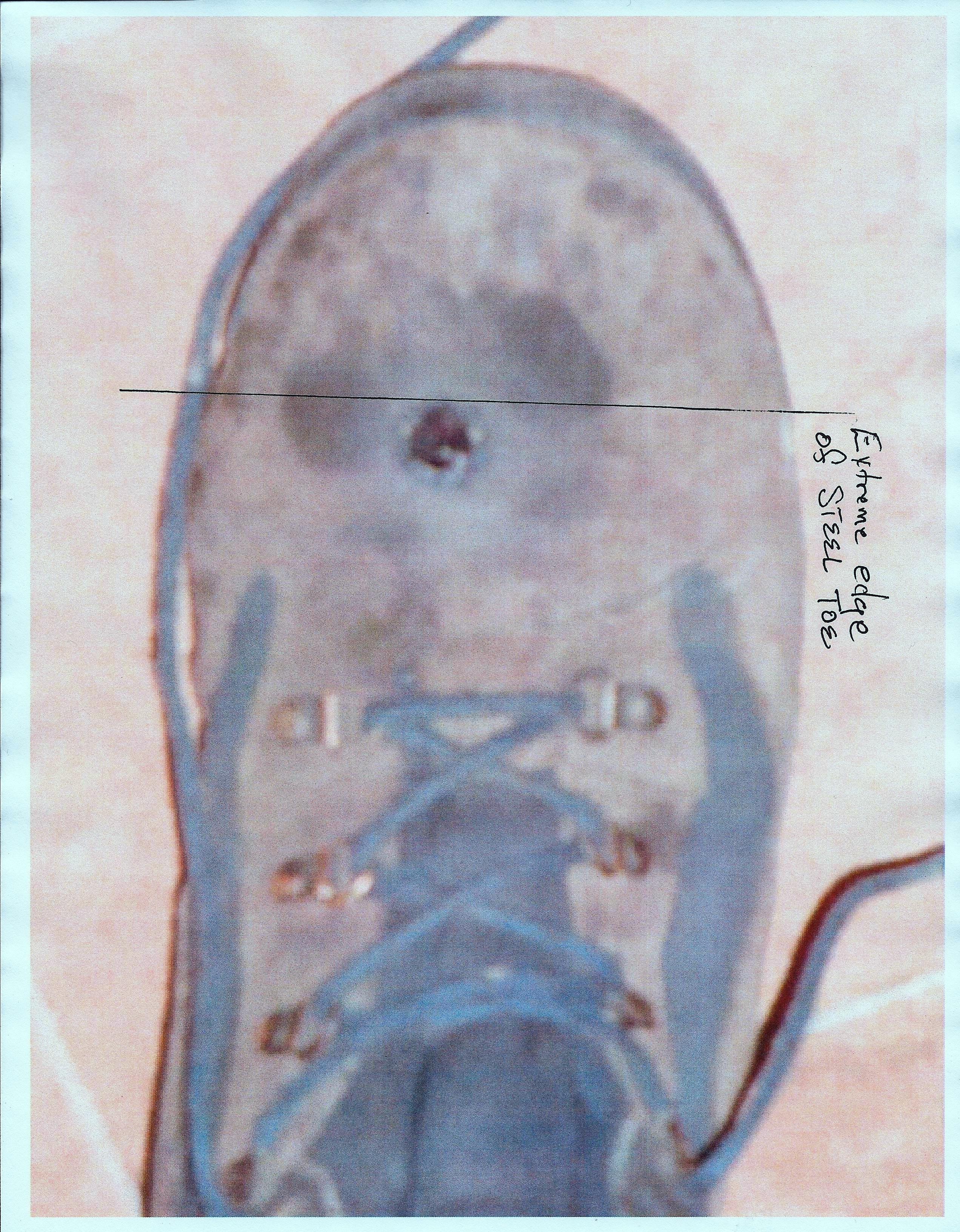
steel-toed bootThe examiner opined that the “Vet was not treated for hepatitis or had any symptoms of hepatitis in his STR. He denied that he was jaundiced. The air jet vaccine gun is plausible way [sic] of his getting this. However, he has other risk factors, like h/o multiple sexual partners w/ STD. The air jet injector gun is associated with hepatitis B transmission (see http://www.ncbi.nlm.nih.gov/pubmed/17879809). Hep C has similar transmission. The June 29, 2004, VBA Fast Letter (04-13) says that this is plausible. However, the vet also had multiple sexual partners which is also risk factor for developing Hep C. So the airjet gun, may have been the cause of his Hep C. This may be related to his military service, but he has other strong risk factors that make this less likely than not that this is service connected.” The examiner provides no rationale for why the Veteran’s multiple sexual partners is a more likely risk factor. The Board finds this opinion to be contradictory in that the VA examiner found that the air jet gun theory is a plausible basis for the Veteran hepatitis, but he also found that the Veteran’s multiple sexual partners may have been the cause of the hepatitis. The Board finds that this examiner’s opinion places whether the Veteran’s hepatitis B and C were caused by an air jet gun into equipoise as it both supports the theory and also finds another basis for the Veteran’s hepatitis. The question of a nexus now in equipoise, the Board finds that 38 U.S.C.A. § 5107(b) is controlling and that the benefit of the doubt should be provided to the Veteran, and thus service connection for hepatitis B and C is warranted.

(As an aside, I want everyone to take note. I began referring to the “air inoculation device” as a jet gun in my blogs back in 2008. With great pride, I see the term jet  gun  finally catching on.)

Assuming the Whacko’s  VA examiner in this case was also pontificating the same day on other claims from our Texas Johnny Vet, how about a few of these gems.

DVT and/or Peripheral Vascular disease

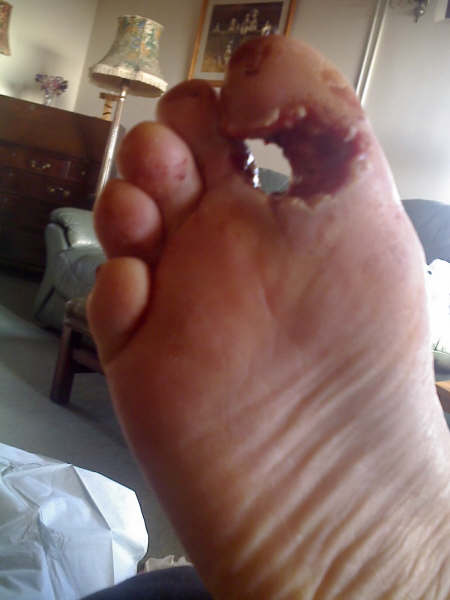
45-inch-hole-plus-peripheral-traumaIn the Board remand, the examiner was directed to expressly address and reconcile the contemporaneous in service findings of lower extremity pain, tenderness, and swelling documented, the SSA determinations showing that his DVT has rendered him unemployable since February 1995, and the lay statements attesting to a history of “blood clots” and related peripheral vascular disease symptoms persisting since his active service. See August 2013 Appellate Brief, March 2010 Statement from D. McGee. The examiner’s opinion consisted of only this remark “Vet checked no to cramps in his legs on his discharge physical. So his legs did not bother him. He was seen for acute knee and ankle injuries, however, there is no documentation of blood clots in his STR. His knees or ankles didn’t seem to bother him at discharge either. Therefore, the evidence is lacking that his DVT is service connected.” In addressing the DVT issue the VA examiner only wrote “Vet’s STR does not have evidence that his current chronic DVT is related to another service condition. His STR does not have any evidence of peripheral vascular disease.”

The vernacular of the examiner(s) is uniquely the same  again here.

Respiratory Disorder

dorsal aspect showing expansion of projectileIn the 2014 remand, the respiratory examiner was directed to expressly address and reconcile the contemporaneous in service findings of congestion and wheezing, the post service evidence of treatment for chronic bronchitis beginning in the mid-1990s, and the lay evidence regarding a history of recurrent coughing and related respiratory complaints persisting since his active service. The examiner wrote “The vet had one episode of wheezing on 5/24/77 which was attributed to a “cold.” He did not have any other episodes in his STR. He also said he did not have asthma on his discharge physical. The examiner did not note any wheezing either. So the evidence is lacking that his asthma is service connected. The Board notes that the VA examiner did not comment as instructed on the chronic bronchitis beginning in the mid-1990s or address the lay evidence of continuous symptomatology. Therefore, the Board finds that the Board’s remand directive was not fulfilled.

These are the ruminations of Veterans Law Judge Gail E. Strommen. If this is the new standard by which we will be judged, God forbid. We’re heading into a perfect storm of remands in search of coherent VA examiners who can read at a 9th grade level and remember to fetch the pertinent contemporary records before ruminating. Once they analyze each individual’s claims, they will be required to opine and subsequently support their findings or this just becomes another exercise in stupidity. We, who live in trailer parks or under posh, well-furnished overpasses, are required to produce cogent, well-reasoned treatises on why we are afflicted with disease and injury. Further, we are required to tie it to our service. Lastly, we are precluded from making any observations requiring medical expertise in diagnosing our ills.

Apparently, VA is not bound by these same codicils.

Asknod's VA Logo

Posted in BvA HCV decisions, HCV Risks (documented), Jetgun BvA Decisions, Jetgun Claims evidence, KP Veterans, Nexus Information, Tips and Tricks | Tagged , , , , , , , , , , , , , , , , , , | 8 Comments

CAVC–GOPAN V SHINSEKI- LINE OF DUTY FOR DUMMIES

vetcourtappealspromoOver the last eight years I have read law. Lots of it. Line of Duty (LOD) determinations are one of those fuzzy areas where everyone can agree to the same thing for five minutes. Then along comes another LOD appeal and all the existing law flies out the window. Here’s a 2009 Single Judge decision by old Judge Greene that illustrates the propensity of the BVA boards of three back in the early days to deny for no other reason than that they could. 

In 1961, VA instituted Boards of three Veterans Law Judges (VLJs), one of whom was a dual hatter-i.e. a Juris Doctor with a Medical Doctorate as well. I often wondered if s/he was remunerated at a higher rate. If not, s/he was a chump.  These VA Boards (twenty) were entrusted with hearing Veterans claims and deciding their merits. Rather than shuffle the Judges about geographically, each Board was assigned an area of the continental United States or one of the outlying areas such as Manila, Anchorage, Hawaii or Puerto Rico. If you, Joe Veteran, lived in Seattle, you would get the same Board over the life of any claims you appealed. This didn’t change until they reshuffled the deck after the passage of the VJRA in 1988 or the judges kicked the bucket/retired.

Another disagreeable aspect of the Board of Veterans Appeals back in the days of Mr. Joel L. Gopan was the lack of  a mechanism to appeal higher. Quite simply, if you lost at the BVA, that was all she wrote. Given the fact that most Judges realized which side of the bread was buttered, they tended to rule against Veterans. Their paychecks came from the VA and it was just de rigeur that they defend their own institution.

Meet Joel L. Gopan and his amazing 1971 technicolor CUE (clear and unmistakable error). Add in a side of earlier effective date and you just know this is going to be a good read.

Gopan-3553

Also, in conjunction with Line of Duty, I include a newer one by Judge Coral Wong Pietsch on the same subject. They bring two different theories to the table on LOD claims. Mr. Gopan’s is intriguing solely for the proposition that VA refused to recognize a clear LOD determination by the Nasty Guard that his injury occurred as stated and he was subsequently discharged for medical reasons directly attributable to it. On the other hand, Mr. Raymond Alley’s decision was remarkable for VA’s refusal to recognize their own rules and regulations saying they are not bound by the military service’s determination of LOD-in certain circumstances.

AlleyRL_12-691

Early VA justice has always been considered lopsided, slipshod and poorly reasoned. The reason for this philosophy is simple. It was. This is one reason we have so much success opening up the books and getting SC for some who have lost repeatedly. Oddly and fortunately, those of us too dense to appeal to the BVA are somewhat blessed. A BVA decision subsumes a piss-poor Regional Office decision and rarely can be reversed as Mr. Gopan did here. By failing to file an appeal and allowing a decision to expire, it leaves open the possibility or overturning it later on CUE. This is not to say that a reversal of a BVA decision in 1971 based on CUE below at the Regional Office is impossible but the menu of options (read reasons) is far more restrictive.

Joel’s  1971 BVA decision was a whitewash.

Although the service department had assigned a line of duty determination to Mr. Gopan’s disability, the Board concluded that it was “patently inconsistent” with the law administered by VA to hold that Mr. Gopan’s old adhesions and regional entritis (sic) could have been aggravated during his few days of service, especially since there were no new internal injuries found.  Thus, the Board determined that Mr. Gopan had no in-service injury while on active duty for training that would entitle him to benefits.

When Joel finally won thirty years later in 2001, he filed for appeal on two separate counts. Number one was the clear and unmistakable error that 1971 was the correct effective date and two, that he was erroneously denied in 1971 due to a misreading of 38 CFR §3.1(k). The fact that the RO granted his claim in 2001 precisely because the medical evidence from his STRs in 1971 showed it occurred in service made this a no brainer. Nevertheless, the BVA was not going to okay a gazillion dollars in a Fenderson staged rating from 1971 to now without a very big fight to the CAVC.

In line of duty means an injury or disease incurred or aggravated during a period of active military, naval, or air service unless such injury or disease was the result of the veteran’s own willful misconduct. A service department finding that injury, disease or death occurred in line of duty will be binding on the [VA] unless it is patently inconsistent with the requirements of laws administered by [VA].

Mr. Gopan was on firm legal ground in 1971 and got a rotten deal. His CUE hinged on the red above. Mr. Alley’s win hinged on the second half in blue. Thus you can see there is much more to LOD than spotting the acronym in the contemporary service records.

The 1971 BVA Board, as well as the 2007 Board of One Judge, both got it wrong. Granted, VA is loathe to overturn old decisions based on CUE. We saw this phenomenon in Macklem v Shinseki play out all the way to the Fed. Circus and quietly disappear. I have often theorized that the BVA’s refusal to grant my earlier effective date back to 1994 was born of the same rationale. Deny it and force it up to the CAVC. Obviously there are two possible immediate outcomes. The Vet may not appeal and secondly, the CAVC may see it VA’s way.

Mr. Gopan’s tenacity and inherent sense of justice wouldn’t permit him to let this one go. Mr. Alley had nothing to lose. He was headed to the locker room with nothing if he lost. Granted, Alley’s circumstances were arguable to some degree but the bottom line is Chevron deference. VA clearly wrote 3.1 to encompass a benefit of the doubt as to the severity of the crime that would forbid service connection. Judge Coral’s reasoning on it was superb. The codicil of willful misconduct will always be the legal standard rather than a dry parsing of the term “Not in the Line of Duty”. Here’s how it shakes out.

The applicable VA criteria for a negative line of duty finding are different from the military criteria. Specifically, Army regulations in 1962 provided that a negative line of duty determination
required substantial evidence that an injury or disease was “[i]ncurred or contracted during a period of unauthorized absence.” AR 600-140, para. 16 (1962). Army regulations further provided that “a period of unauthorized absence” was established when a service member “voluntarily absented himself from his unit or organization or place of duty without proper authority, or was absent from a scheduled duty or restriction, at the time the injury or disease was incurred.” (emphasis in original). Applicable VA regulations, however, require a finding that the claimant was “absent without leave which materially interfered with the performance of military duty.” 38 C.F.R. § 3.1(m)(1). Thus, the VA regulations applicable in this case, unlike the 1962 military regulations, require a finding that the claimant’s absence materially interfered with the performance of his duty.

The BVA generally is far more likely to deny anything which is not in the line of duty more so than they are to approve. Seeing the word ‘not LOD’ in the STRs virtually ends the discussion as does ‘willful misconduct’. Conversely, VA is loathe to grant when they see anything they believe smacks of willful misconduct even if the military record in question iterates it was LOD. This dichotomy throws off many VA attorneys and they never question it or the possibility the logic/regulation/statute is being transmogrified.

Simply put, a Line Of Duty determination is not determinative until the CAVC has spoken to it. We pretty much know what VA’s take on it is going to be. Considering they deny 85% of all decisions-right or wrong- we would be fools not to tug on the loose thread of this Walmarket® sweater to see if it unravels. Obviously, certain acts such as AWOL (absent without official leave) are inexcusable for the most part. I’ve seen them overturned for compassionate reasons so they, too, are not definitive examples of immutable case law.

Never for a moment think a Not LOD is the last word on the subject. Allow me to show you a glaring hole in Hepatitis C jurisprudence many VA attorneys fail to pursue. Remember, this is perfectly legal.

Imagine:

Johnny Vet is in combat in Vietnam. One of his buddies says “Here, shoot/snort some of this junk. It’ll calm your nerves before the gooks come through the wire tonight. It’s gonna be ugly.” Johnbo does this a few times and decides it’s not his drug du jour. He never does it again and 30 years later he discovers his actions  have caused a raging case of Hep C that’s killing him. Willful misconduct for doing drugs? No. And here’s why.

38 CFR §3.301(c) (3):

(3) Drug usage. The isolated and infrequent use of drugs by itself will not be considered willful misconduct; however, the progressive and frequent use of drugs to the point of addiction will be considered willful misconduct. Where drugs are used to enjoy or experience their effects and the effects result proximately and immediately in disability or death, such disability or death will be considered the result of the person’s willful misconduct. Organic diseases and disabilities which are a secondary result of the chronic use of drugs and infections coinciding with the injection of drugs will not be considered of willful misconduct origin. (See paragraph (d) of this section regarding service connection where disability or death is a result of abuse of drugs.) Where drugs are used for therapeutic purposes or where use of drugs or addiction thereto, results from a service-connected disability, it will not be considered of misconduct origin.

Hepatitis C is an organic disease. The plethora of secondary diseases associated with Hepatitis C is extensive. An infection often takes 30 + years to manifest itself. The clear reading of this regulation can only imply that if you contracted HCV due to using drugs/sharing a needle or straw and were never addicted or a chronic user is that your HCV can legally be service connected.

The mention of paragraph (d) is as follows:

(d) Line of duty; abuse of alcohol or drugs. An injury or disease incurred during active military, naval, or air service shall not be deemed to have been incurred in line of duty if such injury or disease was a result of the abuse of alcohol or drugs by the person on whose service benefits are claimed. For the purpose of this paragraph, alcohol abuse means the use of alcoholic beverages over time, or such excessive use at any one time, sufficient to cause disability to or death of the user; drug abuse means the use of illegal drugs (including prescription drugs that are illegally or illicitly obtained), the intentional use of prescription or non-prescription drugs for a purpose other than the medically intended use, or the use of substances other than alcohol to enjoy their intoxicating effects.

This was my chauffeur-driven Lexus many times. The "O" stood for obsolete. Note the pod with the marker rockets on the outboard pylon

This was my chauffeur-driven Lexus many times. The “O” stood for obsolete. Note the pod with the marker rockets on the outboard pylon

As you can see, paragraph (d) and paragraph (c)(3) seem at odds with one another unless you only focus on the phrase “organic disease” and can, in clear conscience, say you didn’t do it for it’s intoxicating effects.  Most importantly, you must reach the high ground of “I never abused drugs”. Hell, I smoked a joint fairly regularly before I took off to keep my hands from shaking and to get my courage up. Granted, I shared bongs but I doubt I got Hep C from it. I can’t say I did it for its intoxicating effects. I did it to remain sane. The very last thing I wanted to be was ‘intoxicated’ on any drug in a combat setting. You need every ounce of concentration to stay alive. And, no- rest easy, folks. I never shot up drugs. My Hep C was held to be caused by a transfusion subsequent to an errant 7.62 X 39mm projectile.

Before any of you ever just accept conventional wisdom on what a regulation or statute says, read it yourself and carefully parse the usage of each and every word/sentence to see how and why an action such as LOD or willful misconduct is, or can be, arrived at.

I have used the bolded purple above to help Veterans get service connection for hepatitis C, secondary to PTSD a few times. Again, a perfectly viable path to service connection exists if you are shaking like a leaf on a tree and decide a dose of white lady was preferable to desertion or going AWOL. I doubt any of us would have ever indulged in something we thought was going to result in a terminal disease a half century later.

The perfect cockpit seat we were never issued.

12932749_579936718840516_4301679800777096140_n


Posted in All about Veterans, CAVC Knowledge, CAVC ruling, KP Veterans, LOD and willful misconduct, transfusions and hepatitis, Veterans Law | Tagged , , , , , , , , , , , , , , , , , , , , , , | Leave a comment