BVA–CONNECTICUT YANKEE IN VA’S COURT


From the Life Insurance Co.

RO of New England

You know how you can sense things? Have you ever had that Deja Vu, look over your shoulder feeling ? I was spinning through a bunch of those BVA  Decisions on the link above and spotted this one.

http://www.va.gov/vetapp11/Files4/1140114.txt

Immediately upon reading the interlocutory part from the 2009 RO hearing, I scrolled back to see if  King Arthur here had a VSO sword carrier named DAV.  Friggin’ ESP , dude. I apologize for that. Yes, indeed. the way that hearing was going, I knew it had to be the DAV. At my 1990 RO hearing , my weapons bearer Ronbo Ampedout, started out by asking me questions just like this. I’m not referring to the drug stuff, but the general presentation. The only problem was we were supposed to meet at 0800 to go over it for the 1030 hrs Show and Tell. This was before Saturday night special  cel phones,  so I had no way to damp down my panic until he arrived at 1000. We quickly went through the motions. Everything I had to tell him had to take a back seat because he’d done this a hundred times.

“Just let me ask the questions , man. I’ll lead you up to it and then you tell it in your own words. First we’ll talk about the…  the hearing thing and what else? Oh yeah. The tinnitus. Got it. Let me, uh-huh, I better write this down. I do better that way.  Yeah, t-i-n-i-t-u-s.and what else were we… right. The back thing, yeah, hips too? Oh, that’s right. It’s all coming back to me now. You were in the Philippines, I mean Viethailand. So, we’ve still got 10 minutes. How about we go over to the VFW’s coffee pot across the hall? So, does the back thing bother you a lot?” He remembered I was in the Air Force.

They must all go to the same school:

At an RO hearing in January 2009, the Veteran contended that his current hepatitis C was related to inoculations by an injection air gun during basic training. He recounted that he later learned that these inoculations presented a risk of passing on bacteria and viruses. When asked by his representative, he noted that he had other lifestyle risk factors that could cause hepatitis C, including drug use. He also related that he had been told that exchanging toothbrushes or razors was another way of passing hepatitis C. When asked if he had ever exchanged toothbrushes or razors, he said that he had not. He recalled that his drug use history included sharing needles. He recalled that this may have included incidents during active service. However, the law prohibits a grant of direct service connection for drug or alcohol abuse on the basis of incurrence or aggravation in the line of duty during service. 38 U.S.C.A. §§ 1110, 1131; VAOPGCPREC 2-98.

So, Arthur. Do you mind if I call you Art? What do you think, I mean, after reading all that internet stuff on HCV and all, what do you think you got this from? Yeah. And the guns were like megadirty and bloody, huh. So, anything else? Drug use, huh. Yeah, but you got through that way back in 90 and you’re like clean now, huh. Yeah , and we talked about that razors and toothbrushes thing and your were, like, oh- you didn’t. I thought , well, never mind.

About this time Mr. DRO cuts in and says:

So, Mr. King. You say you had some drug use issues? Why don’t you lean a little closer over there to the microphone? Yes, that’s good. So, you used injectibles and smoked crack? Well, we all did that when we were younger. I know how that is. And VA doesn’t hold that against you, either. We’re here informally and its just here among us, so we can discuss it like men. You say you SHARED needles? Mmmmmmm. Yep. Sometimes they’re scarce and if you know him and he’s your friend, well, you have to trust someone, huh? They say that Hepatitis is really hard to transmit, anyway.

This goes on like a friendly tag team. You’ve seen the cop show with the good cop and the bad cop in the interview room? Well, just imagine two good cops lighting your cigarette and pouring the 7 up in the glass. Ice?  Everyone’s all smiles like the Cheshire cat at this Texas necktie party. These guys are your friends, man. They just want to make sure you get what’s coming to you legally. What could possibly go wrong with this deal…

The Veteran does not have medical training, education or clinical experience. He does not have the medical expertise to relate his current hepatitis C to air gun injection inoculations during active service. 38 C.F.R. § 3.159(a). Because he is not medically competent to make expert medical determinations, his assertion that he has hepatitis C attributable to in-service air gun injection inoculations during basic training are of no probative value. There is no competent medical evidence to indicate that the Veteran’s current hepatitis C may be due to in-service air gun injection inoculations during active service or any other incident of service.

And of course:

Also, as the Veteran described at his January 2009 RO hearing, and as indicated in medical histories of record, he has experienced an alternative risk factor for hepatitis C, which is the sharing of needles during intravenous drug abuse. This is lay and medical evidence of a possible intervening cause of his hepatitis C, for which service connection is not warranted. This is evidence that weighs against the Veteran’s claim as to medical causation.

Well. Bummer, Dude.
There is no competent lay or medical evidence to support the medical nexus element of the Veteran’s claim, or continuity of symptoms of hepatitis C from active service forward, and as discussed directly above, there is substantial probative evidence against these aspects of his claim. The Veteran may have received air gun inoculations during basic training, as described at his RO hearing, and competent medical evidence shows that he has current hepatitis C. However, as discussed above, there are several aspects of the evidence that weigh significantly against medical causation or continuity of symptoms from active service forward.

Yeah, I forgot to mention that.  What we’re gonna do is file for a reconsideration and get you a C&P exam, Arthur. VA supplies the nexus thing for you no charge. If its any consolation, dude,  I thought you nailed it. Your testimony was straight up and we had the pictures of the guys getting the shots. I don’t get it. They told me that 2004 VA FAST Letter works every time. I think we’ll  win for sure if we go for the reconsideration. What the hey, We can always appeal this to the Court. They like so owe you, dude. And I’m right behind you man. You know, like a wingman. FISTBUMP! High Five!

And so it goes. One Veteran at a time.

Posted in BvA Decisions, BvA HCV decisions, Frivolous Filings, Tips and Tricks | Tagged , , , , , , , | Leave a comment

More Footlocker Stuff

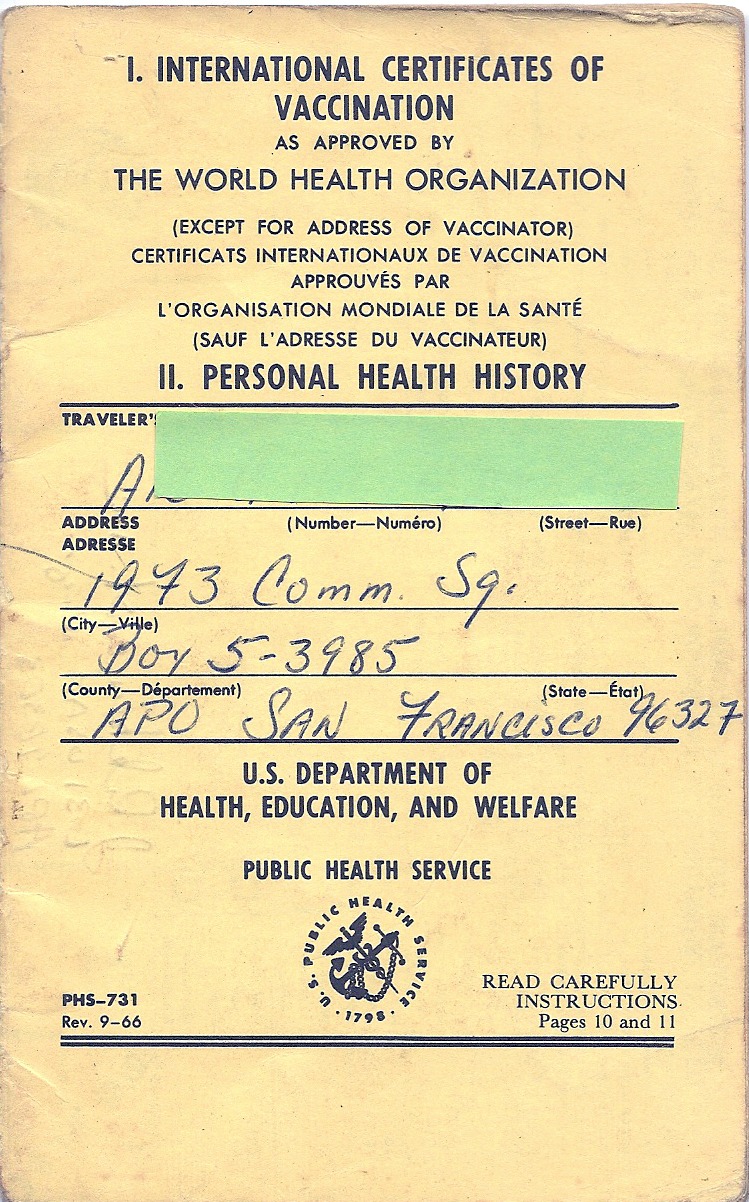
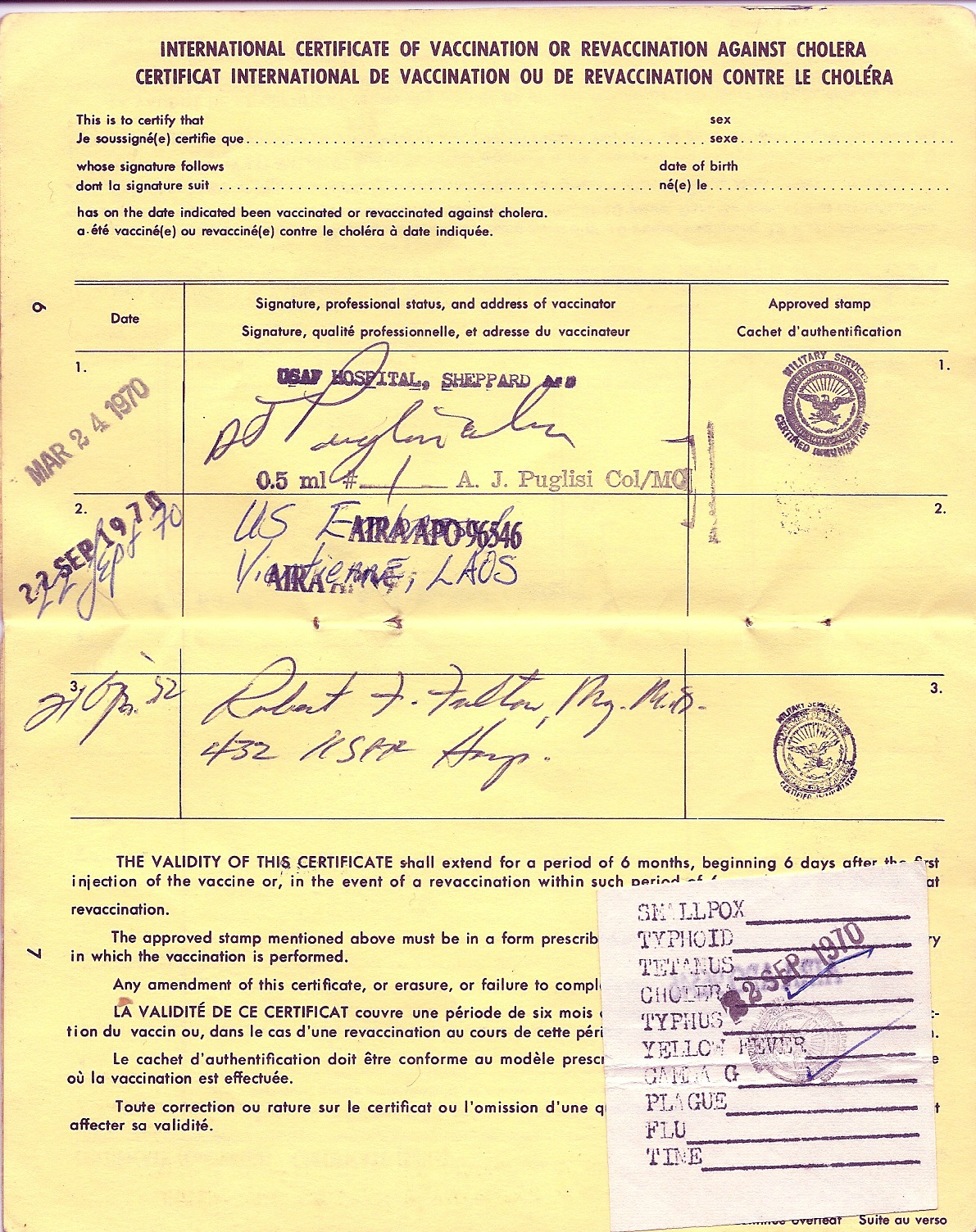
A member asked me if I still had my shot records from service. I said I didn’t. I lied. They were in between my helmet and my liner and they fell out when I felt compelled to separate them recently (I told you guys I’m a packrat). What he was asking about was if the shot record recorded the manufacturer and lot number of the vaccines used. I looked at  them all and could find none but found something even more amazing. I have never found any paper proof that I was ever “over the fence” in Laos. No orders. No ” Take the morning Klong flight to Vientiane”. Nothing. And right there in the medrecs is my cholera/Gamma Globulin shots right after my GSW transfusion. I couldn’t remember exactly what day it was other than late September 1970.

Check this out. The little white paper is from LS-20A which was Long Tieng Airpatch. The flight surgeon gave me the shots and put the stamp on it. The yellow book was kept in the U.S. Embassy at Vientiane. When I came back through, they transferred the shot record from the little white doomoflotchie to the yellow book. AIRA  was the abbreviation for Air Attache.

Posted in From the footlocker, Humor, Uncategorized | Tagged , , , | Leave a comment

CAVC–BROPHY v SHINSEKI-HELLO? McFLY?

What is it in this day and age of claims filing that would allow a Veteran to file a claim with no evidence? What also would possess them to ignore all requests for substantiation? And why, pray tell, would their lawyer sit on his duff and ignore his client’s claim?

Lawyers are light years ahead of legalzoo.com and VSOs. They do this for a living and some go the extra mile and do it for Vets. Veterans law is a nice cozy little backwater that has limited parameters. More slack is given to a Vet than in a civil proceeding on paper. We have found out over a century and a half that what is proffered is not always what is received, but that is not the discussion today.

Enter one Randolph J. Brophy who served in the Gyrines from 1966 to 1970. There is no mention of his serving in RVN , or anywhere for that matter. About all we know is that he received shots for different diseases while he was in the service. Okay. So did we all.

When filing a claim, it is incumbent on the claimant to list what he/she is filing for and to prognosticate on the possible reason for the disease /injury. This helps the VA to misconstrue it and look in all the wrong places. Eventually it gets sorted out if we are lucky, and a decade down the road we may or may not see a grant. I theorize that this is a way of delaying the inevitable. It’s like a new source of money for the VA in that they can program it into the 2022 budget cycle. Avoiding paying for it now keeps the current budget on track and within its predicted parameters. As an example, I point to the M2 money supply on credit cards. It only exists on paper. The debt is real and the funds are eventually realized, but this is not cold, hard cash. I digress.

In August 2008 Mr. Brophy filed for Hepatitis, erectile dysfunction and DM2  with two Form 21-4142s. which are requests to fetch medical records. That’s it.  You read that correctly. He had his able law dog (a non-attorney) at his side when he did this ( the record implies it). As is the SOP, he got his development letter from VA in November that said “Whatdaya got? Send it in.” He replied with a terse ” Nothing to add. Decide my claim and  send me the shekels”.

December arrived along with Seasons Greetings from Uncle Victor. They were desperately trying to fathom Randolph’s risk factors as they had none to deny on. They dutifully asked for anything and everything again. Silence greeted them and as is their wont, VA denied him. The January 2009 denial included a brief note that, in the absence of any communications or N&M evidence filed, VA really had no other alternative than to deny.

What happened next is really bizarre knowing he had a law dog:

In April 2009, Mr. Brophy, again through current counsel, submitted a lengthy Notice of Disagreement with that decision. That Notice of Disagreement, however, contains no arguments based on the specific facts of Mr. Brophy’s case; rather, it contains only a litany of laws regarding VA’s various duties. Mr. Brophy ultimately appealed to the Board. In his Substantive Appeal, also submitted through current counsel, Mr. Brophy again made no factual arguments, only general assertions that VA failed to consider and properly apply numerous statutes and regulations.   Brophy v. Shinseki (2011)

At this point you and I would wake up, smell the coffee and get cracking. No, actually we’d have done so at the beginning if we had our wits about us. What ensued should not have come as a surprise to Randolph and Perry A. Pirsch, Esq. As an aside, what is it with the Esquire crap? That is sooooo passe. It’s like Jr. or Nod III. Does that imply Perry’s a vertically challenged person that needs more titles after his name? Perhaps one who feels he’s mentally inferior to his peers?  I vote for the inferior theory judging by his legal acumen.

At any rate, Randy and Perry got the deep six in August 2010. Assuming the RO didn’t shred his file and ignore something, it appears as though they had less to read than the funny paper section of the Monday morning Charlotte News Observer. Based on that, even I would be forced to surmise as much. We all know I am no fan of the VA, either.

On appeal to the Court, the problems start to pile up. As I have pointed out to Vets in the past, anything you want to argue in front of the Court better damn well have been argued in front of the RO or the BVA. Since the Court is not a trier of fact, you cannot arrive with a laundry list of  new reasons why your claim should have been granted.  Perry must have slept through that part of his legal schooling. He and Randy promptly busted out the brand new proposition that his risk was due to jetguns, or, in the alternative, the scars on his wrists. They didn’t go into a detailed explanation of why the scars on the wrists were indicative of the contraction of HCV. That was left to Judge Hagel to decipher. He politely declined:

As the Secretary points out, at no time before the regional office or the Board, however, did Mr. Brophy identify his in-service inoculations as a risk factor; indeed, he did not identify any risk factors at all, despite VA’s express request that he do so. He may not now allege error because the Board failed to read his mind. The Court finds no error in the Board’s failure to expressly consider this purportedly “favorable” evidence.  Brophy supra

Nota bene. This may be the only time you see me agree with VASEC on something. Footnote # 3 at the bottom of page four on the electronic publication is quite facetious:
Mr. Brophy invites the Court to take judicial notice of “multiple articles published on the Internet” that he contends “describe[] a problem with airgun injectors.” Appellant’s Reply Br. at 2. The Court declines the invitation, as Mr. Brophy has not demonstrated the foundation necessary for the Court to do so: that such a “problem” is not subject to reasonable dispute.  Brophy supra footnote

Ah, grasshopper. Now you see the defense. As for the scars on the wrist, the immediate thought that comes to mind is that he attempted suicide with shared razors, but that is not in the STRs. Randolph’s second theory was that he didn’t get a Dog and Pony show at QTC, but that falls flat like a cheese souffle in a room full of rugrats. Aside from arguing this at such a late date, he gave nothing to them to provoke one.

The third and last gasp was the old “duty to assist” was violated. Well, pilgrim, if you don’t ask them to play Rover and fetch, you can’t bitch on appeal. All these late-breaking revelations were to no avail, nor should they have been. Randy and Perry were out cutting bait when they should have been fishing. As an attorney, Perry’s performance was more a case of being AWOL.

I wrote a post about a BVA decision a while back and entitled it “Boldly going nowhere” as a humorous redo of the Star Trek phrase. This far and away surpasses it in spades. I almost wished I had saved the title for one similar.

https://asknod.wordpress.com/2011/09/26/bva-boldly-going-nowhere/

Mr. Brophy and his erstwhile mouthpiece lost this as we can see. It isn’t even a good teaching moment for Vets. It’s tragic in my mind to see a Vet commit claims hari kiri. If he had been pro se we could all point and exclaim ” Well,duuuuuh!”  Doing it with someone who has been granted a law license is unfathomable with behaviour like this.

If and when I find myself similarly situated, I intend to find the brightest and the best. I would have no qualms about sharing any moneys with them. Going up to the Court pro se or with this bozo would be like climbing Mt. Everest barefoot. That, if anything, is all you can derive from this judicial exercise.

http://search.uscourts.cavc.gov/isysquery/fe9cd874-44ed-4e18-8114-e8208ad608c8/66/doc/
Posted in CAvC HCV Ruling | Tagged , , , , , , | 3 Comments

CUE–FAILURE IN DUTY TO ASSIST

In 1994, the Court came to a very tortured decision that has disenfranchised Vets ever since. I refer to the holding in Caffrey v. Derwinski. This was hard on the heels of the Russell decision of 1992 that brought us the “manifestly different outcome” and removed the benefit of the doubt argument from CUE consideration.Prior to Russell, we had a two pronged decision. An error had to be obvious and it had to be prejudicial to the Vet. Russell added that if the error would not have changed the outcome then it was not clearly and unmistakably erroneous.

Caffrey moved the goalposts much further down the field. It put forth the proposition that an incomplete record was not an incorrect record. This was the advent of the “semantics as law” phase of the Court. While Caffrey concerned itself with private medical records held in private hands away from the VA’s grasp, subsequent decisions have tried to encroach more and more on what constitutes “private”. VAMCs have gone so far as to start using “in the community” as a catch phrase for these records. Caffrey’s holding that the failure in the duty to assist is especially troubling from many aspects. Once the VA camel’s nose is in the tent, Vets can be assured that the rest of the animal is not far behind.

38USC § 5107 is unequivocal in this respect and 38CFR § 3.159 follows it chapter and verse. The dichotomy seems to enter when the decision (denied) is final and a CUE claim is raised. When this happens, the failure to assist is now permissible. Now we have two sets of rules that unarguably conflict with one another. The premise that an incomplete record is not an incorrect record is all well and fine if VA wants to interpret Congress’ intent in that regard. The slippery slope I address today hinges on the obverse of that statement. When does an incomplete record enter into the prejudicial arena of an incorrect record?

Russell expounded extensively on the premise that a CUE determination, by rights, can only examine the record on the facts that were before the adjudicator at the time of the prior adjudication. What Russell never touched on, and what Caffrey purports to interpolate from it, is that the record can be incomplete and somehow not be prejudicial to the Vet. In a word, this sucks.

If a Vet puts the VA on notice that records are available “in the community” and asks that they be obtained, this is required, or obligatory, for the VA. It has even been held that once the VA is aware of these records,  they are either required to obtain them or have you sign a 21-4142 which permits them to do so. Ignoring your request is right out. The cutoff point is the CAVC. If the error is uncovered, a remand to obtain them ensues. If  the Vet loses hope and gives up, the incomplete record, an admittedly incorrect record, is allowed to stand and a revision based on CUE cannot be based on the failure to assist.

Caffrey hung its hat on Porter v. Brown,  5 Vet App. 233 (1993). Porter, however dealt with records that were developed after the final decision. The Court reasoned that they had left open the question of whether the failure in the duty to assist could constitute CUE. Whereupon they turned around and did just that.

Caffrey can trace its roots back to Ivey v. Derwinski (1992):

While Ivey did not specifically request his private medical records and sign the VA
release form as the veteran did in White v. Derwinski, 1 Vet.App. 519 (1991), he put the VA on notice of their existence. Ivey v. Derwinski (1992)

White v. Derwinski (1991) again dealt with private records:

The “duty to assist”  arises when a well-grounded claim is filed. 38 U.S.C. {1 Vet. App. 521} � 5107(a); 38 C.F.R. � 3.159(a); Murphy v. Derwinski, U.S. Vet. App. No. 90-107, slip op. at 5 (Nov. 8, 1990). The statute, 38 U.S.C. � 5107(a), does not explicitly require the Secretary to assist a veteran in obtaining private records. The regulation, 38 C.F.R. � 3.159(b) (1991), is broader than the statute, and does require the Secretary to help the veteran obtain private records.

The Court vacated and remanded White to comport with the above holding. So we can see there is ample precedent for the supposition that the duty to assist is mandatory for private records. The problem seems to arise when we allow our denied claims to lapse for failure to appeal to the next higher venue. This is the tenuous concept that Caffrey tried to excavate from Russell.

Let us take this one step further and enter the theatre of the absurd. When we file, VA is expected to obtain our contemporary records  from  the St. Louis NPRC. I have had numerous members come to me and say that NPRS has no medical or other records for them. Fortunately most (but not all) can be tracked down to your last duty station hospital. What of those that can’t? Is VA remiss in being unable to provide that which is needed to substantiate your claim? Obviously, VA will purport  to go through the motions to obtain them. You are put in the unenviable position of having to do their work if they don’t (and they never do.) Your Congressman/Senator is often your last resort in this. The “what if” factor still rears its ugly head in spite of all that is attempted sometimes.

I was brought up short by a distinguished attorney yesterday for not acquainting myself with the dissent of several Judges of the Court in the CUE claim against Mr. Keith Roberts. Mr. Walsh, his counsel,  made the point when he said that the original panel of three that heard the preliminary case were the three who dissented in the ensuing en banc decision against Mr. Roberts. He rightfully reasoned that if the three had continued the case as a panel, Mr. Roberts may well have simply had his claim terminated rather than be liable for fraud and jailed. While this conjecture is a case of could of, would of and should of, his point is well founded. The Court sometimes seems to operate against the best interests of the Veteran.

With that said, I decided to read the not-so-concurring opinion of Judge Steinberg where he dissented in Caffrey:

Hence, the Court’s tautological distinction between an incomplete and an incorrect record seems manifestly at variance with a fundamental precept of Russell. Surely, it can just as reasonably be said that a record which causes the adjudicator to deny a claim when the “correct facts” would manifestly have produced the opposite result was an “incorrect” record and not just an “incomplete” one. In any event, I find nothing in Russell to warrant the incorrect/incomplete-record distinction which the majority attempts to make.  Caffrey (1994)

Having discussed the issue of CUE and private records, allow me to throw a new wrinkle in. I filed a claim for my back in 1989. I was denied by the RO without a C&P. They granted one for my hearing but not for my back. I complained in my NOD and they promptly ordered one up. It was a put up job. The VA doctor found the problem area (L5-S1) but could ascertain nothing from the x-rays other than lumbar lordosis and possible ankylosing spondylitis.  He made no determination on the etiology, did not review my STRs and did not venture a nexus as to the cause. Pointedly, he also never reviewed any of my private records. The RO put on their very best Ben Casey duds and said it was not service related. This was printed on a single page that said “Sorry Charlie”. No Reasons and Bases. Nothing.

I was stationed at a very remote airstrip with 20 other guys when I injured my back. We all used a hospital contracted by the Government to take care of us. This included Air America and several other spook operations. The records of my treatment were never associated with my STRs. I found this out at my RO hearing when I pulled my C-file over and looked at it. There simply were no records of that time (October 1970 to May 1972). It  was as if the earth had swallowed me whole and spit me back out at Edwards AFB in July 1972. VA did not believe my testimony about the additional records in spite of my pleas to obtain them. In desperation, I called long distance to the tune of $80.00 US and asked them to send the documents. Something was lost in the translation because I got one page that partially documented the injury (x-ray results). VA used that to prove two things. First, there was no evidence of a back injury and second, that there was no evidence of a hip injury. They made no effort to obtain anything. Apparently in VAland, Veterans regularly pull up to private hospitals at the ass end of nowhere during a war and pay good money out of their own pockets for x rays without even consulting a doctor.

My CUE claim is before the Poobahs in D.C. I’ve debated putting up a poll like the one for Leroy Macklem. This one would ask if CUE can attach to a final decision where the VA erred in their duty to assist by not obtaining “service department records” held by an entity other than the government. Mind you, we are not discussing records “in the community”. These are actual records commissioned and paid for by none other than Uncle Sam.

Assuming VA denies, I would be forced to accept some absurd results. Being “official government records”, VA’s failure to obtain them would not technically be covered by the holding in Caffrey. If VA decides to employ mission creep with the regulations, I suppose they would repeat the mantra of “incomplete, not incorrect”, therefore not CUE. With this holding, they would open Pandora’s box for all manner of new interpretations.

What if? What if they decided one day not to obtain Joe B. Sixpack’s STR’s from St. Louis and proceeded to a rating on a knowingly incomplete record? What if Joe Bob didn’t appeal and then attempted to revise it via CUE? Does the VA get a bye on Caffrey and 38 CFR §20.1403(e)? Vets by now can see the slippery slope I am painting. The willful decision made by the RO, and compounded with interest by the BVA, not to obtain the records when apprised of their existence, content, and location created the very same incomplete record that they now will argue isn’t CUE. Judge Steinberg called this circular logic. I call it excrement emanating from a bull.

You may see me in D.C. seeking my Warholian fifteen minutes in a year or two. I thought VA was niggardly with their funds when they sent Leroy to the EAP showers. I can only assume I will get the same treatment. I dug this one up and I think it is very on point:

Fowler v. Califano, 596 F.2d 600, 604 (3d Cir. 1979) (remanding social security claim where record of appellant’s prior claim, through no fault of her own, had been lost and appellant provided evidence to reconstruct the record; the court was “inclined to agree” that it is unconscionable for the Administration to take a position that in effect permits it to profit by its own errors“). 

Since this holding precedes Caffrey and is Fed. Circuit precedence, it supercedes any finding of the Court vis a vis official government records. Well, that’s my theory anyway. As we all know, VA will “construe” it in their own inimitable way and come up with some tortured, pretzel-shaped interpretation of § 5107 or § 20.1403 that supports their view. What remains to be seen is whether the Court, like a docile cow, will follow suit.

Look , Ma! Off road Official Service Department Medrecs!

Posted in BvA Decisions, CUE, Tips and Tricks, Uncategorized | Tagged , , , , | 1 Comment

Green vs. Black Berets

I have two rules.

Rule #1- I am here to win my claim

Rule #2- If denied, refer back to Rule #1

7/28/89

I was at the VAMC in American Lake last week and saw a young Army soldier with the newer headgear. By that, I mean the black beret. I thought to myself that the fashionistas had finally infiltrated the military and were now in charge of Wardrobe. Let me say this about that (this was one of John F. Kennedy’s favorite phrases).

The Army, or any branch of military does nothing, if not for a reason. They are a staid and long suffering bunch with much history. The green baseball cap has been the standard fatigue headgear for more than half a century. I remember well the inception of the Green Berets at Ft. Bragg in the early 60’s. My father was the  4th Wing commander at Seymour Johnson AFB so I went over with him on weekends to hunt doves and watch them field test the new AR-15/M-16. They were also doing acceptance trials on the M-60. We occasionally saw some of the new “Special Forces” as they were known at the PX there. Nobody ever called  them Green Berets. The Beret was a symbol of achievement like no other at that time. A SF team could land in hostile country, had the power to set up a new government, take care of medical needs and much more. They could organize and arm a private army within 90 days and make them into a credible force. They were a country unto themselves. They didn’t take protein pills and put helmets on because they didn’t need them.

Their fellow soldiers realized these guys were way past Rangers. Their authority to do as they pleased was legendary. With that kind of glory, normal soldiers probably have yearned to wear one over the years. John Wayne might have glorified them and Sgt. Barry Sadler sang about them, but nothing prepared you for what they could accomplish back then.

What has changed is the fashionistas trying to infuse that je ne sais quoi  into the rank and file troops. While a pay raise would have been more on point, the black beret was cheaper.  Corporal Joe Blow, clerk typist/apprentice administrator now walks tall with his new headgear. He can feel proud that everyone will now view him as “warrior”.

I used to watch the WHITE STAR teams lift off in AirAm H-34s from Long Tieng in the fall of 1970 and had no desire to be one. You can keep the mosquito bites, the leeches and the Malaysian pith vipers, thank you. I’ll take a cockpit at 1000 feet and triple A. A Chivas Regal over imaginary ice at 1730 was warrior enough for me . Anything less was just uncivilized.

Special Forces were very unassuming and quiet. They didn’t brag. They couldn’t-because it was classified. As an analogy, these are what I see as the perfect attributes for winning a VA claim. Focus. Purpose. Agenda. A take no prisoners approach. My way or the highway.  Promises were made and gifts were exchanged. Now its payback time. You broke me, now fix me and be quick about it.

By coming to this site, Veterans are choosing to win a claim, not file and pray. An aggressive approach based entirely on offense is the attitude you have to embrace.  For too many years VSOs have infused Veterans with the idea that if they piss off the VA, their claim will be sent to the bottom of the in-basket or denied outright. Similarly, they convinced several generations that the only path to a grant was through their front door.

If you are not daring and innovative, choosing the black beret may be the best option. If you are inherently disinclined to be proactive and loathe to learn how to fight and win, you’ll find yourself in good company with a National VSO outfit. They are certainly set up to accomplish this for you. Your odds of winning are diminished, but it will cost you nothing in time and effort. It is the most painless way to attempt it.

This may surprise you but I find most who I assist in this are not what I call “Union” types. Most are self-starters, businessmen, and many who owned their own companies. For them there is no team in “I”. This is the quintessential one on one knife-fight in a dark alley. It may be why your success rate is so high in this.  28-2 in the Vet’s favor certainly says something about the technique I advocate.

Veterans who are willing and eager to kick ass and take names cannot wait for the normal flow of life. Type A Vets tend to be do it yourselfers and have no patience for a slow measured approach. This is what I have seen in virtually every one of you who have come here and asked for my help. Seek answers- don’t wait to be told them. A well-coordinated attack is infinitely preferable to a static defense that never moves.  Know your enemy above all else. 

I suspect most of you have the fire in your belly or you’d be sitting in a waiting room reading last year’s copy of Outdoor Life patiently in line to talk to your S.O. I would also bet you are proactive and know a shit ton about this disease you’re fighting to win. If you don’t, you had better start googling it and get well-versed in it. You do yourself and your doctor a disservice by your ignorance. Expecting him to be Dr. Knowitall is dangerous. I would hope you have a 50-50 hands on with him and there is some quid pro quo between you.  My doctor almost killed me. Let me rephrase that. Several doctors have almost killed me in the last four years. Do what President Reagan advocated; Trust, but verify. The Internet has all you need to know about this bug to make informed choices on treatment. I sure don’t need to add my voice to it.

Learn what you need to know legally here. I have one setting which is win. A denial must be view as being temporarily put on hold. A Dear John letter from VA should be a wake up call to see what you did wrong. An aggressive claimant will get these. I have. The trick is to view it as almost expected and keep your sights on the goal. VA can be worn down as we see. They deny in hopes you will give up. They plan their financial budgets around the fact that 85% will go home, complain, pop a top and turn on the TV.

Only one thing to win is left and that is the nexus letter. We have that covered six ways to Sunday like VA. Dr. Cecil is our “VA Examiner ” who can supply that. Because ex parte justice travels at the speed of growing grass, you have plenty of time to ask questions and hear from others here on how to do the ass kicking.

I really don’t mean this as some kind of Pep Talk, nor do I mean to denigrate the wearing of the black beret. We can’t all be SFs or have tiger blood in our DNA like Charlie. What we can do is avoid being sheeple around the VARO. I would think that if anyone could piss off the VA, I sure would have done it by now.  Hell, I’m the Poster Child for that. Adding my Independent Living Program requests in on top of appealing everything I’ve ever filed for is not going to win friends or influence raters at the RO. If it was going to get me in some kind of trouble, I doubt they would have granted it all.

Whatever you do, don’t get mad. Get dissatisfied and fight for what is yours. Anger generates a lot of hot air and causes Global Warming. We don’t want that.

Posted in General Messages, Independent Living Program, Introduction-Read these first, Nexus Information, Tips and Tricks, Uncategorized, VR&E | Tagged , , , , , | 1 Comment

WHAT WILL THE FED. CIR. DECIDE IN MACKLEM?

Posted in Fed. Cir. & Supreme Ct., polls | Tagged , , | 10 Comments

Fed. Cir.–SHINSEKI v MACKLEM– PART 2

And here we thought old Leroy was going to collect Monty’s cookie jar behind door #3. Not! The VA decided this was simply too big a cookie jar and filed to prevent his judgement from being enforced. Here’s the audio of the argument posted yesterday.

http://veteranslawlibrary.com/files/Fed_Cir_Audio/2012/MacKlem_2011-7034.mp3

As you may or may not know, old Leroy filed for CUE on an old 1950 claim and the chuckleheads at the RO accidentally sent out a preliminary settlement telling him how rich he was going to be.

https://asknod.wordpress.com/2011/09/27/cavc-macklem-v-shinseki-leroy-macklem-come-on-down/

It had only two of the three signatures needed to make it legal. What he didn’t know was that VA had decided, in its infinite wisdom one day, to institute what was known as the Extraordinary Awards Program. One little problem. It was illegal because you cannot have another decision on a claim behind closed doors with no representation. That, in essence, is a de novo adjudication after an adjudication. Its like a trial in the back room after the trial to make sure the jury got it “right”. In this case, it was a tool to give a haircut to Veterans’ claims where they were awarded over $25,000.00 at once.

The Purple Heart VSO brought this to trial and won. The EAP was deep sixed and everything returned to normal. Or did it? There was no “formal” EAP now, but if I know the VA, there was a new “informal” procedure that gave these things the hairy eyeball for some way to reduce them. Enter Leroy Macklem. Unbeknownst to Leroy, the VA was still doing this after they were told not to.

Leroy’s award back to 1950 would have made him very, very rich. This rankled the VA so they sent it in for an EAP review. The only thing wrong with this picture was that the EAP had been ruled dead in the water already as I mentioned above. Leroy’s law dog argued that he won but for the illegal actions of the VA. He lost at the single judge disposition but returned for a win by a panel. This is what the VASEC is now contesting.

When this occurs, the decision reverts and the appellant, Gen. Shinseki (ret.) gets first billing and the appellee (defendant Leroy) gets second shot. The VA counsel (government) argues that they want a do over. They aren’t happy one bit. Ignoring the fact that this is  res judicata, which is VA legalspeak for a done deal judicially speaking, they beg for another bite of the apple. Their argument is ingenious (for them).

VA contends Leroy’s award was actually not quite an award. It was good to go, but needed three signatures. It had only two. VA says that means it wasn’t a “finding” or “holding”. Their repair order is to send it back to the RO for a “new” de novo adjudication. Paraphrasing what the Fed. Cir. judge and the VA counsel said went like this:

Judge: So you’re looking to overturn Macklem?

Counsel: Well, not exactly, your Honor. We want to remand it down to the RO for a de novo decision. It wasn’t complete with two signatures.

Judge: But wouldn’t that mean Mr. Macklem’s award would be overturned?

Counsel: Well, we don’t know that ahead of time. The decision hasn’t occurred yet.

Judge: Well, the CAVC said his CUE claim back to 1950 has no merit and would never be granted but for the error. So how would that play out? It seems to me that your boss (VASEC) has made his feelings on this subject clear. A remand would almost guarantee a denial for Mr. Macklem. If the boss says “Here. Look at this again. You know I’m looking for a denial and I write your paycheck.  Make it so, Number 1”.

Counsel: Your honor, we don’t know that. The CAVC is forcing us to accept a decision which was never final which isn’t legal. The Court only has jurisdiction over final BVA decisions.

Leroy’s law dog got his chance at the microphone and had a mouthful to regurgitate. He rightly reasoned that but for the error with the EAP fiasco, Leroy would be driving a Lamborghini right now. By sending him the preliminary decision, they had, in essence, agreed with his CUE theory. Mailing him a final decision and a monster check was just a formality. The RO had made its decision and it was a done deal. Reneging on that  wouldn’t be according to legal Hoyle. Res judicata was raised as an affirmative defense and the judges sat and listened. The legal beagle cited to Shinseki v Sanders as the controlling precedent for the procedural error.

http://www.law.cornell.edu/supct/html/07-1209.ZO.html

Last but not least we are treated to the real meat of the appeal. Leroy’s mouthpiece recited these three salient reasons why this should not come to pass and Leroy should be allowed to enjoy the ill-gotten fruits of his CUE filing:

1) It’s prejudicial. If VASEC takes this down to the raters at the VARO, you know what they’ll find. VASEC signs their check and they can see which way the legal wind is blowing. The twenty years and a golden parachute go out the window if they find in Leroy’s favor.

2) Remand is simply not needed. But for the EAP imbroglio, the decision would have gotten it’s third signature in due course;  it would have been mailed, and we wouldn’t be here today having this discussion. In short, this has been decided and a new decision isn’t in order. The Court found error and the case is done.

3) Of real import to you and me, the lawyer enunciated that which we know to be true. Leroy is 88 years old. VA will drag their collective feet on this until he blows the canopy and punches out. We know the old saw about delay and deny-until we die. Well, the lawyer made that perfectly clear to the judges.

On rebuttal, the VA counsel tried her mightiest to dispel that scenario by saying “Gee, your honor. Look at it this way. His widow can take over his claim and if she wins, she’ll collect.

Since I have failed to renew my subscription to “Santa Knows All” and the “Tooth Fairy Chronicles”, I find myself  bereft of faith that Leroy will get a fair shake. Apparently his law dog does, too. If his spouse fails to maintain her health, I suspect the VA would say the offspring of their union do not have a constitutional right to any accrued funds that may be due Leroy. This presupposes that anyone at the RO would have the audacity to cross swords with VASEC and grant the CUE.

Posted in Fed. Cir. & Supreme Ct., Important CAVC/COVA Ruling | Tagged , , , | 2 Comments

VA Letter 211b 98-110

Don’t any of you wonder where this went? In the circular file, apparently…

http://democrats.veterans.house.gov/hearings/schedule106/apr00/4-13ben/jilem.htm

Postscript: There are actually numerous mentions of this letter in different decisions. Here’s one I found on Google.

http://www.va.gov/vetapp08/files1/0804757.txt

Risk factors for hepatitis C include intravenous (IV) drug use, blood transfusions before 1992, hemodialysis, intranasal cocaine, high-risk sexual activity, accidental exposure while a health care worker, and various kinds of percutaneous exposure such as tattoos, body piercing, acupuncture with non-sterile needles, shared toothbrushes or razor blades. See VBA letter 211B (98-110) November 30, 1998.

This one also pops up but it has everything to do with illegitimate procedures employed by VA until they were caught cheating and were summarily precluded from doing this.

http://www.vva480.org/extawltr.pdf


Posted in Congressional HCV info, HCV Health, Nexus Information | Tagged , , , , , , | 3 Comments

FIGHTER PILOT HUMOR

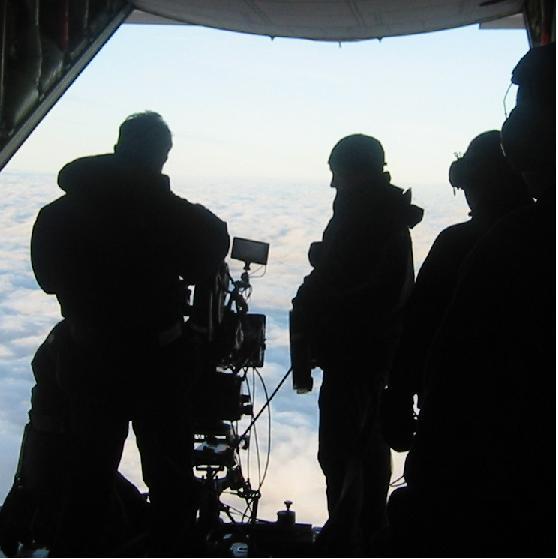
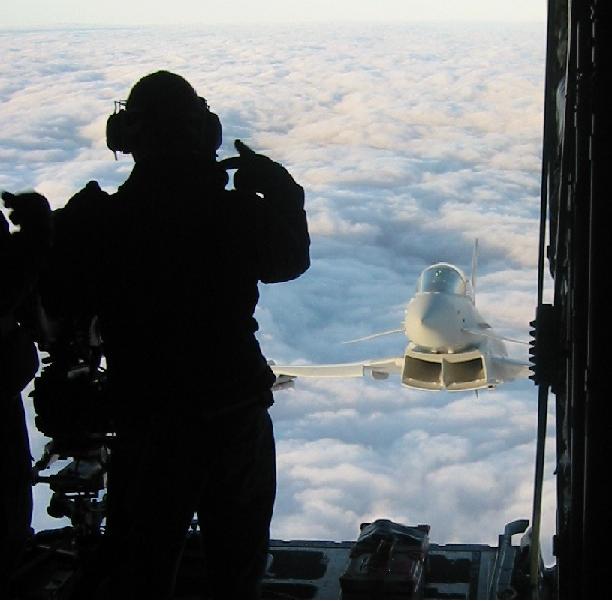
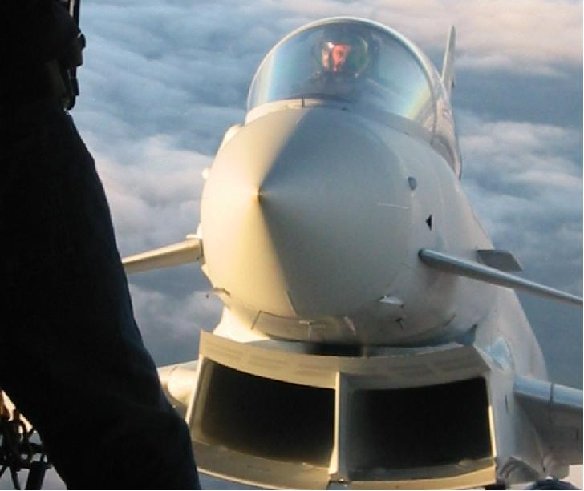
 British Royal Air Force Typhoon pilot flies up to the back door of a C-130 (Hercules) for a photo opportunity.

He radios “how much closer do you want me?”

  Photographer radios back “How close can you get?” 

At this point, the Pilot radioed “Close enough?”

Fighter Pilots have such an inflated sense of humor.

Posted in Humor | Tagged , | Leave a comment

RECESSION and VAMCs

Something seems amiss in the new “non-economy”. Since the beginning of the recession, many have lost employment and, by extension, their health care. Those of us who are Veterans have always had one constant we could fall back on in hard times, This was the promise of a grateful nation that we would always have health care and not be forsaken.

Sadly, I have to report that the promise is ever present but the reality is evaporating. I now have heard from Vets who tell me they cannot get treatment from VAMCs or VAOPCs. The problem is not so much in signing up as it is in getting an appointment.

When we signed up to serve, promises were made and gifts were exchanged. Now we are faced with trying to cash in on the promises we were given. VA is being recalcitrant and not very forthcoming with their end of the bargain.

My friend Harvey traveled from South Dakota to Las Vegas in desperation. There are no gastrodocs or Hepatologists available to him up north. VA outsources it all. Now they aren’t funding the outsourcing. What better way to get service than by voting with your feet. No dice. As soon as the folks at the LVVAMC  figured it out, the jig was up. Their reasoning is, well, who knows what their reasoning is?

A Veteran is a Federal person by rights. They have no state affiliation where the Government is concerned. It’s not like welfare where you have to be a resident of a state for a period of time before you get benefits. A Veteran should be able to present himself at a VAMC anywhere in the US or the overseas VAMCs in the Philippines, Puerto Rico, Guam etc. and be given the same services. It would be unreasonable to send a Vet back to the State he had most recently lived in for medical care from, say, Guam.

It seems all that has changed. While it seems you can show up and register, getting an appointment might result in death before any meaningful medical intervention occurs.

Harvey reports he has been in contact with other HCV positive Vets who find themselves similarly situated in that they are without meaningful medical coverage. Apparently the VA is reducing its coverage and help for HCV patients by shrinking the number of clinics that specialize in it. There appear to be four now in the midwest and the east and all are to the north of the old Mason Dixon line.

As we know, HCV is often accompanied by ill health and an inability to work. This oddly creates poverty and no funds to afford decent medical accessibility to care. Veterans are now seeing this new abortionized “Obamacare” first hand and they don’t like what they see. If this is the new VA, perhaps they need to rethink their priorities.

The bulge in the python of Veterans’ HCV is now reaching a crescendo. It started as we can see, in the early 1990s when a generation of Vietnam Vets became aware that something was amiss. It has since ballooned into a crisis that is overwhelming the system at a time when the Government is ill-equipped to deal with it. The demands of the Iraqi and Afghan returnees is simply exceeding their resources. VA, like the proverbial ostrich, has chosen to hide its collective head in the sand and hope the problem will go away. It will. It’s just that “going away” means going off to die somewhere.

State dollars are not available for this endeavor because they rightfully assume this is a Federal issue involving Veterans, hence the “Not it!” mentality. Simply waiting for Vets to seek alternate help from as yet unidentified sources is not an option for VA. Signing Vets up with no intention of granting them access to the promised medical care isn’t either. It may be time to start pestering your Congressmen and Senators over this. The status quo is not an option that will end well.

Posted in General Messages, Uncategorized | Tagged , , , , , , | 3 Comments