 In keeping with the theme this week, let’s look at a request for a Writ that went nowhere. In this game there are three settings. One, the most rare, is a Writ granted with sanctions, fines, sackcloth and ash-anointed foreheads. In your dreams, jelly beans but it’s what we all aspire to.
The second outcome, which is what we reasonably expect, is a request dismissed as moot because our public shaming of the Secretary forced him into doing what you’ve been asking or waiting for for over two years. VA cites to Chandler v.Brown, 10 Vet.App. 175, 177-78 (1997) as an excuse to dawdle. The Court cites to their boss the Fed. Circus- Cmty.
Nutrition Inst. v. Young, 773 F.2d 1356, 1361 (D.C. Cir.1985). Either way, it’s an excuse most often cited for delay.
The last is the least desirable option which is not an option. It’s a denial of cert. It’s a refusal to even consider it and more along the line of “Get in line like everyone else and wait your turn. And be quick about it.”
Constructing that perfect writ requires four items which is the Gospel according to Jean Erspamer. You need each and every one of these ingredients in full measure. Failure to meet or exceed any one is grounds for denial. The bar is set high for this Holy Grail as it probably should. That’s what makes this such great theatre. Remember the old Queen For a Day shows in the fifties? Black and white TV but the raw emotion and wailing, the gnashing of teeth, the tearful entreaties that this tale of woe met or exceeded any tale heretofore told on the show was the hallmark. And speak of woe. You never heard a country song with this many troubles. In fact, a country song would have to run on to twelve minutes like the long version of InnaGoddadaVida in order to fit them all in.
Well, Vets don’t cry so we have to channel our theatrics more adroitly. At the CAVC, apparently they have very strict Queen for a Day rules so you have to read up at their site. Focus on Rule 21 and 32. That is what you have to obey. The days of sending in a paper towel with your gripe attached to a poverty pledge are over. You can still get in free but you have to learn how to type-reeeeeally reeeeeally good.
Rule #4 right out of the gate is the one most hit their forehead on. It is the hardest to attain as mentioned above. Many Vets get discouraged with this and it leads to a great many giving up in frustration. This is what VA intended. If you make the Halloween corn maze too difficult to navigate, nobody will want to pursue it. Duh.
Rule #4 states:
4) Moreover, when delay is alleged as the basis for a petition, the Court has held that a clear and indisputable right to the Writ does not exist unless the petitioner demonstrates that the alleged delay is so extraordinary, given the demands on and resources of the Secretary, that it is equivalent to an arbitrary refusal by the Secretary to act.
Very few have met that metric in spite of their travails. Mrs. Erspamer’s petition was dismissed after almost two years because the Court browbeat a recalcitrant Derwinski into complying with the dark threat of sanction. Remember also that Derwinski questioned the Court’s authority to even hear her (or any) Extraordinary Petition in the first instance. Pretty ballsy guy. What did he think the response was going to be? Derwinski and his VA ilk are living proof that testosterone can cause social problems…
Here’s a brand new one issued today. Joseph W. Hallett case number 14-4327, filing for a hurry up on his SOC, has made a terrible blunder. Well, let’s say someone did. He has a law dog but when his esquire entered the picture is vague. Joe received his wave off July 2012. Mark that date. Better yet, let’s do the time line.
2012
July 2012— Denial received
August 2012—File NOD and ask for Traditional review.
November 2012 — File New and Material Evidence prompting a de novo review a la 38 CFR 3.156(b). This creates the need for a new look at it to see if it can be granted based on the new submissions. In VAland, this would have to end in a second denial and a new filing of NOD to comprehend the new aspects of the denial based on his new and material evidence.
2013
October 2013—- Request issuance of SOC (nine months)
2014
March 2014— second request for SOC sent in. (seventeen months)
May 2014 — VA bait and switch. VA declares it is now in possession of the wayward NOD one year and nine months after it was mailed. VA now asks Vet whether he would like DRO Review or Traditional appeal.
This request is out of time legally as Mr. Hallett submitted N&ME November 2012. VA has yet to make a de novo decision on that in the first instance before addressing the NOD which is now void ab initio based on the NM&E. If VA continues, they are committing procedural error and due process violation by announcing a denial in a SOC. VA OGC PREC 9-97 puts a hold on this claim until he is given the de novo review and then a SOC/SSOC.
June 2014— Veteran now elects to take DRO Review-contradicting his August 2012 election of a Traditional Appeal. This is the bone of contention. VA quietly allows this to slip by. Hallett can now expect to wait another two years for his DRO review. Four years from NOD to DRO.
December 2014— Hallett files Writ with Court
Mr. Hallett is asking the VA to expedite the May 2014 bait and switch in both the Court’s and the VA’s view. He, on the other hand, thinks he is asking for an SOC to be issued from the NOD filed twenty eight months ago in August 2012 (as of his December 19th, 2014) Writ filing.
A VSO might not be able to follow this but it’s fairly elementary. VA takes everything you say literally at the most recent event. Here, even though Joe had earlier asked for the August 2012 Traditional Hanging in the Public Square in Washington DC, VA now asks anew if he would like to choose once more. Joe opts in this time for the private execution at the hands of the Decision Review Officer. This new choice resets the appeals clock in everyone’s mind judicially (except Joe’s) so his Writ is now in violation of Rule #1 by trying to speed up his request and avoid the normal appeals path.
A side note is in order here. Normally when VA acknowledges receipt of your NOD, they ask which appeals path you wish to pursue. In this they were not remiss or trying to confuse Hallett. However, his earlier election in his August 2012 NOD is not forbidden by law, and if he had stuck with that election, his Writ would have meaning and the potential to cause the Secretary heartburn. VA cannot ignore what the Vet chooses but they can wait two years and come back and say “What’ll it be?
Mr. Hallett was represented by an attorney who forgot the admonition to put handcuffs , suspenders and belts on every phrase so there can be no confusion. Here, the disastrous effects surface for lack of an effective phraseology, a later changing in mid-stream of what was asked for and an ill-conceived attack on the wrong perceived decision.
Even though we cannot say VA was engaging in estoppel, by giving him a new bite of the appeals path apple to purposefully confuse him (or his VSO) was adversarial in a most subtle way. An erudite attorney might have spotted this three card Monte game but maybe not. The end result is still a train wreck. This gets filed in the “Be careful what you ask for” cabinet of Writ jurisprudence.
Mr. Joseph Hallett’s denial of Writ.
Hallett Writ denial

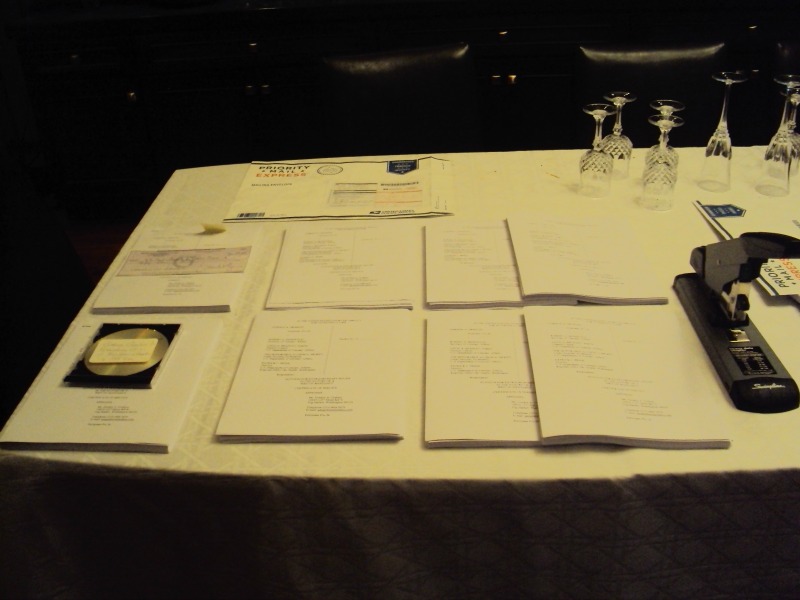
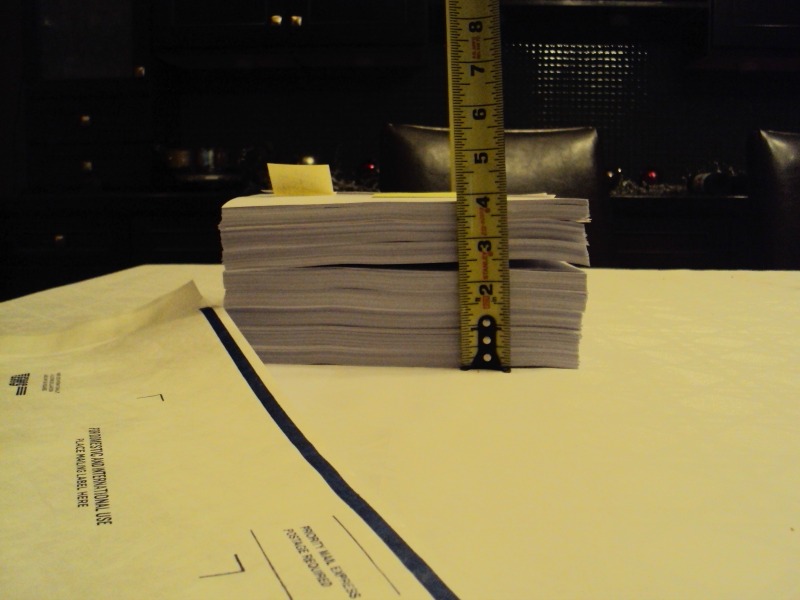
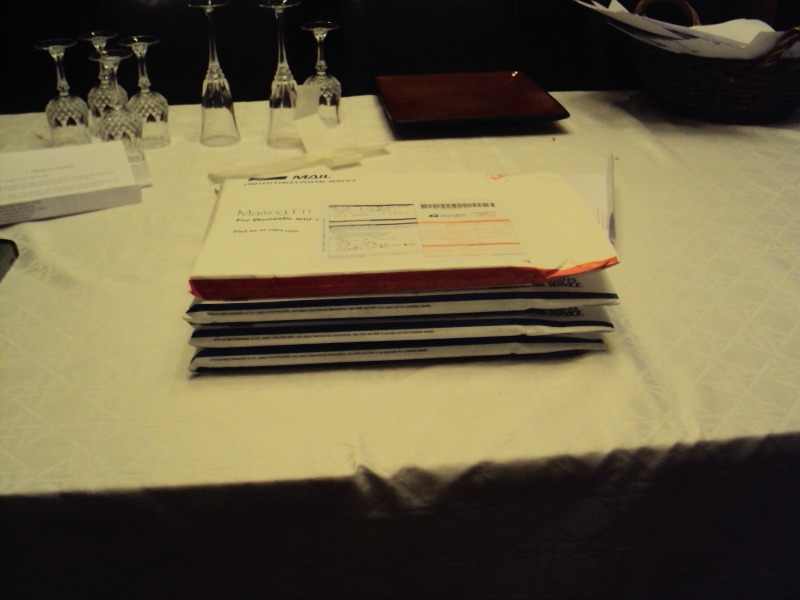
 Normally, about this time at 810 Vermin Avenue NW, the janitors have worked their way up to the 3rd floor and begun the nightly chore of empty, sweep and vacuum. There may be a few lights still on tonight. Hell, maybe not. Maybe they’re all over at the grill across the street getting lubricated and saying I deserve one of Laura Eskinazi’s famous Rocket Dockets.
 I will consult with Dear Leader in Battle Creek and see what the tea leaves portend. Read the Writ soon you shall, Yessssssssssssssssssssssssss.
































 asknod
 Bethanie Spangenberg
 kcraveiro
 robinhoodesqvetsatty
 Wesley McCauley
