CAVC–Buie (5) v. Shinseki (0) (2011)

VetCourtAppealsPromoNow here is a case that is worthy of a panel. We are seeing more and more hilarious and comical decisions and orders handed down that are mundane and/or run of the mill. It can’t be that justice has been clarified like butter and needs no more work. And then along comes a case like this. It is novel in many respects. The most salient is the way the BVA and by extension, the General Counsel try to turn everything into a timeline wherein the Vet ends up on the wrong side of it.  Consider the following enigma (in VA’s mind).

Mr. James E. Buie was a groundpounder from 12/65 to 6/67 including Vietnam. He didn’t fair very well over there, but more about that later. He applied for, and was granted, a 10% disability for his low back condition in 1971. In late 1995 he applied for an increase and let VA know he was receiving 100% Social security as he was unable to work since 1974. As usual, the VA promptly handed him an 8940 IU form to fill out. Wonder of wonders. He was denied. In early 1997, Mr. Buie tried yet again to reopen his back claim. This time the RO found the exact same thing (no evidence of prerequisites for 20%), but strangely upped his rating to 20% anyway in July. He persisted in August and said his injuries had gotten worse during the course of the claim that year. 8 months later in March of 1998 the RO granted him a 40% rating. A month later, in April and again in May, Mr. Buie busted out the magic typewriter that was his new money machine and petitioned VA again- this time for a 60% rating on his back.

The RO dawdled for an incredible 18 months before finally refusing to increase to 60% in October of 1999. Mr. Buie promptly filed his NOD in November along with another 8940 for IU. Mr. Buie was finally getting the hang of this game. The RO almost immediately (in VA time) issued a SOC  continuing the 60% denial in January 2000 and dragged its collective feet until November of 2000 to issue a denial of the TDIU request. Mr. Buie at this point could see the writing on the wall and lawyered up. His new legal pony was none other than the illustrious Kenneth Carpenter of Topeka fame. Mr. Carpenter promptly filed an NOD for the denial of the IU in December of 2000.

The immediate result of lawyering up was that the RO rethought its 60% denial and caved in six months later in July of 2001. They also threw in the TDIU and basically conceded total defeat. That wasn’t good enough for Mr. Buie. He filed new NODs for the effective dates of his 60% and IU respectively.  In for a penny. In for a pound, right?

 As if this wasn’t an interesting case already, another of his claims came to fruition in May of 2004. This was in the form of 30% for PTSD effective May 1998, which was upped to 70% effective 2001. Mr. Buie was starting to realize his investment in Mr. Carpenter was probably the smartest thing he’d ever done. The reader has to realize at this point that they haven’t even left the RO to visit Washington, D.C. on appeal yet.

 Finally in May of 2008, after a game of Ping Pong between the Court and the BVA, the BVA agreed on a date of April, 1998 for his award of 60% and the IU.  

Now, if you’ve followed this crooked path with a stick drawing and a timeline flow chart up to here, the claim takes another turn. Mr. Buie has now been granted an IU (100%) rating as of 4/1998 based on 60% (back). He has also been granted 70% for PTSD as of 1/2001. Relying on Bradley v. Peake (2008), he argues for SMC (S) for a ripping $325 extra per month back to 2001, which is when he qualified.  The Secretary choked and said Agh! No way, dude. Mr. Buie’s argument was a little shaky. Because the VA argued that Mr. Buie’s TDIU consisted of multiple ratings to attain TDIU, it didn’t meet the requirement of §1114 (S). It finally boiled down to a definition of TDIU being a rating and not a condition ! You can see the Secretary’s point. He sees a 60% rating bumped to 100%, but when the 70% shows up, he wants to supplant the TDIU rating back to a 60% and then add the 70% to make it 100% combined. With this scenario, there is no extra 60% above 100% which is the SMC S qualifier. Mr. Buie, through his Topeka mouthpiece, seeks to substitute the 70% as the underlying rating and make it IU plus 60 % for the back from 2001. This yields the SMC S and the extra three and a quarter per month. The Court agreed:

 That is not the end of the matter, however.  The Secretary is also incorrect in asserting that this analysis means that Mr. Buie is necessarily ineligible for special monthly compensation under section 1114(s).  There is no language in either the statute or the regulation that relates to timing or suggests that the relevant disabilities must be awarded in a particular order. See 38 U.C.S. § 1114(s); 38 C.F.R. § 3.350(i).  The Court envisions a scenario in which a veteran receives a total disability rating based on individual unemployability that is based on multiple underlying disabilities and then later receives a schedular disability rating for a single, separate disability that would, by itself, create the  basis  for  an  award  of  a total  disability rating  based on individual  unemployability.  In this scenario, if the order in which the veteran received the awards for his disabilities was determinative, he would not be eligible to receive special monthly compensation. However, if the veteran had been awarded service connection for these disabilities in the reverse order, he would be eligible to receive special monthly compensation. There is no evidence to suggest that Congress intended such an absurd result, and nothing in the plain language of the statute or the regulation requires it.

Buie v. Shinseki (2011)

Awesome, huh. This must have made the VASEC apoplectic. But wait. Here’s the punchline:


Therefore, the Court holds that the order in which disabilities are service connected is not relevant to VA’s determination of a claimant’s eligibility for special monthly compensation under section 1114(s). Whenever a veteran has a total disability rating, schedular or extraschedular, based on multiple disabilities and the veteran is subsequently awarded service connection for any additional disability or disabilities, VA’s duty to maximize benefits requires VA to assess all of the claimant’s disabilities without regard to the order in which they were service connected to determine whether any combination of the disabilities establishes entitlement to special monthly compensation under section 1114(s).  If, after such an assessment, VA determines that the claimant is entitled to special monthly compensation, the effective date of the award of special monthly compensation will be the effective date assigned  for the award  of  benefits  for the  final  disability that  forms the  relevant combination of disabilities.  In this case, there is evidence in the record to suggest that Mr. Buie may be eligible for a total disability rating for individual unemployability based on his service-connected post-traumatic stress disorder alone.  Buie (supra).

This is one of those situations where it just didn’t pay to get out of bed, trundle down to Indiana Ave. NW and tangle with the Court. Mr. Buie won everything he set out to obtain. Mr. Carpenter’s phone will be ringing off the hook for years to come with breathless Vets desirous of his services. The Secretary retreated to Vermont Ave. and tried to recover from his wounds. The poor man must have been born under a bad sign or has incredibly bad karma.  April 26th dawned with the dogwoods in full bloom. I know. I was born there and I have a valid birth certificate to prove it.   Several hours later the Court kicked in the Secretary’s teeth and told him he no longer had plenipotentiary powers over the selection of fiduciaries for Vets. The eons-old practice of total strangers nicking Vets for $90/month to manage their affairs had finally come to an end. But that is another story for another day.

      This is Mr. Buie’s day and we wish him the best.  A big  Attaboy is due Mr. Carpenter as well.  The community of Vets salutes you for your unswerving devotion to Mr. Buie and our cause, sir. 

     Read about how Mr. Buie goes 5 and 0 with the Big Guy:

http://www.uscourts.cavc.gov/documents/Buie_08-2705_opinion_with_errata_April_2011.pdf

   Letters of Condolence may be mailed to the Secretary c/o BVA at:

810 Vermont Ave. NW

Washington, D.C. 20420

 P.S. One thing a lot of VSOs and attorneys stub their toe on is the specific language of SMC S in 38 CFR3.350 (i). Note that it specifies the initial qualifier for SMC S is ” a single disability”. If you arrive with TDIU based on a package of disabilities that add up to the 70% required to qualify for 4.16, then you have not met the single disability codicil. 
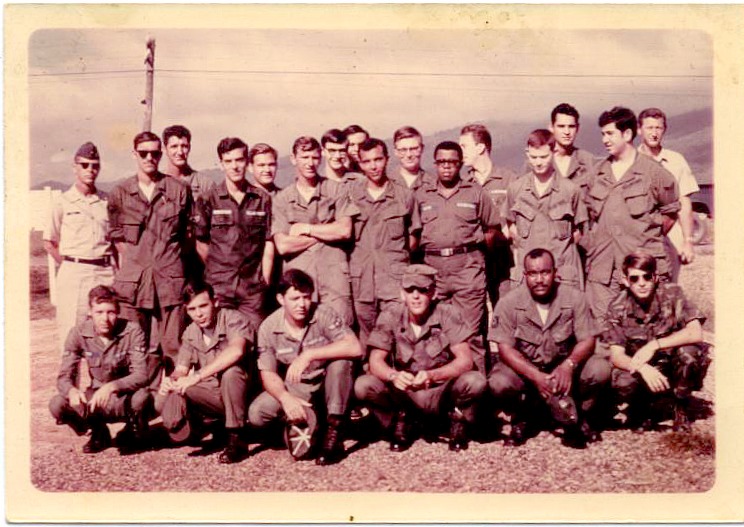
I’m on the bottom right in camo with no stripes, no USAF and no nametag. I traveled light back then.

Posted in Important CAVC/COVA Ruling, TDIU | Tagged , , , , , , , , , , , | 9 Comments

CAVC–Melancon v. Shinseki (2011)– Dude, they dissed me in 91

Even though we cannot use single judge decisions from the Court for precedence, we find them extremely informational for what they contain. They are useful for Vets who choose to defend themselves as the following Vet did. This is called pro se which means representing oneself.  It also means dusting off the old Boy Scout chapeau.      While we have no qualms about advising Vets to defend themselves up to and including the Board of Appeals process, we strongly feel they should obtain real legal help when going up to the big house on Indiana Ave. Virtually all Vets who file there will discover a chipmunk or two in their pockets shortly afterwards offering to be their huckleberry. This is not a bad thing. You will be doing battle with no less than the Secretary, who is ably defended by a bevy of  500 law dogs working exclusively for him alone. The Group is called the General Counsel.  This is all they do. Defending your claim there when your first language isn’t Latin can be very intimidating.  We strongly suggest a legal beagle of your own, If you are not too well heeled, there are many who will do this pro bono. More Latin and this time it means “for free”. If they (your new legal huckleberries) prevail, they can pester them (the Court) for EAJA funds, too. Mr. Malcolm H. Melancon, Jr.  was the latest casualty of war to go to D.C. pro se. Most of his claim held water but his CUE allegations were poorly thought out and had no basis in fact. It was more a case of “They dissed me in ‘91, dude.” What more accurately happened were the infamous hep tests in the late 80s and the early 90s that had an error rate of 33-40%. This meant obtaining meaningful results to determine if you had the big C entailed taking the test about five times. If you came up positive on 3/5 then you probably had it. The military can’t even do your blood typing correctly so it follows the Hep test would be similarly compromised.  The military did test Mr. Melancon for hep when he came down with it in service. The tests indicated B, but no A or C. Lo and behold, he started getting ill about 8-10 years later and went to the VA. Now keep in mind he’d already been denied in 1991 on the theory that B is acute versus chronic. As was VA’s habit back then, no one bothered to send him out for testing to confirm A, B or C. Just a simple denial based on acute B in service-period. After an extended period of all the classic presentations of Hep C, VA finally tested him and discovered it was all a simple misunderstanding. The poor man never had B or A. It was C right out of the gate. Finally in 2004, they granted him SC, only at 0%. You see, Mr. Melancon had taken the Interferon “cure” and was now symptom free, so VA felt no compunction to give him a compensable rating. He promptly filed to appeal and also threw in a CUE attack on his unappealed 1991 denial for several lame reasons.  The BVA split the difference and gave him a 2001 rating (at 0%) and tossed the CUE in the circular file.      Mr. Melancon, obviously a man with some legal acumen, dutifully filed his NOA to the Court. Because there were no earth shattering legal ramifications to this claim, it was assigned to a single judge. The Court held that his 2001 reopening of the 1991 claim was legal, but the assigned rating of 0% was simply unsupported. A man who is in obvious distress with RUQP, nausea and vomiting qualifies for more than an attaboy or two. That is what the Court said, too. What the Court didn’t find was CUE. Reading the CUE regulations the Board is required to follow clearly states what is CUE and what isn’t. One of the hallmarks of what isn’t is a new diagnosis that corrects an earlier incorrect diagnosis. Mr. Melancon was screwed by the pecker checkers who did his labs in 1988. After discovering the error in 2001, he felt this was CUE. It isn’t. The VA examiners may have been remiss in 1991 for not sending him over to the VAMC for a new blood test or tests, but he never objected. Hell, he didn’t even appeal. New evidence in 2001 that uncovers an earlier error isn’t CUE. It sure looks and smells like it to the aggrieved party, but it just isn’t. Mr. Melancon had several other CUE theories but they were equally unfounded. 

     This Vet got his 2001 claim vacated and remanded. He may get 30% for the hep up to when he did the cure. They may or may not give him 100% for a period of a year and then they will zero him out after 2004. If he was smart, he could start amassing a collection of med recs that supports what we all know is coming. Brain fog and depression will simply be the harbingers of a lot more.


     I don’t know that this man could have obtained more from his appeal. What is certain is that he attempted to collaterally attack a prior decision with insufficient assets. Further, his legal argument was defective for the attack. His narrow win on the BVA’s failure to look at the 2001 records that also documented a weight loss down to 119 lbs. was well executed. It was also glaringly obvious such that the Court had no problem seeing it.  


     When you get into a knife fight close in with an adversary, you better be good. It happens fast and you may not feel the lethal strike. This is what transpired here. Mr. Melancon was not expecting a no holds barred adjudication and escaped with very little of what he sought.


Without further ado, meet our legally challenged, pro se  loser of the year-Mr.Malcolm H.  Melancon, Jr.:

https://efiling.uscourts.cavc.gov/cmecf/servlet/TransportRoom?servlet=CaseSummary.jsp&caseNum=09-1752&incOrigDkt=Y&incDktEntries=Y


Click on the Memo decision to view Malcolm’s Texas necktie party.

Posted in CAvC HCV Ruling, CUE, Interferon claims | Tagged , , , , , , , , , , , , , , , , , , | 1 Comment

CAVC–ARNESON v SHINSEKI–TOO MANY JUDGES, SO LITTLE TIME

  Meet Robert H. Arneson, a Squid Veteran of the Vietnam era.  Mr. Arneson filed for several issues in 2005.  After denial and a prolonged SOC and SSOC battle, he finally had his day at a BVA Travel Board hearing in the fall of 2006. This hearing was before Veterans Law Judge Sabulsky. His claim was remanded for an IMO over a year later in October 2007. 

     In January of 2008, the Board granted one claim but continued the denial of the other two claims before them. In June of 2008 Mr. Arneson had a second Board hearing, this time via a video hookup before another, different Veterans Law Judge named Herman. This was the beginning of his problem. He now had not one, but two law judges involved in his claim. BVA law says there can be one or more judges on a decision, but panels have to be composed of odd numbers in order to attain a majority decision as opposed to a tie.  As Mr. Arneson had two judges, a third one had to be added. When this occurs, VA is required to tell you about it, not inform you after the fact when you receive the Dear John letter. This they did not do.

     Mr. Arneson rightly argued that he should have had a hearing before the third judge named Sullivan to make it legal. The VASEC disputed this and said the regs read differently, and besides, two of the three judges ruled against him anyway so it was a moot argument.  Even, arguendo, if he had been granted a hearing before Sullivan, there was no guarantee it would have come out in his favor. Then the VASEC dragged the following argument out of the closet and tried to bamboozle the Court. They weren’t buying: 

As an initial matter, it is well established “that the unchallenged historical practice of the Secretary is not evidence that the practice is correct.” Tropf v. Nicholson, 20 Vet.App. 317, 321 n.1 (2006) (citing Brown v. Gardner, 513 U.S. 115, 122 (1994)). The fact that the Chairman may assign Board  members to a panel in piecemeal  fashion cannot serve as a basis for the Secretary’s interpretation of his own regulation, especially when that practice seems so clearly at odds with the regulatory language.  The Secretary’s interpretation suggests that a veteran has a right to a hearing in front of all the Board members adjudicating his appeal only if his case is assigned to a panel from the start of the adjudication; whereas a veteran whose appeal is assigned to a panel on an ad hoc basis, as apparently occurred in the present case, has no such right.  This interpretation makes no sense.  The regulation does not state that Board members assigned to an appeal shall conduct a hearing if that hearing happens to be scheduled subsequent to their assignment. Nor does it state that a single member of a panel can conduct a hearing where a case has been assigned to be decided by a panel.  Instead, the regulation states that the Board “Member or panel” assigned to an appeal “shall conduct any hearing before the Board in connection with that [appeal].”  38 C.F.R. § 20.707 (emphasis added).  The plain language of § 20.707 does not in any way indicate that the timing of Board member assignments dictates the scope of one’s right to a hearing in front of those adjudicating one’s appeal.

     Them CAVC boys are some kind of smart. They take in all this hooey  and sort it out.  Then they chop it up into bite size pieces and digest it.  What ensues is an orderly, clear and reasoned decision. There is no magic here. They remove the wool from everyone’s eyes and shine a light on the problem logic. The Secretary is entitled to his opinion. But he most assuredly is not entitled to insert his defective logic and opinions into VA law.  Here he has attempted both and once again is being called on the carpet.

    If this was an isolated occurrence with no prior history of similar shenanigans, we could overlook his eagerness as simply misguided. The fact that Mr. Secretary engages in this defective decision making  regularly, and indeed, all the way back to his inauguration to the post, shows a juvenile approach to adjudication.  He bases far too much on how VA “has done it in the past” without examining whether it was done legally in the past.  Here it has bitten him in the buttocks once again.  

     So, in the end justice for Mr. Arneson was discerned to be skinny and the decision was vacated. It really could not have had a different outcome. The Secretary’s obstinate adherence to wrong-headedness and a narrow, myopic judicial vision have once again left him in the lurch.  We understand that VA is experiencing growing pains and has limited financial assets to offer Vets, but trying to deny them benefits with comical rule interpretations that yield improbable results has no place in a Veteran friendly environment.

     Choosing a demise like Custer’s and dying on a hill for no good reason is demented. It doesn’t grant you martyr status. It simply makes you look like an uneducated boob. This Court decision was really uncalled for. Had Mr. Secretary parsed his argument in front of a mirror several times he might have seen how foolish this was going to look when he arrived at Indiana Ave.

     I, for one, believe Veterans deserve better. Not only did we offer our lives in defense of our country, we were promised that our Government would be there for our spouse and offspring should we fall in battle. I think I speak for all of us when I say that we never expected to see this kind of shabby, vindictive, Catch 22 treatment of Veterans from the very agency created to deal with our plight. Sadly, it is becoming more and more commonplace in this current administration. Thank your lucky stars for the Court of Appeals for Veterans Claims.

http://www.uscourts.cavc.gov/documents/Arneson_09-953_published_opinion_4-20-2011.pdf


P.S. Maybe the Secretary has been eating too many Fukitol (see below) and has become addicted…


Posted in Important CAVC/COVA Ruling | Tagged , | Leave a comment

CAVC–Hillyard v. Shinseki- CUE it again, Sam

Even though this decision goes against the Vet, one can hardly fault the Court or the VASEC for their logic. Joseph C. Hillyard, a peacetime Veteran, suffered a head injury that caused him some mental problems. He filed claims for this injury when he was discharged in August of 84. The VA turned him down. He appealed it all properly, but Vets must remember, prior to the enactment of of the 1988 VJRA and the inception of the new Court, there was no higher venue for appeal than the BVA. 


      He filed to collaterally attack this claim in 2001 and lost again. However, he did not appeal it to the CAVC. His rationale was logical, but there really was no clearly erroneous error to correct.

    Dissatisfied with those results, he enlisted a man many consider to be an accomplished legal beagle in the VA world. That would be Kenneth M. Carpenter of Topeka, Kansas fame. Mr. Carpenter is no stranger to the Court and knows the ins and outs of adjudication there. As to why he agreed to accept this arcane CUE attack and defend it, we may never know. Altruism? Properly informed, he would probably shy away from it. The CUE laws have always been very strictly interpreted and there is virtually no fudge room. Granting CUE to decisions is rare. Very few attacks are successful. This is not to say that it is impossible, but it must be a glaring error. And more importantly, there is one abiding precept. You only get one bite at the apple. 

     Mr. Hillyard’s theory of apple biting was more nuanced. He believed that if at first you don’t succeed, try, try again was the tried and true adage. That is what inspired his new attack, albeit on a new theory. If the Court had allowed this, VA would be up to their ass in CUE claims that went on forever. Veterans filing new claims would have to stand in line to make room for the perennial  “frequent filers”. The claims process would become so bogged down with these do overs that meaningful litigation would take years.

     Mr. Carpenter should have seen this one coming. It certainly shouldn’t have come as any surprise. This decision was just posted on the Court’s website as of this morning. We may have not seen the end of this. He still has 30 days to file his appeal with the Federal Circuit and see if he can make it stick there. Somehow we doubt it unless it’s being filed in the 9th Circuit. I’m sure Vets everywhere remember the cutting edge jurisprudence handed down by them in their review of the Stolen Valor Act. 

     Meet the unsinkable Mr. Hillyard and his sidekick, KC from Topeka:

     We pray no moral, upstanding Vets who obtain advice here would try to gum up the judicial works with litigation such as this. It is a disservice to Vets to tie up the courts at their expense. Obtaining justice is sometimes a life and death, time is of the essence pursuit. We won’t dwell on this other than to say it has a distinctive odor about it we here at HCVets find repugnant.

Posted in CUE, Important CAVC/COVA Ruling | Tagged , | Leave a comment

CAVC–Heino v. Shinseki–April Fool’s Day at the Court?

April Fool’s day at the Court?

     Before Hagel, Moorman and Schoelen, a certain appellant named William H. Heino, Sr. pleaded an extraordinary case pro se. It was decided April 11th, 2011, just ten days after my favorite day of the year. It might have been more appropriate to issue it on the first as it is the most bizarre I have read in years. Not for what the august judges decided, but for the sheer madness that was decided by a panel of judges rather than a single judge.

     When a novel situation arises in VA law and a Vet appeals up to the Court, a panel is convened. But a run of the mill decision is usually handled by a single judge. Judges are busy people. They have to listen a lot, read a lot and occasionally dictate a long, reasoned decision for their secretary to type up. They are so busy handing out justice to Veterans that only very important law changing justice demands a panel decision.

     Mr. Heino contends he has to cough up $7.00 every month to get his high blood pressure medication. To add insult to injury, they only manufacture the tablets in 25 mg. dosage and Mr. Heino’s prescribed dose is 12.5 mg./day. This necessitates Mr. Heino take one of those pill cutter doomoflotchies and whack all his tablets in half. Mr. Heino contends he should get a break on his $7.00 a month co-pay because he has to cut the pills in half. He further argues that he should perhaps get 30 25 mg. tablets a month if they insist on charging this exorbitant amount for 15 tablets. Finally Mr. Heino argues that the $7.00 copay exceeds the actual cost of the prescription and is therefore against the law. Not that this has any bearing on the subject, but Mr. Heino is not service-connected for anything. He merely uses the VA as his pharmacy, and, for all we know, his medical plan. He is entitled to do that. He is also entitled to clog up the Court’s busy schedule to appeal for justice.

     Justice in the VA system is slow but inexorable. There are many cases that require extensive development and time consuming legal research to make sure justice is dispensed correctly. With some of these decisions, time is of the essence for medical or financial reasons. Therefore I find it difficult to believe the Court would accord a decision of this minor magnitude a 60-piece orchestra and a top slot on the New York Times Bestseller list. It will consume two sizable pulp trees for publishing the decision and the reams of copies that were preliminary drafts.  Mr. Heino will be directed to pay any withheld monies to the VA for past prescriptions. The VA Police at his VAMC will be issued a picture of Mr. Heino as a potential “probable mental deficiency”/ agitator.  All this for about $42.00 a year?  Hello? McFly? What is going on?

     I searched but there is simply no intelligent life in this thing. Judge Hagel went so far as to actually file a separate opinion concurring in part and dissenting in part.  Please sir. May I have more pulp for paper? 

http://www.uscourts.cavc.gov/documents/Heino-09-112-published-opinion-April-11.pdf 

     17 pages of decision. Did you know that Gilbert v. Derwinski (1990) which was positively earthshaking for Veterans jurisprudence, took only 19 and addressed multiple, seminal issues that will affect Veterans for many years to come, if not forever? We here believe this is a collective judicial attempt at tardy humor around April Fools day. We certainly needed something to raise our spirits and this is a good beginning.

Posted in Important CAVC/COVA Ruling | Tagged , | 3 Comments

COVA–Bentley–The First CUE Case

We have discussed CUE (Clear and Unmistakable Error) many times but few Vets know how and why it exists. It is another one of those blessings bestowed on us by a grateful nation for our service. Just as we are accorded the benefit of the doubt, so too are we allowed to disturb an otherwise settled case of law and reopen it for perceived error. This avenue is not available in a civil court.

     Journey back to 1990 and see how the modern concept of CUE evolved. It started long before this in 1928 when the old VA first incorporated the idea. It was further enshrined in 1946 after the war when the more modern Board of Veterans Appeals system emerged. And there it sat until the Court of Veterans Appeals was inaugurated in 1989 by the VJRA.

     The first case in the new CUE batter’s lineup was Mr. Russell L. Bentley on July 26th, 1990. Oddly, Mr. Bentley’s Christian name repeated itself almost 3 years later when the Court started chipping away at this sacred right in Russell v. Derwinski.

       Mr. Bentley filed a long series of motions over a 40 year period with VA over his service connected injuries. VA shortchanged him in 1960 and he knew it. Fortunately for him, this finally came to a head after the new COVA was ensconced, thus allowing him a hearing before them. It was the very first CUE claim and therefore, as a panel decision, it set precedence.  The reason for the appeal was clear cut and straight forward. Most aren’t this simple and require cogent, tortured reasoning. Mr. Bentley had been handed a 40% rating and his illness deserved 60%.  The BVA said as much. Hell, even the Secretary admitted it, but somehow the Director of Compensations in D.C. got hold of it and screwed it up.

     Hard on the heels of this came a trickle which turned into what surely felt like a potential flood to the Court.  Mr. John W. Akins’ appeal was heard by the Court a month later on August 27th.  Prior to his decision being  decided, Mr. Bentley’s was on September 13th. The Court reversed and remanded the case for a decision consistent with their findings.

     On April 23rd, 1991, the Court filed Mr. Akins’ decision and again reversed and remanded for readjudication consistent with their findings. Well, ladies and gentlemen, Vets were starting to sit up and take notice of this newfangled CUE thing and started sharpening their pencils and lubricating their typewriters. The concept of opening up an old 1946 decision and winning it in 1991 sounded pretty lucrative. Other Vets were reviewing their pending appeals and now started searching in vain for possible CUE.

     On April Fools day of 1991, Mr. John G. Oppenheimer’s CUE claim came before the Court for its hearing. His decision was handed down on July 15th and remanded for more development by the Board.

     Thompson, Akles and others were starting to crop up with similar reasons for review. Some had merit, some didn’t. As the filings amassed in the mail room, the Court decided it had to act and act fast. The proper vehicle arrived in the form of Mr. Robert B. Russell and Mrs. Rosie Sampson Collins. I guess the Court was still rather chauvinistic then because in spite of her being a lady and alphabetically before Mr. Russell, she still got second billing on the Header. I have attached that decision below as well for anyone who wishes to see the evolutionary aspect of the Veterans legal system.

     The Secretary, in an attempt to stem the tide of CUE filings, tried something novel and implied the Court had no business reviewing BVA decisions for CUE.  That went over like a lead balloon up at Indiana Ave. NW. Mr. Derwinski was kept after school and put on detention, but he did take away a strategic win here. The Court reasoned semantically that if there was a clear and unmistakable error, there can be no benefit of the doubt. Either there is an error or there isn’t.  

      More importantly, the Court held that if there was an error, and it wouldn’t have changed the outcome such that it yielded a win for the Vet, then it, too, wasn’t CUE. The phrase the Court chose was if the error didn’t manifestly change the outcome, then it wasn’t clear and unmistakable. This is where the concept of an outcome based decision arose. Henceforth, a simple procedural or statutory error that would not have granted the claim was no longer CUE.  The heretofore two pronged pitchfork of CUE had just sprouted a new tine with Russell.  Things have pretty much remained the same since, but Caffrey v. Brown (1994) did whittle another branch off the tree. Vets had often relied on incorrect or missing info in their claims file to win CUE. Caffrey held that an incomplete record was not an incorrect record.

     The law has not retreated appreciably since then, but it does seem to shrink imperceptibly every time it arrives at the CAVC.

      Join with me now as we climb into the DeLorean and visit 1990:   Please click on Bentley below to open the PDF file and energize the hyperdrive motivator.

Attached is Bentley as well as Russell.

Bentley_89-70

Russell_90-396

Posted in CUE, Important CAVC/COVA Ruling | Tagged , | Leave a comment

CAVC–Frederick v. Shinseki 2011– Don’t mess with Ruth

Allow me to introduce you to one Ruth Hill Frederick. She is not the lady you would want to attempt to assault. Snatching her purse might be akin to overcoming the Gordian knot with no sword. I wouldn’t doubt she packs a ,25 calibre belly gun, perhaps a FN “Baby”.

Mr. Hill punched out on May 28th, 1970. That date resonates with me as this FNG had just arrived in country thirteen days earlier. Mrs. Hill, Ruth, if you will, applied for DIC and was promptly granted it. In December, 1986, shortly after she turned 57, she remarried. Being an honest person like you and me, she timely reported this to the VARO. They discontinued her DIC at that point as that was how the law was written back then. So far so good. No harm, no foul.

The next seminal date was December 16th, 2003. Congress decided to change the law to allow a surviving spouse to continue to collect DIC even in the event of remarriage as long as he/she did it after age 57.  I say he/she as I’m sure there must be the odd man or two who married a WASP or WAC. It was further promulgated that spouses who desired to obtain this DIC (who had married after age 57) had one year from the above date to register for it. That gave an end date of December 16th, 2004. Before we venture any further, I want the reader to understand something. Receipt of DIC is predicated on the spouse having a permanent and total rating (i.e. 100%). Therefore the number of eligible spouses seeking DIC was finite in number, probably on the order of less than 20,000 by 2003. Conversely, by 2010 the number was probably less than 8,000. DIC pays about $1200/mo. or so currently.

Ruth, being a sharp woman of keen intellect, heard about this change in the law and filed for it in November, 2007.  I’m going to go out on a limb here and bet she also clipped Tuesday coupons for weekly specials at the local Safeway. At this point, I guess the gentle reader has already figured out that Secretary Grinch couldn’t leave well enough alone and had to steal her Christmas. His odds would have been better trying to take down a Brinks warehouse with $9 million inside and two drunken guards.

The Board, at his direction, turned her down on the request by reasoning that she hadn’t filed for this “in the window” before 12/16/04. But the Board made its decision on shaky ground-on the part of the law that was not codified.  They had not parsed the statute to perceive its true implications. You see, Ruth wasn’t applying for the DIC. She was asking to be reinstated as she had already technically “applied “for it in 1970 and been granted it.  Fearless Leader Erik the 1st disagreed and refused to budge. He read the regulations, cast the chicken bones and brought in the tea leaf readers. As he signed their paycheck, they all concurred that there was only one way to read the statute.  They also reasoned that an uneducated dolt like Ruth couldn’t fathom these highfalutin’ laws and tried to blow smoke up her ass. Say this like a sheep: “Baaaaa-aaaad idea.” Ruth probably went out right about then and purchased the services of a nice young lawyer named Paul M. Shoenhard using all that money she had saved up clipping coupons. They filed a NOA and scampered on up to the Court for a date with the General in November of ought 10.

I think of the Beatles song about now: Now Erik it seems, had been smoking his greens, and proceeded to fabricate bull$hit.  Verily so. The Secretary stuck to his guns much like  Slick Willy when they brought out Monica’s blue dress with that pesky stain on the front.. He must have known at some point he was doomed. The statute was never intended to disenfranchise spouses who had qualified prior to its enactment, nor did it go to lengths to do so. Imagine the pit bull who has latched onto a teddy bear and has no intention of letting go. That’s how tenacious this debate became:

“The Secretary suggests that the universe of persons affected by this Public Law provision includes only those who previously applied for benefits.  He further reasons that if the universe of persons affected by this portion of the Public Law is only those who previously applied for DIC, then all such persons would have met the end date for submission of an application, rendering any such interpretation of the uncodified provision of the Public Law meaningless.  The Secretary’s universe of persons, however, is ill defined.  Specifically, it ignores the fact that there likely are surviving spouses who remarried after the age of 57 and prior to enactment of the Public Law who never applied for DIC prior to enactment of the Public Law.  Under the plain wording of the statute –which sets an end date for application –  these individuals clearly would have to submit an application no later than December 15, 2004, or forever lose their benefits.  Thus, the plain language interpretation is not rendered meaningless and is not absurd, as the Secretary suggests.” Frederick v. Shinseki (2011)

Without digging too deeply, it might be safe to assume the VASEC was a charter member of the Flat Earth Society. Mensa membership, however, is going to forever elude the Erikmeister, I’m afraid.

What is sad and oddly missing from all this is one simple test. Read the statute. Examine the meaning of it. Examine the congressional intent in enacting this and who stood to benefit. Using 8th grade logic skills, one can see Congress was trying to sweeten life for old ladies whose husbands (or the obverse I mentioned above) had been injured in war. This is whatLincoln set out to do and the boys in Foggy Bottom were simply continuing in the same vein.

The Secretary, on the other hand, is trying his damnedest to reduce the number of eligible spouses. Had he succeeded, he might have saved the VA several hundred thousands of dollars until the Ruths of  America succumbed to old age and disease. Hell, it might not have even amounted to that much. Veterans of the big WW2 andKorea are the only beneficiaries and they are falling like flies unless the Secretary hadn’t noticed. Of all the hills to choose to die on, the General seems doomed to follow in the footsteps of Brevet Major General (Colonel) George Armstrong Custer .  The General Counsel the Secretary has at the Board (027) is either woefully uneducated or is having a communications snafu with him.  Third year legal students with any acumen whatsoever should be able to ferret out the thrust of this statute. The only other possibility is that the Secretary does not serve Veterans’ best interests. How can that be?  I can almost hear Tim Allen doing his trademark “Aeugh?”

I’ll let you be the judge on this one. Is the enemy of my enemy my friend? Not if he’s a former General, apparently. I apologize for that. It was uncalled for. I am inured to believing VA justice is imperfect justice unless or until it arrives at the Court. JOVO

http://www.uscourts.cavc.gov/documents/Frederick_09-433_published_opinion_March_11_2011.pdf

P.S. Apparently, the Secretary is unhappy with the response of the Court as I just spotted this being heard at oral argument on March 9th, 2012. Bozo Boy  isn’t finished with Ruth yet, which is sad.

Posted in Important CAVC/COVA Ruling | Tagged , | Leave a comment

CAVC–George v. Shinseki (2011) SJD–Telling Fibs at the Big House

This is an illuminating case for several different reasons.  Veterans with HCV have been availing themselves of our limited resources now for three years and we have never illustrated what happens when you get caught stretching the truth up at the “Big House”. This is a wonderful example even though it is a single judge ruling. Gentle Veterans with real morals would not need to search this decision for useable info anyway. 

     Neatly summarized here is the case of one Robert J. George versus his nemesis, Gen. Shinseki.  Old Bob, here, is attempting to pull the wool over Judge Lawrence B. Hagel’s eyes. Don’t ever try this at the CAVC and most especially, don’t even try it on any judge with the name LAW in his first name. 

     Bob filed for six items in April of 06, among them Hepatitis. He didn’t submit much more than the Risk Factors Questionnaire. Yep. No nexus or any other supporting records. Just that dogged male determination we are so well acquainted with-Onward through the mental Fog! Full speed ahead! VA denied that November and he filed his NOD. Subsequently, in March of 07, he was sent a letter setting up a C&P exam. He claims he never got his 2007 notice from the VA to report.  Nevertheless, he didn’t complain of this in his NOD. When the SOC was issued stating the same thing, he still never murmured any disagreement with their assessment of the posture of the denial. In fact, he never even raised the subject in his Form 9. The BVA made short work of this and put a fork in it. He dutifully filed his NOA and marched on up to D.C.


   0 hour was 9 A.M. Thursday, February 24th. Judge Hagel properly deduced that if old Bob had never received that scheduling letter and missed his Dog and Pony show, he sure would have pissed blood to prove it before he ever got up to the Court. He had ample opportunity at the AOJ and again at the Board. He politely let Bob off the hook on whether he was lying about it or not. An impolitic judge might not have, but the President always appoints judges with more than just strong credentials. Fortunately for Bob, this saved him a lot of face. Now he can blame his law dog, Jeany C. Mark, Esquire, for the inconvenient, incongruous facts. Such is life.


     At any rate, here’s what happens when you “disremember”:

 GeorgeRJ_09-3294

Posted in Important CAVC/COVA Ruling | Tagged , , , , , , , , , , , , , , | Leave a comment

COVA– Littke v. Derwinski (1990)–Original Duty to Assist

In our continuing series on Oldies But Goldies, we were researching where a completely new concept of VA law originated on evidence and remembered this gem.

Mr. Harold E. Littke, although the decision doesn’t mention it, was probably a Veteran of the War to End All Wars.At 57 years of age, he put in a claim for IU due to a lot of aches and pains. He was already rated at 20%, but hadn’t worked for 5 years. At his D&P (that would be the Dog and Pony show)exam before the VA, he was miraculously pronounced good to go for employment that didn’t entail sitting or standing for long periods of time. Yes. That’s pretty much what they said.

The veteran also informed the BVA that his recent X-rays taken revealed marked deterioration in his condition and that he had requested an examination by the VA.

In affirming the rating board’s decision, the BVA found that although the veteran’s disabilities did limit his occupational opportunities, they did not preclude him from engaging in ordinary work which did not entail extensive physical exertion. The veteran now appeals to this Court, seeking a reversal of the BVA’s decision. Under 38 U.S.C. § 4052 (1988), this Court has jurisdiction to hear this appeal. (Littke v. Derwinski )

Now, for the newcomers to VA law, this is the scenario. For as long as time can be remembered up until 1988, the BVA was THE final arbiter of the law. The VJRA Act of 1988 created an Article 1 court to hear Veterans appeals from the BVA and allow them to be reviewed by the Federal Circuit. The VA and the BVA did not take kindly to this trespass on what had traditionally been their turf. They blithely continued to make the same errors and the Court of Veterans Appeals (COVA) began their new job cleaning house and rearranging the legal furniture. Mr. Littke had the pleasure of being one of the first new guests the Court entertained.

The Court discovered numerous errors regarding the proper collection of evidence and instances where the BVA ignored the Veteran and never sought highly probative documents which supported his contentions for IU. His D&P show was a complete failure and violated several important tenets of VA medical evidence collection. The Court expressed their displeasure at the cavalier attitude the BVA accorded Mr. Littke and the poor legal reasoning behind their flawed decision. They were sent packing and told in no uncertain terms to try again- correctly this time.

We can assume Mr. Littke was granted that for which he asked because one does not see his name arise in the legal calender   anywhere after this:

Here I might add that we are starting to see this same attitude surface anew. It’s an ugly development and doesn’t bode well for Vetkind. The VASEC must always remember he represents the Vets first, not his government. Apparently he has dyslexia or misread the Mission Statement issued byLincoln: “To care for him who shall have borne the battle, his widow and his orphan child.”

Littke is attached here:

Littke_89-68

Posted in Important CAVC/COVA Ruling | Tagged , | Leave a comment

CAVC–Clemons v. Shinseki (2009)–Not an M.D.

VetCourtAppealsPromoClemons v. Shinseki is a marvelous piece of work. I’m sure Eric the clueless wasn’t entirely enthralled with the outcome, but that is neither here nor there. Bill Clemons simply reinforces Espiritu v. Derwinski from our point of reference.

Mr. William N. Clemons was a Squid and a participant in the Korean “Misunderstanding”. He served aboard the USS Rochester from 2/52 to 9/ 53.  They stored some cadaver popsicles in the ice box on board and this had a deleterious effect on poor Mr. Clemons’ brainbox.  In 2002, nearly two score and ten years later, he filed for PTSD reasoning that that was probably what he suffered from. He didn’t much care what the name of it was. He knew he had a problem and asked VA for help with it. Utilizing their four dimensional Ouija Board techniques, the VA fiddled with it for 4 years and finally came to the conclusion it was not PTSD. Silly Billy had filed for PTSD and they had determined he had a schizoid personality disorder. Because he had not claimed this, he was not entitled to it. VA’s theory was simple. “Start over with a new claim, Bill”. Mr. Clemons wasn’t going to be rolled that easily. He dutifully filed his NOA and set about remodeling the kitchen patiently for three years.

2000px-Rubik's_cube.svgIt should never have had to have been appealed that high and when it arrived, the Justices started examining it like a Rubik cube. The General immediately went into full pit bull mode and said Mr. Clemons didn’t deserve to be there as he didn’t suffer the claim he was appealing (PTSD), and the illness he did have hadn’t even been decided yet ( schizoid personality). Therefore, absent a claim to appeal, the Court had no jurisdiction to hear it.

Mr. Clemons, on the other hand, patiently explained there was, and had been, only one claim. It certainly wasn’t his fault that he wasn’t a licensed headshrinker capable of diagnosing his problem. He had come to VA, hat in hand, and intimated that his head wasn’t too tightly attached anymore. In spite of his thoughts on the subject, he was putting himself in VA’s able hands and letting them figure it out.

The Court had to decide first whether they had the right to hear it. If there were two separate claims, then it was Goodbye Mr. Clemons.  Displaying remarkable insight, the Judges rightfully reasoned that Mr. Clemons had one claim and one only. Perhaps it was multifaceted, but it was still basically one claim.

About this time the General had a pow wow with his people. They realized the futility in continuing to blow smoke up the Justices’ asses. He then approached Mr. Clemons and allowed as how they probably might oughta ask the Court to issue a Joint Motion for Remand (JMR). The VA would call this a reasonable accommodation on their part. Mr. Clemons wanted a rapid resolution to this, smelled victory and agreed wholeheartedly.  Unfortunately for the General and Mr. Clemons, the Justices now had a death grip on this doggy bone and were loathe to relinquish it.

After much examination, they decided to clarify the claim for the General on the off   chance he still didn’t get it. Instead of a simple JMR, they explained that what Mr. Clemons had was unarguably one claim only, not several inextricably intertwined ones. As such, the VA was instructed to send it all the way back down to the RO and basically start over with a new adjudication based on the premise that the mental trauma Mr. Clemons experienced in 1953 was either an anxiety order or a schizoid personality disorder. He had been diagnosed with both by VA’s finest and they had made the added mistake of saying that it was directly related to the popsicles on board the USS Rochester.

In 1993 Espiritu v. Derwinski was decided. It held that a Veteran, absent any formal medical training, was not capable of making decisions medical in nature. This was certainly a valid holding and no one found fault with it. Layno v. Brown (1995) expanded on this by saying a Vet was capable of testifying as to those symptoms he could ascertain via his five senses. Decisions following this were similar and expanded only the circumstances but not the underlying jurisprudence.

When Mr. Clemons entered the arena, the General granted him medical authority to determine his disease and then held him accountable for his own misdiagnosis. In the General’s mind, VA had accepted Mr. Clemons’  explanation for his ills at face value. They could hardly be held to account for this unexpected turn of events. And being the stand up guys they were, well shoot, they were more than willing to start a new claim for these other, recently discovered disorders. Of course, there would be no discussion of an effective date earlier than 2009.

The Clemons Court was not entirely finished with the General, however. They reasoned that just as a Veteran is ill-equipped to make decisions medical in nature, the blade cuts both ways so that a lay claimant cannot be held to a narrowly claimed diagnosis – one he is incompetent to render when determining what his actual claim may be in the first place. This is Layno and Espiritu 180 degrees out of phase.

I’m sure the General wasn’t expecting this.  He thought he had arrived with an airtight case. When faced with Pandora-like reality, he tried desperately to retreat with a JMR.  What ensued were seven additional pages of decision that created more favorable jurisprudence for Veterans in their fight for justice:

Rather, the Board denied the claim because the appellant’s hypothesized diagnosis–one he is incompetent to render–proved incorrect, instead of confronting the difficult questions of what current mental condition actually existed and whether it was incurred in or aggravated by service. The Board made no affirmative finding as to the nature of the appellant’s condition, it only observed that the appellant was not diagnosed with PTSD.  However, because the appellant was reasonably requesting benefits for symptoms of a mental condition he was not competent to medically identify, the adjudication of his claim does not end in the face of currently diagnosed mental conditions that are different from his lay hypothesis in his claim form. It is generally the province of medical professionals to diagnose or label a mental condition, not the claimant.  The Board should not limit its consideration of the claim based on the appellant’s  belief that he suffered from PTSD, something he generally is not competent  to render in the first place.  (Clemons v. Shinseki)

This always brings to mind the old saw “Be careful what you ask for”. Ladies and Gentlemen Vets, I give you Mr. William N. Clemons N.M.D. (Not a Medical Doctor):

http://www.uscourts.cavc.gov/documents/Clemons-5581.pdf

Posted in Important CAVC/COVA Ruling, PTSD, Veterans Law | Tagged , , , , , , , , , , , , , , , , , , | Leave a comment