 Greetings from the Graham ménagerie-now only eight of us. Our pony, Big Shot (nee Buckshot) passed this fall from Diabetes Mellitus or what passes for pony diabetes. He’s buried out back next to Dude (another pony). Cupcake and I have had an uneventful year but made great inroads in the VA fisc by winning our clients’ claims. Come to think of it, we’re actually still batting .1000 if you can believe it. No, I’m not restatisticating à la VA. I don’t count a denial as a loss until it’s dead in the water. Since I have never given up on any of you, I claim the .1000 figure for the time being.

Thinking back on Txgiving 1970, I had amassed a horde of turkey c rats for a veritable feast with my Tabasco I carried with me everywhere. While flying a mission that morning, someone snuck into our barracks and stole them all-even my peaches. I got Spammed-literally. That was all they left me. Well that and the sixteen year old Lucky Strikes. It’s always been a low point for me and destroyed my faith in humanity.

Sadly, as I posted last week, we lost Butch Long of LZ Cork fame. In addition, my Korean War Vet Charles passed on July 25. Leigh passed in April and lastly, my first Blue Water latecomer Doug passed September 7th. Each came pretty much completely out of the blue. I will miss them all. I couldn’t salvage Leigh’s DIC claim as her husband had passed away and the kids had already received their DEA Chapter 35 benefits. I got her 100% for Hep C and a transplant years and years ago. I was working on the diabetes secondary to the Hep C and an SMC S rating when she passed.

I guess that’s one of the hardest parts about doing this work. You become very immersed in your clients’ lives and family. Then you start repping their kids. When I lose one, it creates a grave disturbance in my mental Force. I strive to keep my representation down to no more than 80 souls so as not to become as inaccessible as did my DAV rep. in 1989. That was the pits. He arrived at my DRO hearing in 1990 10 minutes early but had asked me to be there an hour before for the SITREP. Worse, he walked right by me and didn’t recognize me. I had to give him a short brief on what he was hoping to accomplish. Boy howdy have we come a long way, baby.

SMC- New Tricks
On the SMC frontlines, I’ve discovered an interesting phenomenon that bears inspection and sharing. After researching a Veteran’s claims file, I always catalog the actual ingredient that produced his or her 100% schedular/ TDIU. If it’s a combination to two or more disease/injury processes, you don’t qualify for SMC S. Read it. It has to be a single disease entity at IU or a true 100% schedular. Nevertheless, TDIU is a 100% rating and the gateway to what’s beyond SMC S. If you have one disease process like Parkinson’s or DM II, VA permits combining them all to arrive at a 100% rating (via VA addition of course) to permit a pseudo- 100% combined rating- and thus, permission to advance to the higher SMCs of L and beyond.

The phenomenon occurs thusly. Example #1: Say you’re at 100% schedular P&T for COPD and have been since 2008. Secondary disabilities gradually take you up to a SMC S rating. Your situation deteriorates further. You have to go on 2 litres of O₂ daily and you need A&A. Suddenly, in the middle of your A&A claim fight at the BVA, VA freely concedes your bent brain from all this trauma warrants a 100% scheduler. We all know that never happens.

Anyway, the next spring, the BVA grants a&a and remands it back to the Lokal Yokels. In a splendid display of ratings gerrymandering, they declare your 100% schedular for bent brain is the primary a&a factor -in conjunction with all the earlier ratings, of course- which led to the a&a. But what about that 100% schedular you’ve had since 2008? Why did the advent of the new 100% schedular only now create your a&a entitlement? And why in Sam Hill didn’t any of this provoke the 1/2 step or full step bump we get from §3.350(f)(3) or (4)? You have to go back to the earlier discussion about surveying the original predicate for your SMC S. This is how you spring the SMC punji pit trap on them.

I refiled to get the full step bump to M based on two separate and distinct 100% schedulars and caught them with their pants down. They did exactly what I expected and stampeded back six months to February 2020 and inferred entitlement due to the old 100% for COPD. This way they felt they could award the bump to SMC M for the 100% schedular bent brain without conceding their stupidity in the original rating a year earlier. Again, the punji pit comes into play. If the antique COPD, now, in 2021 is the declared predicate for a&a, why, then, would not the later award of 100% bent brain not provoke yet another SMC L for aid and attendance in its own right rather than the bump to M? What the hey? If bent brain was the predicate first, and now isn’t, somebody’s screwing the pooch. I call it VA three-card monte or “which walnut is the pea under?”

One common mistake most litigators make in SMC law is believing you cannot have two A&A ratings. Or, if the practitioner understands you can, they believe there cannot be any overlap in the criteria described in §3.352. Wrong. SMC is one of those unique situations in VA regulations that permits pyramiding. Here, the predicate for a&a is based on a “factual need” as defined in §3.351(c)(3). VA will try to tell you that Disabilities A, B, C, D and E are the predicate for your a&a needs. It really makes no difference what causes the factual need as long as you have one 100% (schedular or combined) service connected disease that prevents you from accomplishing the activities of everyday living – due to either physical or mental deficiencies. Period.
When, as I described above, a new 100% disease or injury arises that is separate and distinct from the 100% rating that provoked your entitlement to a&a initially, you are legally entitled to consideration to another SMC L rating under §3.350(b)(3). The factual need as described in §3.351(c)(3) allows you to hoist them on their own pétard as many times as you are granted a new, separate and distinct 100% schedular rating. Essentially, once you’ve proved you need a&a, any future 100% rating automatically comprehends you need the identical a&a. No pyramiding. No harm. No foul.

Of most interest in this VA SMC building contest, your early-on rating for TDIU under §4.16(a) can become the inviolate benchmark 100% rating. By law, that is a favorable finding of fact and protected under Medrano v. Nicholson. It’s a finding of fact that cannot be disregarded, modified or tampered with short of an act of commission or omission on your part. VA will almost always “convert” your TDIU later if your sum of ratings -when added up together- exceeds 100% combined. This is why most will never see SMC R1 for anything but loss of use of extremities or blindness combined with their a&a rating.

Example #2: So, you have a TDIU and an extra 60% in separate, distinctly different ratings having nothing to do with the TDIU. When you eventually get a later 100% rating, that, too, must be separate and distinct if you expect to get a&a. But here is where semantics kick in. A mental disorder, even if caused by Parkinson’s, is a separate and distinct (think mental versus physical) disease involving a different organ or bodily system. It is a stand alone 100% that is eligible for a&a. VA knows this but tries to bullshit you out of it with a not-so-generous full-step bump to M instead. When they rate you for Parkinson’s- or DM II for that matter- they add up the peripheral neuropathies in all four quadrants, all the difficulty swallowing, the cranial nerves that make you face muscles hang limp,, lost smell, constipation, ED-the whole shiteree. They almost invariably add up to about 100 +80% or more. Subtracting the usual 30% they give you for the anxiety disorder associated with Parkinson’s never reduces you below the magical 100% combined. Ditto the DM II scenario with peripheral arterial disease, PN, diabetic retinopathy, renal failure ad nauseum.

The perfect storm for a TDIU-based a&a rating is as I have explained. In most cases I appeal, I have to divorce the previous separate and distinct ratings from each other first. I use the clear and unambiguous precedence of Buie v. Shinseki for this:
Buie v. Shinseki, 24 Vet.App. 242, 250 (2010).
In Buie, the Court held that [w]henever a veteran has a total disability rating, schedular or extraschedular [TDIU], based on multiple disabilities and the veteran is subsequently awarded service connection for any additional disability or disabilities, VA’s duty to maximize benefits requires VA to assess all of the claimant’s disabilities without regard to the order in which they were service connected to determine whether any combination of the disabilities establishes entitlement to [SMC] under section 1114(s). This duty to maximize encompasses all SMCs and requires VA render a decision which grants every benefit that can be supported in law while protecting the interests of the Government. See §3.103(a) (2021).
Buie is the fork you use to move this jumbo of ratings around into the most advantageous order to get the biggest bang for the buck. If you had TDIU granted in 2015, and you get a new 100% rating, VA can legally use it for the 60% bump to SMC S. But…they have to first consider entitlement to SMCs-all SMCs- not just SMC S.
So, last month I filed a Vet for loss of use of all four extremities due to Parkinson’s. He had an appeal for SMC S up at the BVA currently before he hired me. My battle plan is simple. I filed it all at once asking for SMC O and the bump up to R1. I purposely held my cards low so VA could read them. “Ned” went to the c&ps for loss of use but… VA threw in a request for increase to his 30% rated anxiety disorder we most assuredly did not file for. Yesterday morning, after a 30 minute chat with a shrink, she wrote him up as totally bent brain at 100%. The DBQ was filed an hour later in VBMS. Their oh-so-subtle plan appears on its face to make an end run denial around the loss of use and munificently grant a&a in its stead solely based on the bent brain and try to throw all the other shit in on top. But if he already had the ingredients to qualify and held a TDIU or combined 100%, isn’t that 100% for Parkinson’s a separate and distinct illness that qualifies for a&a in its own right? By virtue of Buie, they should keep the TDIU/100% combined as the predicate for an SMC L a&a and make the new 100% bent brain a separate a&a. And on to SMC O/R1. In your dreams, jellybean.

VA is predictable. You can stampede them into an a&a punji pit and then file for an extra a&a if you construct it properly. And trust me, it works. VA is so narrowly focused on trying to fence you out of the R1 corral that they often inadvertently create the perfect storm to get there. Pretty cool beans, huh? Even better, you can use Buie to separate and rearrange all their mistakes in order to get to R1. There’s no business like this VA pétard business. Well, maybe fishing with hand grenades in the Mekong. Now that was a hoot.
On another note, please welcome my shirttail relative Don to the 100% club for blindness. I’m fine-tuning his a&a based on blindness but VA is insisting he’s not completely blind-just 90%. They did give him an automobile grant but $21,500 doesn’t go far toward one of them newfangled Tesla self-driving rigs. And you’ll never catch me riding shotgun with him. Hellllllllllllllllllllll no.
Have a happy, safe Thanksgiving and Holiday season and steer clear of the new omicron corona bugs. You might be free to move about the country right now (assuming you don’t beat up the stewardesses) but it’s ill- advised. I have to go to a Travel Board hearing in Houston RO on January 12th and I’m praying it doesn’t get cancelled again. It was scheduled for May 7, 2020.

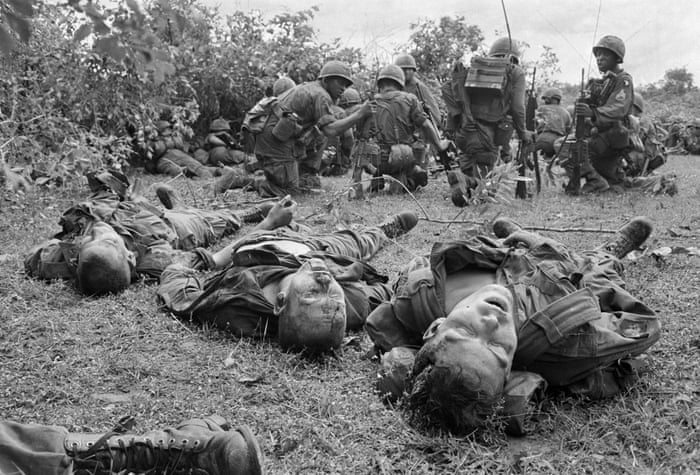
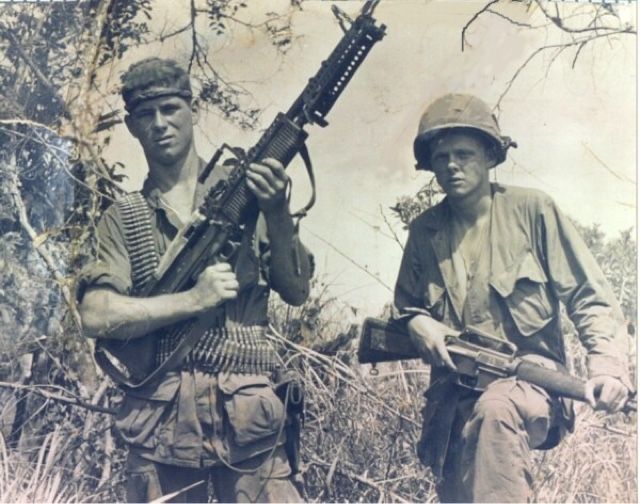
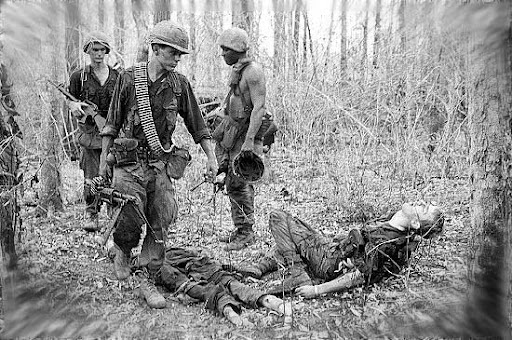
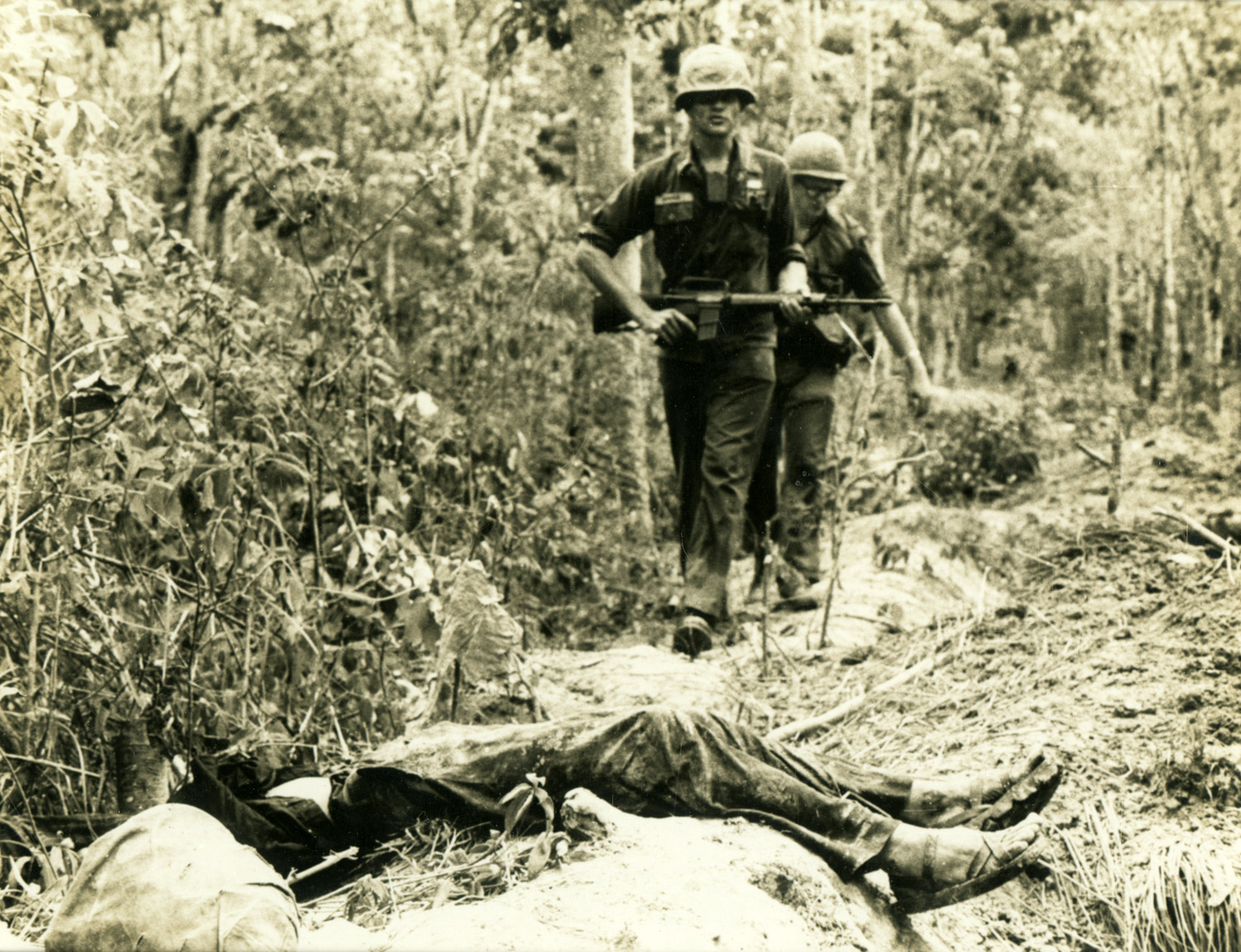
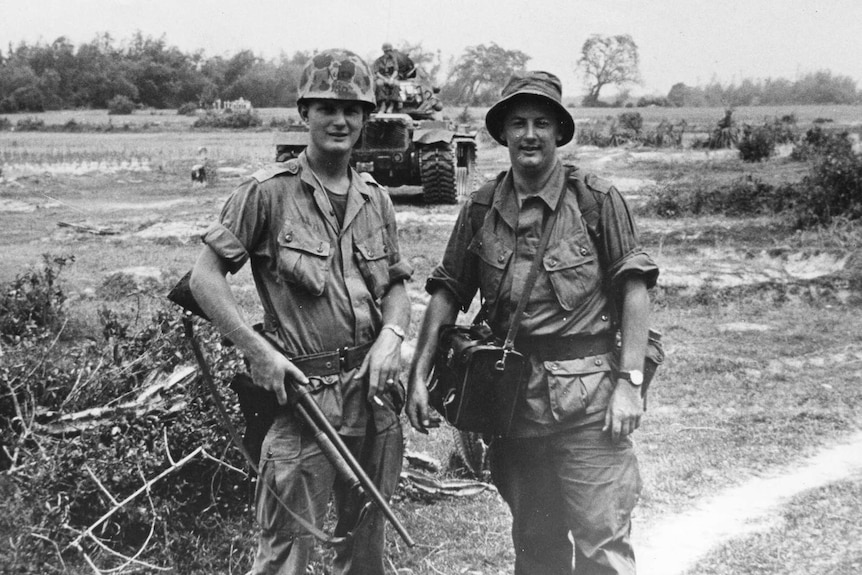
P.S. If these pictures seem too graphic to the reader, I apologize. Imagine what it felt like to be there in living color. War is Hell. Combat is something entirety different. I can’t tell you how many Vets I talk to who served in Germany that claim they wish they’d been sent to RVN. Be glad you didn’t get your wish. The above would be burned into your mind. The reruns start every night shortly after bedtime. There’s a Black Wall in DC that lists 59,494 reasons why you should be glad you missed it…or any war for that matter. I publish these pictures to remind me of my lost friends. I didn’t have the luxury of a camera and time to take my own pictures. The fact is, I didn’t have the time to mourn in ’70 and nobody was interested in talking about it when I came back two years later in ’72. And that’s all I’m gonna say about that.













































 asknod
 Bethanie Spangenberg
 kcraveiro
 robinhoodesqvetsatty
 Wesley McCauley


Good morning sir,
I have a question in need of your expertise advice for additional SMCs. Like the previous question, I am still puzzled about the ½ and full steps on the SMC chart.
Injury Snapshot:
I am currently 100% P&T, Car Grant recipient, HISA approved, SAH approved, Chap 31 ILP client for SEH rehab concerns, SSDI recipient, Medically Retired from work, and now SMC L ½ rated, effective 09/29/2021 due to all of my injuries. I just recently won a CUE for not rating my surgically repaired left hip replacement due to reevaluation of 90% after 1 year. They had to back date my CUE to 7/29/2019, which was the day that I was originally awarded the Aid & Attendance for the Left Drop Foot, along with the standard verbiage was, “In need of A&A of being so helplessness….”
I have gone through the Pain Clinic, Spinal Cord Stimulator patient, RFA patient, Left Ankle surgery (2018), Botched VA Left Hip Replacement (2015), and 2 revision hip surgeries (2018). Diagnosed with Restless Leg Syndrome. And cannot performed a few of ADLs too.
I have a chair lift in my home for stairs, ramp accessible, grab bars in shower and near toilet, ADA raised toilet with toilevator installed, about to get adaptable auto attachments, VA approved motor scooter, right ½ inch-built shoe due to left leg longer due to botched surgery, left shoe modified with AFO inserted into the shoe, due to I cannot put on myself
I strongly feel that I have been short changed on my proper rating! I have listed my injuries below for a better visual.
Current Disabilities:
Left hip replacement: 90% (additional 2 resurface hip surgeries)
Depression: 70%
Radiculopathy of left lower extremity with drop foot: 60%
Lower Back: 40%
Radiculopathy of the lower extremity (femoral) with left drop foot : 30%
DJD right ankle: 20%
residuals of fracture of left medial malleolus: 20%
Radiculopathy of the right extremity: 20%
R knee: 10%
R hip flexion: 10%
R hip extension: 10%
R hip abduction: 10%
R wrist sprain: 10%
L hernia scar repair: 10%
L ankle scar repair: 10%
L thigh myositis ossification: 10%
L thigh ext: 10%
L Ostemacia (soft bone): 10%
Nonservice connected for Flat Feet: 0%
Questions:
1.) Do you think I am due the ½/ or full step in SMC lineage? The recent Decision Letter only showed rating rationale for the previous 2 (hip and right sciatica) injuries, but failed to mentioned their selected injuries and not mentioned of the other (right hip, knees, atrophy, and drop foot), It seems like they were just to make me go away?
2.) I thought I should have been SMC N or at least M for loss of hips or loss of legs, which was not afforded to myself?
3.) Should they have evaluated all of my mentioned injuries, since they were not the same/repeats?
5.) Should I get a separate evaluation for calf atrophy for muscle injury? The DC code is 8520, but should be in the Muscle Injury DC range?
thx in advance
Here’s my response. First, no offense intended N Shari, but I abhor being called sir. I enlisted. The only thing that gets my goat worse is “Welcome Home” from someone who was probably protesting the war when I did actually return to the world in ’72. You folks are 50 years too late, so stop it. Don’t waste your breath. I doubt any of us boots on the ground folks will ever forget that bitchslap. No amount of apologizing can erase it.
So… the envelope, please.
First, you are not 100% rated. From your list of disabilities provided, you are TDIU or, I suppose, in the VA vernacular, 100% combined. When you go down the combined road, VA will pile up every single thing you are rated for and use it as the predicate for the A&A. The only way to improve the SMC rating is to get something new that is independently ratable and not part of that A&A rating. Well, that or artfully find the way to divorce the needed element from the conglomerate and develop it as a standalone SMC L. This VA “everything but the kitchen sink” technique often screws you out of SMC S in the period before you got to SMC L for the A&A. It’s useful though to prove you have separate and distinct rated disabilities to prevent the kitchen sink scenario. Once VA declares a disease/injury the predicate for a standalone 100% and some others as the 60% separate and distinct rationale, they have made a decision that is protected. Use Medrano v. Nicholson, 21 Vet. App. 165, 170 (2007) (The Court is not permitted to reverse findings of fact favorable to a claimant made by the Board.). Thus, they cannot come back and insist all the SMC S ingredients are the reason for the A&A. The reason is simple. If they grant you SMC S, there must be a subgroup of ratings 60% or higher that comprises the “independently ratable” quantity to qualify. It would be injustice to later say it’s all one “disease entity” or “physical injury”. This is how you begin to prepare your defense-waaaay before you get to SMC L for anything.
By rights, your 90% for the hips should be your TDIU. The PTSD should have pushed you to SMC S. Then, the aggregate stuff could be used later to butress an A&A with the 70% PTSD used to grant your half-step to the intermediate rate between L and M (L 1/2). If you look at your most recent Code Rating sheet, you will see how they break it down. The actual description of the A&A should list all the things they use(d) to grant it.
By operation of law, §3.103 admonishes the Secretary to grant every benefit they (pronoun?) can come up with. Buie precedence instructs that there is no law saying the disabilities have to be arranged chronologically- or in any particular order at all- for that matter. Failure to perform this step produces absurd results which is forbidden under Sambonis v. Brown 1994.
VA groups similar maladies in subsets. If you had multiple SFWs, they would be rated separately ( see §4.25(b). But… if you got one more new one at 50% it would not be separate and distinct and independently ratable for a half-step bump if the predicate for the A&A was all the other muscle group disabilities. It would just be added to the A&A mix.
§3.350(f)(3), excluding TB which you did not mention you have, says:
(3) Additional independent 50 percent disabilities.
In addition to the statutory rates payable under 38 U.S.C. 1114 (l) through (n) and the intermediate or next higher rate provisions outlined above, additional single permanent disability or combinations of permanent disabilities independently ratable at 50 percent or more will afford entitlement to the next higher intermediate rate or if already entitled to an intermediate rate to the next higher statutory rate under 38 U.S.C. 1114, but not above the (o) rate. In the application of this subparagraph the disability or disabilities independently ratable at 50 percent or more must be separate and distinct and involve different anatomical segments or bodily systems from the conditions establishing entitlement under 38 U.S.C. 1114 (l) through (n) or the intermediate rate provisions outlined above.
Similarly, §3.350(f)(4), in pertinent part, states:
(4) Additional independent 100 percent ratings.
In addition to the statutory rates payable under 38 U.S.C. 1114 (l) through (n) and the intermediate or next higher rate provisions outlined above additional single permanent disability[singular] independently ratable at 100 percent apart from any consideration of individual unemployability will afford entitlement to the next higher statutory rate under 38 U.S.C. 1114 or if already entitled to an intermediate rate to the next higher intermediate rate, but in no event higher than the rate for (o). In the application of this subparagraph the single permanent disability independently ratable at 100 percent must be separate and distinct and involve different anatomical segments or bodily systems from the conditions establishing entitlement under 38 U.S.C. 1114 (l) through (n) or the intermediate rate provisions outlined above. So, we now look at your L & 1/2 which under VA law is
(i) Where the multiple loss or loss of use entitlement to a statutory or intermediate rate between 38 U.S.C. 1114 (l) and (o) is caused by the same etiological disease or injury, that disease or injury may not serve as the basis for the independent 50 percent or 100 percent unless it is so rated without regard to the loss or loss of use.
So, let’s examine the SMC L and ½ half rating you have. First, it’s really couched in SMC as SMC P (L 1/2 + K for LOU of the one foot). VA is giving you TDIU for either the 70% PTSD or the hip(s) at 90%. They are the only two that qualify as a single standalone rating of 60% or more under §4.16(a). Radiculopathy of left lower extremity with drop foot at 60% has to be the 1/2 step kicker under §3.350(f)(3). You should have a single rating under DC 8520 at 80%- not 60% if they have held loss of use. But §3.350(f)(3) permits combinations of disabilities to add up to 50% to qualify to whereas (f)(4) has to be a true schedular 100%.
The Oral Briefing utube link above to Barry v. Denis the Menace argues whether multiple awards of (f)(3) -or (f)(4)- can be awarded. I personally think so but you don’t see a JD after my name nor a Judge in front of it.. I do not see anything in the language of either reg subsection specifically limiting it. Logic dictates that VA is not overly generous so they would never set up a merry-go-round where you could keep collecting 1/2 step gold rings each time you passed the dispenser. I do think personally that both bumps could, and should, be awarded at least once though. F3 and F4 are sure ambiguous and the default setting should be the interpretation which grants the greater benefit to us.
I just had a recent shootdown on a L 1/2 bump and here’s why I lost and am appealing it.
VA’s M 21, which is not law or even germane most of the time, says (distilled)
The M21 suggests that SMC(l) has a schedular/extraschedular requirement. Specifically, the M21 indicates that a single disability evaluated at 100 percent disabling may be required for a grant of aid and attendance, and that without such a total disability, referral to the Director of Compensation may be warranted for extraschedular consideration of aid and attendance.
In addition to the above, the VA ADJUDICATION MANUAL, M21-1MR, Part IV(ii), Ch. 2, § I(58)(e) notes “veterans entitled to SMC at the [(o) rate or (r) rate] are, by definition, very seriously disabled” and the rater should “apply a liberal interpretation of the law in determining the need for A&A”.
Boy howdy is that ever a lot of permissive ‘mays’ and purely subjective language to arrive at a requirement for a 100% schedular or combo interpretation. I’m not buying it.
Breniser v Shinseki 2011 is your North Star to get over the hump of trying to assemble all your disabilities using 3.350(f)(3)(4) to get to N or higher. VA calls SMC O the maximum rate. It is, technically. Anything above that has to be a need for a higher level of A&A as in R1, R2 or T. There are 4, and only 4 ways to get to O. You need any two of the four conditions in §3.350(b)(1-4)-i.e., LOU of the upper or lower extremities or a hand and a foot, blindness, the need for A&A or being Bedridden. Period. Think back to your old Chutes and Ladders game.
You are suggesting you should be able to endlessly get bumped up using all the existing ratings you have. Check out SMC N. You’d need to physically have your legs removed at the hip in order to employ it as a kicker bump to SMC O.
So, how do you get to a higher rating? Based on what you present, I don’t see a path. The recent HLR review I got on 9/28 says:
“Note: a 100% disability and a need for regular assistance with the activities of daily living is required to meet requirements for entitlement to special monthly compensation based on Aid and Attendance. However, the 100% disability can be a single SC disability or multiple SC disabilities of a single disease entity such as Parkinson’s disease or multiple sclerosis. The 100% disability can be the sole factual basis for the need or it can be a combination of need for aid and attendance due to the 100% disability or other SC disabilities to qualify. The actual need for Aid and Attendance (A&A) must be wholly or partially due to service-connected (SC) disability evaluated as 100-percent disabling. This means that we must have evidence the 100% condition has at least a small part in the need for aid and attendance. (§3.352, §3,351(c)(3), 38 CFR 3.350)[sic]”
But note the clear and uncomplicated language used in §3.351(c)3) cited as their authority…”(3) Establishes a factual need for aid and attendance under the criteria set forth in § 3.352(a). Then look in §3.352(a) and tell me where it says you need that 100% or combo of shit equaling 100%. I’ll wait. The closest thing is the postscript catchall at the end of the laundry list for inability to accomplish the daily activities of living says ” or incapacity, physical or mental, which requires care or assistance on a regular basis to protect the claimant from hazards or dangers incident to his or her daily environment.”
This is why the BVA and the higher Courts refuse to consider the M 21 as the authority. The VA makes this shit up out of whole cloth and then tries to pawn it off on you like you just graduated from turnip wagon driving school and are educationally challenged.
I will never use M 21 in my legal briefs to support my argument. It will get you laughed out of the BVA or the CAVC. You’re relying on what? The M 21? Gidouttahere. They change that on average 135 times a year depending on how much new CAFC/CAVC precedence overturns the established parameters in the current version of M 21.
A possible scenario exists for you, N Shari, to say your PTSD creates, in its own right, a need for A&A independent of all the other stuff used to grant A&A #1. It appears most of your disabilities revolve around your musculoskeletal disabilities-ergo, the need based solely on that huge subset of neuropathies. If your PTSD can be shown-alone- to cause inability to remember to take medications, or protect you from the hazards of life, then try that avenue. You simply do not have multiple Breniser conditions which can advance you.
Lastly, I will tell you I had a guy come to me who amassed 22 10% ratings to reach a combo 100%. VA kept reducing him on one or another back to 0% claiming improvements. He had a hard time going to work because he was always at QTC c&ps attempting to protect his precarious 100% from reduction. You never get anywhere trying to glue 10%s and 20s together to get to 100% and, by extension, the higher SMCs. It wasn’t built that way. SMC is a quality of life booster for after you get to 100%. It’s designed to help you out with the exorbitant costs of becoming severely disabled. VA purposefully designed it with a gazillion Catch 22s to make it sound richly rewarding but with no means to advance to the higher levels. Whoa there, buddy. You weren’t born on a Thursday. You don’t qualify for SMC. I can’t impress on Veterans how long it takes to develop any level of mastery to be able to gerrymander your SMC into the highest and best rating. Each Veteran’s combo of disabilities has to be studied, analyzed and parsed to figure out how to assemble them to yield the best outcome.
I wish I had better news in this regard, sir. I also apologize if I lost you or others after about three paragraphs. SMC is like trying to turn water into wine. It tasks me but I love it. It’s akin to advanced Alchemy 401.