
VA’s latest publication on why we are in deep doo-doo is intriguing. The backlog has more excuses than Carter has pills. I know that sounds old fashioned but this needs no tortured explanation. All the flag waving is merely a distraction.
My daddy said a bunch of things in the course of his life. Most were non-judgmental. They were simply observations about human nature. One that stands out in my mind is that the more a body (or a government agency) explains how they got into a fix, the true magnitude of the problem is inevitably being marginalized.
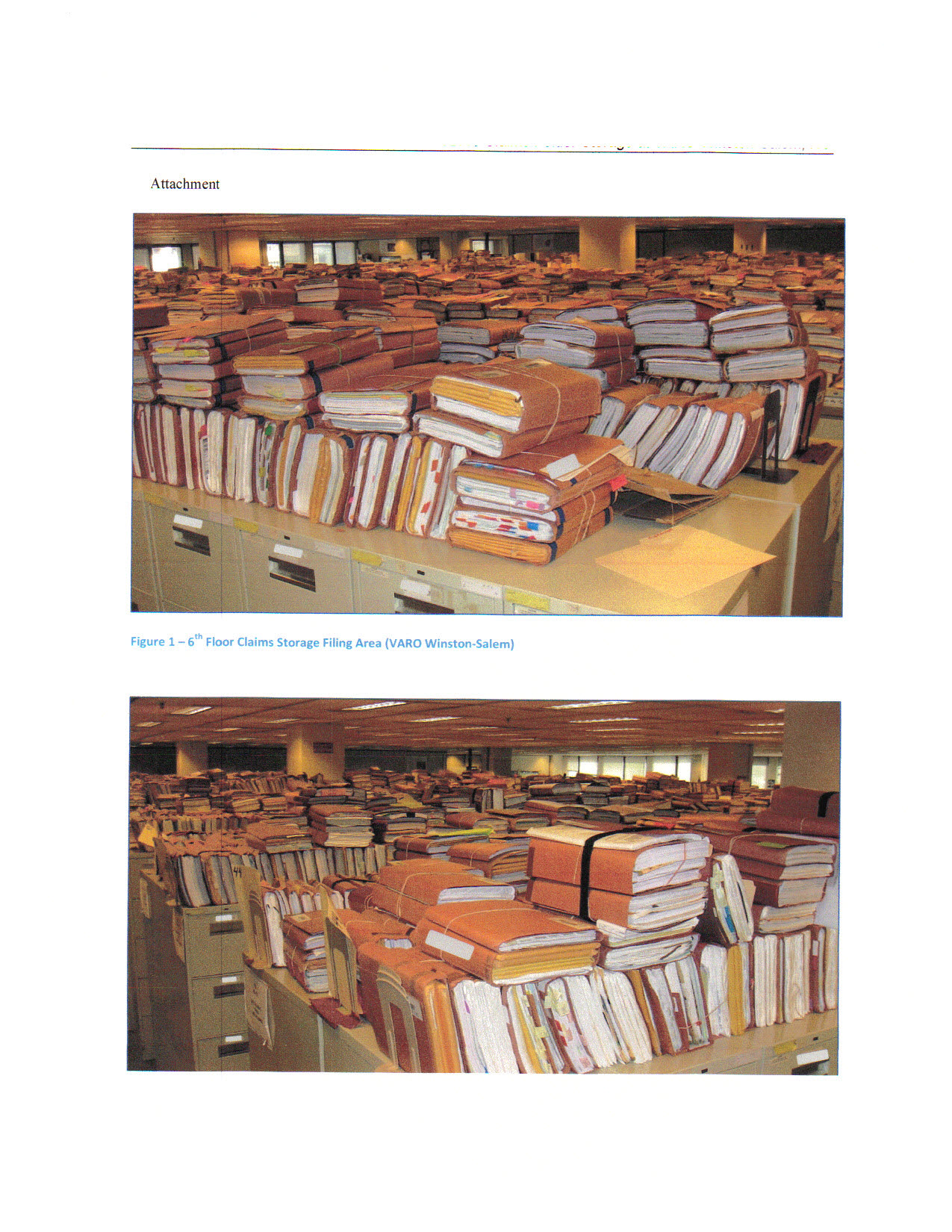
VA attempts to change their story line and spends beaucoup bucks on PR in the process. In 2009, this was simply a matter of hiring more worker bees and training them. In 2010, we were eagerly awaiting the completion of their training and subsequent deployment. Suddenly, in 2011, we discovered the enormity of the paper file tsunami. In order to go barefoot with VBMS, we had to scan the equivalent, pulp-wise, of all the trees ever cut down in America since 1776. My guess was someone in authority went up to the sixth floor of the Winston Salem Cigarette RO and noticed all the files stacked up in 1994. He multiplied that by 57 ROs ( I count the AMC black hole as one) and it dawned on him that it was going to take every reproduction company in America about 10 years to scan, collate and make them .PDF word-searchable based solely on the numbers of Vets back then. The enormity of the problem was so depressing, he went back downstairs and elaborated. They promoted him for being such a far thinker and then did nothing.
Hand-written records are not, nor ever will be, word-searchable, so VBMS still is no panacea. This is the ugly stepsister VA hasn’t even disclosed yet. That shoe will fall in 2015 when they can’t possibly meet Revered Leader’s 125-day/98% accuracy goals. In short, failure is once again built in with ultimate deniability. All the Vietnam Vets through the late 80s, with their hand-written STRs are hitting the wall and they all have illegible, handwritten records that demand a sleuth with a magnifying glass. The current training for VA examiners no longer includes the curriculum. This means the records, for all intents and purposes, are not viable evidence unless a Veteran can provide a translation. That does not guarantee VA’s finest will accept it. Much like the inhabitants in the next state over from Missouri, they’ll see it when they believe it, and not a minute sooner.
The VA appears as though they live in faery tale land. Either they are convinced in their own minds that what they write for us is true or they are smoking something better than what the medical marijuana salesmen are hawking.
For decades, the VBA system has carried an inventory of pending claims, and a backlog that was ambiguously defined and sometimes confused with inventory. In 2010, the Secretary of Veterans Affairs defined the backlog as any disability claim over 125 days old…
Silly rabbit. Trix are for Vets. All this time we were using the wrong name for it. Calling it Inventory or backlog is immaterial in that it still doesn’t explain what VA called the identical problem in 1992 or 2008. The delay has always been there regardless of what or how one characterizes it. This didn’t just materialize out of thin air after September 11th, 2001 but now we are expected to believe if we magically add up the “inventory” and the “backlog”, we can better define the problem and solve it. Only in D.C would properly naming a defect simultaneously present the cure for it. That only works in Hollywood movies.
VA has always been a past master at obfuscating, going off on a perpendicular tack or manufacturing a straw man and pointing to it as the sole reason why they are unable to perform. This manifesto is no different. It subtly diverts attention away from their centuries of wastefulness, carpetbagging and featherbedding.
Apparently VA has never noticed the correlation between armed conflict and casualties. You would think that if this is all they do for a living, the Undersecretary for Job Security would sit up one day down at Vermin Ave. and say ” Mikey. Hey, Mikey. Did you know that every time they have a war like Iraqistan a whole bunch of people start sending in claims? I mean, like way more than a normal amount? This is like, totally awesome. It explains the backlog, dude. Manna, I’mma gonna getta bo-nusssss.” (sung liltingly). The fallout of WW2 must have also come as a big surprise sixty eight years ago. In fact, they may not have even noticed the blip of Korea or Vietnam on their claims radar if they are that dense.
The number of service-connected disability claims grows during periods of armed conflict and economic downturn. The backlog also grows when policymakers establish new presumptive conditions, courts make new decisions, and legislators make laws that establish new entitlements.
The fact that they feel this needs to be restated indicates somewhere, a village is missing it’s idiot. Who did they write this for? Veterans Service Representatives? Here the VA attempts to blame the internet…
Increased Access
1. Increased use of technology and social media by Veterans, families, and survivors to self-inform about available benefits and resources
2. Improved access to benefits through the joint VA and DoD Pre-Discharge programs
3. Additional presumptive decisions resulting in more claims for exposure-related disabilities
4. Extensive and successful use of VA outreach programs encouraging more Veterans to submit claims
Perhaps we should add that when they created a neetsy keen thing called the Benefits Portal (Ebenefits), this became inevitable. Are they now conflusticated that Vets actually avail themselves of this technology? The military washes their hands of us like Pontius Pilate when we separate. They encourage Vets to file and wonder of wonders- they do. Now VA cannot fathom why they are filing so many claims. All that is finally covered in this missive.
Increased Demand
1. Ten years of war with increased survival rates, resulting in more claims
2. Post-conflict downsizing of the military
3. Impact of a difficult economy
4. Growth in the complexity of claims decisions as of result of the increase in the average number of medical conditions for which each claimant files.
Gee, where’d you park the squad car, Dick Tracy? So we now have an ample description of what caused the problem. Veterans appear to be at fault for filing in such large numbers and with such enormous numbers of ills. The military (read Bush 41& 43) is also a culprit for being so bellicose and warlike. And lastly, the American populace is indicted for being greedy and crashing the economy. In sum, everyone but the VA was instrumental in causing this perfect storm. They are merely trying to keep their heads above water and cope with it.
To add to this cacophony of dysfunctionalism, we are beginning to find out that someone is stretching the truth at the DVA. We had hoped to see an eventual melding of the two dissimilar computer systems of DoD and VA into one seamless, integrated network where a Vet could separate from service and file electronically with VA as necessary. His medical records, in this more perfect world, would simply pop up and populate a new Form 21-526 (e) (e for electronic) when he notified VA he was ready. Even better yet, they would be “pre-filed” before separation and the Vet would begin drawing his VA compensation on Day One after walking off base. Not. Panetta and Dear Revered Leader weren’t even on the same page recently at a joint Dog and Pony show. Both spoke but the bubbles they were blowing weren’t the same size and color. It didn’t faze them a bit that their comments were mutually exclusive and contradicted one another. Onward through the fog. More computers. More money. More personnel. More time. More. More. More.
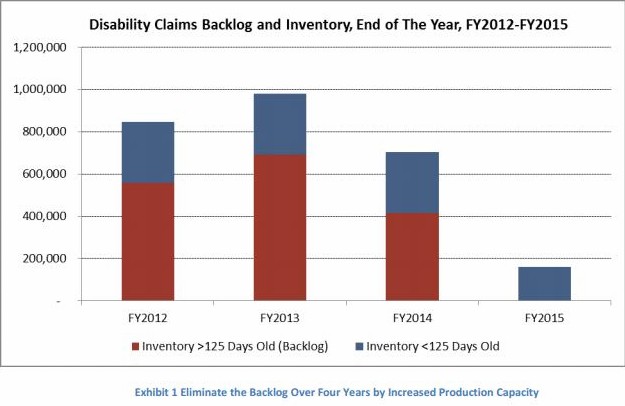
One thing that catches my eye and should be cause for alarm is the straw man mentioned above. He is going to be the fall guy when things don’t pan out. The foundation is being carefully constructed and cardboard cutouts are being erected to appear authentic. The following graph and explanation are an example. Notice everything is couched in ” This is what is supposed to happen” or “We foresee a gradual…”. Planning at VA has been non-existent for centuries and is a spurious combination of “Oh, shit! When did that happen?” followed by lots of “Perhaps they won’t notice” or “I hope this doesn’t affect our tee time.”.

Take-down chart? This sounds like a Swat maneuver. Col. (Brevet Maj. General) George Custer had a chart similar to this in his hat when found above Minneconjou Ford. It carefully detailed what the Indians were planning and the adequacy of his response. I’m sure the captain of the Titanic had a similar one threading a path through all the open sea ice infesting the Northern Atlantic every April. The point I’m trying to make is that VA’s suppositions are manufactured much like a billiards game. Wait until the ball quits rolling to make a decision. Nothing is committed to paper until failure is imminent. At that time, a new, improved game plan is instituted that will carry the day. Each and every plan fails but that does not dull the enthusiasm of the planners. They dutifully return to their chalkboards and start drawing anew. No mention is made of failure or poor planning. No bonuses are relinquished for failures of judgement. Quite the contrary. Even larger bonuses are dangled in front of them and exhortations to stem the tide are shouted louder. Congress instituted the VJRA in 1989 to fix this. Old habits die hard. Really old habits are immortal and refuse to succumb at the VA.
VA resorted to acronyms several years ago to enunciate how they were taking the backlog fight into the field. We’ve reported some and invented a few humorous ones of our own to make our point that catchy phrases sell cars and potato chips. They do not change reality. Challenge Training is all well and fine in teaching RVSRs the mechanics of the claims process. If you’re still driving a paper model T, the chasm is too wide to ford and no amount of training is going to bridge it. Which leads us to the miracle of technology. Would that this were the case.
VA belatedly launched their VBMS plan in 2012 as a last ditch effort to modernize. They took 4 (four) (quatre) (see) VAROs and said that henceforth all claims would be done electronically. First, a company had to be located on short notice to start scanning in the Vet’s records. Next, the .PDF format had to be word searchable or all they had was an incredibly small filing cabinet where the Vet’s records couldn’t get lost or misplaced. Whoa, hoss. Don’t bet on that one yet. They probably haven’t right clicked and made a copy. VA has a storied history for losing things. Finally, the new electronic file had to be organized uniformly such that each VSR could access them and find everything in the same place.
Think left flap, center flap and right flap. For those of you uninitiated, a C-file is a file folder that opens with three parts and two folds. Take a piece of paper and fold it like a letter into three equal components and you’ll get the picture. Currently the left flap has to do with dependency, wives, kids, etc. The center flap is all about compensation. The right is VR&E, VA loans and other entitlements. If I have the right and left flaps reversed, excuse me. My brain is getting defective.
After collating and scanning, the organization was next. Following that, VSRs were expected to go online into the bowels of the VBMS and use it to manufacture ratings. Who would have thought that the four VAROs would all try to access the national VBMS database simultaneously during daylight hours? The VBMS promptly became the VBSM and crashed. All the VASEC’s horses and all the VASEC’s men couldn’t put VBMS back together again. Soon it was back to the hitting the books with the old analog pencil and paper. VA is now claiming that they have no less that 12 VAROs VBMS operational. As with all that wanders out of the mouths of the VA talking heads, the definition of “operational” is key to understanding this. Here’s the mantra posted on all the bulletin boards of the new VBMS-equipped VAROS…
Through process-improvement initiatives, VBA is rapidly developing and testing streamlined business processes, focusing on eliminating repetition and rework. VBA established a “Design Team” concept to support business-process transformation. Using design teams, VBA conducts rapid development and testing of process changes and automated processing tools in the workplace. This design team process demonstrates through pilot initiatives that changes are actionable and effective before they are implemented nationwide.
This was lifted from Bernie Madoff’s game plan. It also bears a striking resemblance to the expensive Dave Del Dotto Cash Flow System brochure (and cassette tapes) I bought back in the eighties. It sounds good on paper. VA calls that the “paper view” as in “We designed this on paper and it appears as though it will fly”. The numerous IT contractors asked to bid on this hodge podge of new ideas refer to it as “pay-per-view” as in “Sure, we’ll build it for you just like you drew it here. Unfortunately it won’t work the way you drew it. When you come back with a change order, we’ll build that version so you can pay to view it as well.”
What I think VA fails to comprehend is that their IT gurus are the ones who clung to the paper files systems for decades past when even their very own contemporaries in government realized its neanderthal potential. Now, like newbies wanting to have the shiny new skateboard on the block, they are grasping at anything to appear more modern and knowledgeable. As we all know, you let the geeks figure this out. Give them the parameters of what you need, the stringent mission needs and get out of the way. The worst thing you can do is hire a bunch of your own talking heads, none of whom speak the same language, and turn them loose on a project of this enormity. They’ll tell you anything you want to hear if you’re cutting the paycheck.
VA has been building a Tower of Babel for the last few years. In construction, we have an apt term- Eventually you have to shoot the engineers and begin production. VA cannot bring itself to do this. They endlessly continue to tamper with the model and commit inadequate resources to any one facet of it. Thus you have no national infrastructure set up to scan the C-files but just a few local yokels with no instructions on the parameters and needs. Each varies from RO to RO with no uniformity built in. Computer servers haven’t been set up because no one has allocated sufficient funds for a massive server farm somewhere to accommodate it (yet). Nevertheless, VA has put in place a plethora of cute acronyms to describe what will happen in this new idyllic world they are creating. It’s like taking your Erector Set® down to the World Trade Center and asking “Where do I set up?”
Allow me to pluck from some of the choice phrases that so richly adorn this document.
VBA has also conducted Lean Six Sigma and Kaizen events on these selected targets of opportunity,
I believe these are Karaoke terms. Either that or they are Yoga positions. “Targets of opportunity” leads me to believe former military planners have their fingerprints all over this.
VBA has actively solicited innovative ideas for process improvement from Veterans, employees, and industry stakeholders through a variety of structured mechanisms
Simply read, VA was too cheap to go out and hire think tanks to unravel this. Instead, they installed “structured mechanisms” called “suggestion boxes” in VARO rating rooms, VSOs and VFW bars. Veterans from Rio Linda can be excused for misreading the spelling of “stakeholders” and demanding grass-fed beef with their claims.
VBA also implemented the Simplified Notification Letter initiative
This is one of the few true statements in the document. They did do this. Now your denial letter is couched in fewer keystrokes. Of course, it’s computer generated so it really didn’t speed up anything ratings-wise. The form now simply says “We made a decision-No!” The beauty of this is manifold. By using denial as the default setting more broadly and rapidly, productivity will appear to go through the roof. When the chickens come home to roost from remands two and three years down the road, a new backlog will begin. VA will deal with that when they get there. Anything post-2015 is not programmed in because they haven’t ever faced that eventuality yet.
Fully Developed Claims (FDCs) are critical to achieving VBA’s goals. A fully developed claim is one that includes all DoD service medical and personnel records, including entrance and exit exams, applicable DBQs, any private medical records, and a fully completed claim form.
Whoever dreamed this one up got the “Let them eat cake” award. Imagine making a claimant go out and get everything needed to assess his claim. VA does nothing. Once assembled, the rater simply makes his/her decision based on what the M21 spits out (denial) and sends it up for a signature and the steno pool. What could be simpler? This should, by rights, leave the raters with ample time to brush up on their upcoming Karaoke competition in Orlando this summer. That it will make severe inroads into the backlog is without question. Duty to assist, as an obligation, will fall into disuse and be supplanted by “Dude, you didn’t give me a FDC. I can’t rate it.”
And then there’s the dilemma of scanning I mentioned. VA glosses over this with another acronym (VCIP) that blithely ignores the 800 lb. gorilla with handwritten records. They gleefully point out that they’ll be up and running on this to the tune of 70 million images a month from 5. Really? My C-file contained 3.517 individual sheets of paper to scan. My attorney asked for it on the 26th day of June 2012. We received them in October. This was mandated by the CAVC to be done within sixty days of the filing of the Notice of Appeal. VA must not have gotten that email.
VBA recently established the Veterans Claims Intake Program (VCIP). This program is tasked with streamlining processes for receiving records and data into VBMS and other VBA systems. Scanning operations and the transfer of Veteran data into VBMS are primary intake capabilities that are managed by VCIP. As VBMS is deployed to additional regional offices, document scanning will become increasingly important as the main mechanism for transitioning from paper-based claim folders to the new electronic environment. The VCIP contractors began scanning on September 10, 2012. The ramp-up volume mirrored the VBMS deployment plan for the 18 regional offices on VBMS as of the end of CY 2012. By the end of December 2012, the VBA contractors were providing 5M images per month. By the end of CY 2013, the contractors will be providing 70M images per month.
What VA fails to reveal is that the VCIP contractors came back to the VA and started asking questions almost immediately about how they (VA) wanted the scans organized. The next burning question was what to do with all the hand-written medrecs. Each contractor at the four original VBMS test VAROs were given conflicting instructions. As for the handwritten ones, VSRs are instructed to revert back to analog on them. So, at best, newer “round peg” claims will fit into the round hole whereas older “square peg” handwritten claims will suffer the same slow “inventory” semantic or is it “backlog”?
There is no simple solution to this. VA should have begun it in the 1990s when they had the foresight to go to the VISTA system employed by their VHA. They didn’t and now they are paying the piper dearly. It wouldn’t be so disagreeable if VA would just own it and get ‘er done. Instead, they erect the staging and call the media for grandiose soundbite news about how they are winning the war on the backlog. The more they try to convince me that they can see the light at the end of the tunnel in 2015 convinces me of my father’s observations. They haven’t a clue what they are about but they can sure talk a blue streak about how to fix it.
How about this one? Count them. No less than six acronyms to cut the Gordian knot. At this rate, by 2015, VSRs will be accosting you in supermarkets or Costco and begging you to file claims because they are under-employed. In fact, they’ll be researching our e-records desperately in hopes of finding some entitlement they overlooked in years past that is due and owing. After the Fed. Circuit’s Walker decision, you can pretty much count on it.
A crucially important element of our technology plan is the ability to file an on-line claim through a new DoD-VA shared self-service portal called eBenefits, which is part of the Veterans Relationship Management (VRM) initiative. VRM will provide multiple self-service options for Veterans and their service providers. In addition to eBenefits, VRM includes the Stakeholder Enterprise Portal (SEP), the Direct Electronic Gateway (D2D), and VLER-dependent intake solutions like Access or Direct Connect that provide service treatment records (STRs) from DoD and medical records from VHA, and – with the new DBQs – private physicians.
Well shoot, pilgrims. Problem solved. Them fellers down at Vermont Avenue have this all sewn up. Good thing too. This was threatening to have tremendous repercussions on Veterans as most know. Now, with the insertion of a bunch of letter combinations, all our worries have been addressed. VA has come back down from the mountain with the sacred tablets. They have drawn colorful pictures that even Dick and Jane can digest. One minor problem seems to be cropping up. A lot of the DBQs are about as long as a 21-526 and many private doctors are demanding money to sit down and fill them out. Who woulda thunk it?
Here’s the one I like.
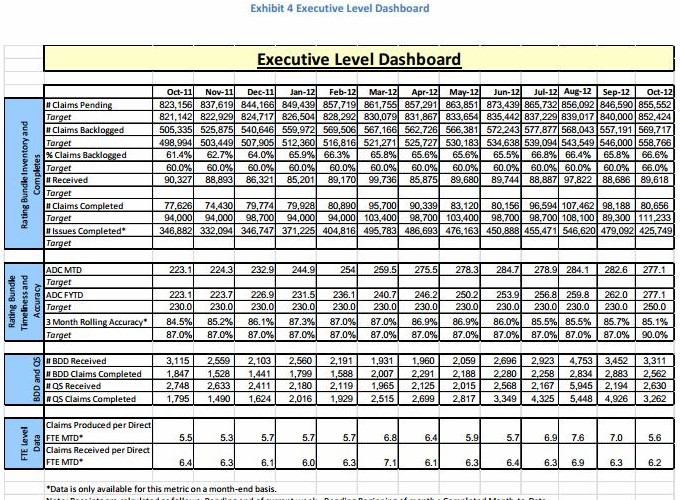
Check out the three month rolling accuracy with the asterisk beside it. Does anyone find it odd that the data is only “available for this metric on a month-end basis”? How is it they can project these mythic percentages? From my readings of the Veterans Benefits Manual from Lexis Nexus, it categorically pokes a rather large hole in their data. Based entirely on the outcome of judicial proceedings, it has been determined that VA is in error at least 60% of the time in their decisions. If this wasn’t cause for alarm, it doesn’t even encompass the vast quantity of JMRs where VA admits no wrongdoing and asks for either a do over or a settlement on the Courthouse steps before you enter. Those “errors” never enter the system as hard statistics and are lost. If included, it would point to an error rate of 70% which is appalling. VA can’t or won’t explain the disparity between their data and documented judicial percentages.
Why is there no hue or cry when a government agency publishes a document rife with propaganda and lies? How can it be that this will represent the true state of affairs? Do the VSOs of America subscribe to this pablum and swallow it uncontested? Is there no one who will stand and cry foul? Do we have to wait until 2015 to find out (once again) that but for a glitch in statistics, all the carefully laid plans were for naught ?
Always remember that when someone dumbs down the explanation for the problem and writes it out, it will probably state the obvious like ‘The sun rises in the east in the morning and sets in the west in the evening. This explains that dark stuff in between.”
Try this one on.
VBA’s Transformation Plan includes initiatives directed toward increasing decision output (claims completed) above the volume of incoming claims (claims receipts) in order to eliminate the backlog.
So near but yet so far.


 asknod
 Bethanie Spangenberg
 kcraveiro
 robinhoodesqvetsatty
 Wesley McCauley
 Veterans Claims Help
Agreed with the scanning analysis, I see this as one of the biggest problems and yet to be resolved. A Vietnam or Desert Storm Vet may have evidence in their file for a disability but the rater is probably not going to see it beause it’s difficult to read and they are under a time cruch anyway? They’ll go with the easy typed evidence or path of least resistance which may or may not be easy to read but or strong enough for an accurate assessment to determine a correct rating? It’s a shame because the hand written medical records will not be given the time review they derserve. That’s why I think, we will see a significant increase in appeals now. Sure, the backlog will get reduced but appeals are going to increase exponentially to the Vets demise? You mentioned the “real” error rate on claims which adds to an element of distrust in that most people are not sure they can trust the data or not? I have a claim in now and about half of my c-file is hand written doctors notes…so…we’ll see how it turns out…
All my SMCs are hand written and some are from a civilian hospital in NW Thailand written by Thai doctors. We were off the grid with AirAm and depended on locals for the basics.VA refused to go get them so I did. They still wouldn’t take them because they were “private medical records” while I was in so they had to be forgeries. Who in a war zone goes to a civvie medical facility? We did. Few can do this at the ROs. They are trained in word-searchable Adobe. Handwritten shit is like the Hieroglyphics to them. Always a good idea to take them to a medical transcriber and have them do it and certify it as “true and correct”. You’ll find some really interesting things. Look at the top of the page at the widgets below the VCM and click on Medical abbreviations. Good hunting sir.
Lean six sigma–http://en.wikipedia.org/wiki/Six_Sigma
The phrase I liked best was “Each Six Sigma project carried out within an organization follows a defined sequence of steps and has quantified financial targets (cost reduction and/or profit increase).” Read denied claims= better bottom line
Kaizen– Japanese for “improvement”. Lots of room for that.
http://en.wikipedia.org/wiki/Kaizen
Perhaps we should do a post on this.Using Kaizen and lean six sigma to improve the prospects of winning. Nawwwwww. VA always gets it right. Why try to improve on perfection?
I don’t understand why claims with more than one condition can’t be decided one condition at a time (by specialists in body part, or disease) when the development for each condition is complete. Why does a claim containing multiple conditions have to stay together until all conditions are developed before decisions?
Don’t know who your “we” is but taking 4-5 years (or longer) to get a 100% for life threatening conditions is abominable by anyone’s standards one should think. Quite often the Vet dies before his claim is finished and then his wife has to fight the vA for years to get what her husband started. If SSA processed disability claims like the vA; Congress would be all over them like a cheap suit! The vA seems to like to deny claims and lowball when they have to approve a claim. If that isn’t enough they play around with the effective date. Rarely is a mistake in the Vets favor so are these actually “mistakes”? The vA can make C-files or evidence within them disappear so fast that Harry Houdini would be envious!
Just drawing from my own experiences or those of my acquintances mind you.
Jeez..and this backlog just started? I was under the impression that this had been going on for years…I hear there are as many claims approved in last 3 years, as in the period 2003-2009. So just in last couple of years we began ignorring & denying Vietnam war claims? and 1991-1992 Gulf War claims? I didn’t know that