BVA–TARRED AND FEATHERED

This is a classic example of VA’s habit of interviewing you at an initial intake exam and trying to pin the willful misconduct tail on the donkey. I have witnessed it numerous times, including having it almost happen to me.

When you first enter the VHA system, certain protocols occur. They want your old history as much as possible and will ask where any records regarding your ailment(s) are located. If you file a claim for SC, they will return to these initial records as they did to this Vet. What has occurred here is the Vet was undoubtedly questioned about the origin of his HCV and willingly provided evidence to the interrogator. The Vet was queried about any behavior that might have put him at risk. He repeatedly and vehemently denied any consumption of drugs during the course of his claim, yet it still sneaks in. It’s no mystery. When I came into the system in the fall of 2008, I had reams of info about this illness and not one scintilla of evidence about any drug hanky panky. Nevertheless, the first doctor I talked to started off the conversation with “Well. Let’s talk about your drug history. Tell me how you started out. Pot?” The assumption is always that it is a drug-related infection. VA doctors, for the most part, assume this from the get-go.

It is paramount that you make it known in no uncertain terms that this is not the disease vector. Just filling out the RFQ can be fraught with danger. We had one member that scratched out an answer regarding piercing because he wasn’t sure about the terminology. VA attempted to use this to prove he was being devious and was therefore not a credible historian. When he filed a second RFQ, they said he had changed his story. He won on appeal, but it illustrates what you will deal with.

When a doctor or an examiner from QTC asks you questions during a C&P exam, he/she will pose rhetorical questions. This means questions that are assumed or really don’t need an answer of yes or no. They will ask you if you’re a Veteran. Well, Duh! That’s why you’re there. So if a doctor segues into a discussion about drugs or the risk of drugs with respect to HCV infections in general, without referring to your case specifically, you can assume this is the groundwork for an assumption on his part that if you do not specifically deny it then you are guilty of it. It is a very subtle technique, but police detectives do it every day. Doctors write it in the records and you will spend the rest of your life trying to excise it. When the subject is broached, simply nod your head sagely and say something inane like “Well, that’s what I’ve heard, but I’m a pick one (Christian, Mormon, 7th Day Revisionist, etc.) and we don’t cotton to that stuff. Never done drugs or alcohol myself.”

If you so much as admit you puffed on a joint (and shared Slick Willy’s propensity for not inhaling), you’re headed for the Group W bench. No one will ever be able to prove this one way or another unless you have been busted and have a track record. Pot doesn’t cause HCV even if you shared the joint so why drag it into the discussion? The same applies for alcohol. VA uses anything in the file as a tool to leverage a denial. Therefore it behooves you to think very carefully before shifting your mouth into drive and taking your foot off the tongue.

This Vet was lucky because he kept his story the same. He didn’t get worried and start adding more suspected risks as he progressed. He refuted the “drug” testimony as soon as possible and did so frequently. One thing Vets should also consider is the conversation with the doctor is not testimony sworn to, but simply what the doctor wrote down. If you discussed this again and again every time you came in and bragged about how many times you’d been through rehab, it might be a little bit more damning. Here, the Vet discovered it and immediately set about correcting the record. Remember also, if you discover it and do nothing to correct the misconception, it is assumed to be true.

Meet our Veteran from Manchester, New Hampshire:

http://www.va.gov/vetapp11/Files3/1125743.txt


Posted in BvA HCV decisions, Introduction-Read these first, Tips and Tricks | Tagged , , , , | 2 Comments

BVA–§1151-HCV Reasonably Foreseeable?

I always search BVA and CAVC decisions for medical validity and to see how the VA approaches these things. While reviewing this decision, I noticed, as did the VLJ, that a VA physician opined that the risk of acquiring an HCV infection via transfusion in 1982 was entirely foreseeable.

The VLJ analyzed the evidence and noted that HCV wasn’t identified or recognized until 1989. This was the difference between winning and losing this claim. Yes, I hear the chorus of naysayers. Sure, the Vet could have won this on appeal to the Court, but the fact remains that he shouldn’t have to resort to a higher tribunal to obtain justice. Physicians who set themselves up as knowledgeable, go-to specialists must be above reproach. This is very sloppy work for an expert. The fact is, we are seeing more and more of this in a rush to deny claims. Accepted practice dictates handing this off to a VHA employee who does nothing but opine. It is no surprise that virtually all of these “opinions” seem to come down in favor of the VA and against the Vet.

I wrote up a long treatise about another VA phyician who was asked to submit a “Independent Medical Opinion” (IMO) regarding the etiology of a Vet’s HCV. That chucklehead quoted all manner of incorrect medical procedures for identifying the hep using 1987 AIDS testing protocols. This is more of the same. The fact is, ladies and gentlemen, VA will use anything or anyone to deny your claim initially absent concrete proof presented by you. Do not expect them to collect this proof for you. In fact, expect them to use outdated protocols, inexact science and outright tomfoolery to deny you. Always examine a denial for several things. Among them, look for a dichotomy between accepted medical knowledge and when it was discovered.

Most importantly when denied, be sure to make sure VA addresses every possible risk you bring up. We are starting to see a plethora of denials based on one facet such as jetguns even though the Vet also claims other risks. VA will focus entirely on one risk to the exclusion of all others. There will be no discussion about these other risks and you will lose. VA is obligated to address all risks whether you bring them up or not. They rarely do this.

Here, where a Vet brings a truly viable claim to the table, the VA resorts to rounding up a pliant doctor who will say what he is paid to say. Fortunately the opinion blew up in their faces, but what if it had been couched in medicalese such that no one but another doctor could call bullshit on it? This gentleman was represented by the DAV and I have no confidence in their abilities to uncover what amounts to medical malpractice.

Veterans expect to be given a fair shake, but the evidence seems to come down more and more frequently proving otherwise. This decision exposes yet again the VA’s propensity to deny with no accountability. When exposed, the guilty party is not penalized. He/she can continue this practice for years aided and abetted by continued employment at the VA. In a civilian arena, this would be cause for remedial training or termination due to gross negligence. Witness:

In October 2009 a VA physician opined that the most likely 
cause of exposure Hepatitis C was the February 1982 
blood transfusion. She explained that Hepatitis C was
 commonly spread by blood transfusions prior to 1992. 
 Since then, a blood test has been developed to accurately 
screen the disease. The examiner opined that the Hepatitis 
C infection did not involve carelessness, negligence, lack 
of proper skill, error in judgment, or similar instance of 
fault on VA's part. She also opined that it was reasonably 
foreseeable. She did not provide further explanation for 
her opinions.

I hope Vets can take advantage of this adjudication for their own claims as it is a model of brevity and honesty. Sometimes the BVA gets it right.

http://www.va.gov/vetapp11/Files3/1125825.txt


Posted in BvA HCV decisions, Introduction-Read these first | Tagged , , , , , | 3 Comments

Wilco Farm Stores

While shopping at the new Wilco store in Gig Harbor, Washington where I live, I was pleased to find that they offer a 10% discount to Veterans. I mention this because I always patronize stores which offer this above others that don’t. They are also proactive and ask you if you are rather than wait to be asked. I like that. We get the short end of the stick from an agency created to serve us so it’s always a joy to get an unexpected reward from the private sector. Besides, Wilco has a nice military ring to it as in “will comply”. Give them your business if you would. At the risk of sounding like a male chauvinist pig, the gals who work there are very attractive (mentally). They helped me find everything in short order and it was an unexpectedly pleasurable shopping experience.

Above is the only picture of my Father and my Uncle Jay I have. Dad and Uncle Jay didn’t socialize much after WW2. He retired as a Lt. General (USAF) in 1975 and my Uncle Jay, as I mentioned in a prior blog, was a guest of the Japanese government for 3 years following his completion of the 97 klic Bataan Marathon ( see Jay Claire Warner- 1916-1989- An American Veteran). He soured on the whole military thing after his POW experience.  I forgot the dog’s name.

Posted in General Messages, Uncategorized | Tagged , | Leave a comment

Of Prophylactics And The Monsoon

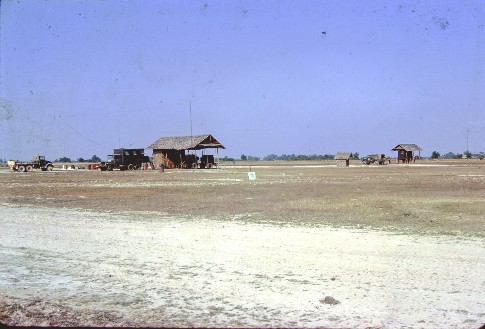
Even though I spent most of my two years either in Thailand or north of the border, I did have occasion to visit Saigon more than once on business at 7th Tactical Air Combat Control (TACC). I was there for a month getting up to speed on French with a lovely young lady who was assigned to make me literate in the language again.

When off duty, I tended to seek entertainment in the downtown area. The marketplace known as the Cholon District was on the other side of the river and for the most part, off limits. All rules are made to be broken and I was a victim of the siren’s song. In addition to being a marketplace for foodstuffs, it had a thriving prostitution trade.

Without going into detail, I can say that finding a prophylactic when you need one is futile. Oddly, we had access to them by the gross where we were stationed, but nowhere to employ them up country. If I had been foolish enough to fool around with a young Hmong maiden, I would have found myself the guest of honor at a shotgun wedding. No one in their right mind would even conceive of doing this. We were warned repeatedly at every Commander’s Call and there were messages to that effect posted discreetly at the Air Operations Center. Why then, did they have enough rubbers to sink a ship on hand? We found out soon enough in August when the Monsoon began. You could employ them to keep water and dirt out of your weapon barrels. They were absolutely perfect for that. You didn’t have to remove them to shoot. They fit my 12 gauge and M-79 equally well. They could be carried in the hollow handle of a Car-15 and were also useful when stretched over the top of extra clips.

The problem was always being shortsighted when departing for a short TDY or a liquor run. Somehow the raincoats always got left behind and the need arose when far away from them. This is what leads me to believe one of the reasons we had such high numbers of HCV was due to unprotected sex. Back then we didn’t consider it high-risk sex. It could be cured with 3 million units of Penicillin in most cases. The approbation of your First Sargent was the big issue. For some reason the military took surveys and kept track of this disease. They engaged in “body counts” much the same as they did with enemy killed. Why we will never know. I suppose they don’t have to worry about that in the Afghan Olympics.

The fact remains that we almost always had these objects in our pockets during Monsoon to protect our weapons (no pun intended) but did not make a practice of carrying them during the dry season. If they kept the records I have mentioned, I surmise it would show a marked drop in reported cases of STDs during the Monsoon. It stands to reason if everyone was packing them during that time, that they were employed more frequently.

The VA has chosen to grant me SC based on the Genotype being 3A which is endemic in that region, and because of a transfusion from an encounter with the silver BB. Regardless of why it was granted, there is an equally recognized risk now that high-risk, unprotected sex was the culprit. VA never considered that and I luckily never had any STDs. I did have several instances of NGU, but that happens when you are wet a lot in that environment.

Veterans who are filing for Hep. should check their medrecs and if they ever had urethritis (non-gonoccocal), it would support a risk of HCV. Many mistakenly think that to win a claim, they must prove a genuine case of the clap. What most don’t know until they look at their records is that the pecker checkers were liable to throw a prescription of Penicillin in on top of a NGU diagnosis just in case the test was defective. Often you wouldn’t be back near medical facilities to test again soon, and pills were cheap. This saved everyone a lot of lost time and kept the wheels turning smoothly. This gives more weight to a “possible” dx of a dose whether you actually had one or not. VA will grant SC for this , but it may take a trip to D.C. to attain it. This is being offered as a FYI to all of you. I’m really not trying to wreck any marriages.

Fortunately my wife realizes the exigencies of war were far different from anything we encountered here. Certainly no one was aware of the host of diseases we all have come to fear since the eighties. That knowledge has changed the way we think and behave nowadays, but the sixties had a different cache. So check your medrecs before filing and look for the signature abbreviation of NGU or the words gram-negative if you ever had occasion to go on sick call for the telltale symptoms. A win is a win in this business. I do believe the jetguns will be found to be the greatest risk, but I also expect that finding won’t be published by VA until all of us from that era are room temperature.

Posted in HCV Health, Introduction-Read these first, Tips and Tricks, Uncategorized | Tagged , , , , , | Leave a comment

OUT TO LUNCH

Cupcake and I are celebrating our twenty fourth anniversary today so I will be out. I apologize for no intriguing post about the shortcomings of the VA system this afternoon.

A short aside to you male Vets out there. When scheduling a marriage, it is important to do it near or after a prestigious day like February 15th, July 5th, December 8th, or December 26th. The reasoning being that it’s much easier to remember the date of the anniversary and have flowers on the magic day for pun’kin. She’ll think you actually remembered on your own without any prompting from her. I don’t personally advise using Easter, Labor day or post-Thanksgiving for this. Veteran’s Day is pretty much right out, too.

Posted in General Messages, Humor, Uncategorized | Tagged , , | 2 Comments

BVA–Dr. Ben Cecil

Here’s a case that exhibits the narrow-minded, myopic policy of the VA examiner to focus so totally on only one side of the dice cube that he never sees the other 5 sides. The Vet had hep in service and served for 17 of his 20 years with it. The evidence is overwhelming. One doctor in service even went so far as to say it was NANB in 1987.

http://www.va.gov/vetapp11/Files3/1126252.txt

The fellow has two very well-constructed nexus letters, yet can get no traction until he arrives here (at the BVA). Dr. Cecil and Dr. Stevens have both written letters that pass muster in every respect, but the Louisville RO has punted to the BVA. Considering they have the highest grant rate for PTSD claims, one would assume their raters are claimant friendly.

Dr. Cecil has a practice, but also writes letters for hep. c vets who petition him to do so. He provides the service for free and is a Godsend to Vets. I’m sure he also gets overwhelmed with this sometimes, but I hear he always comes through.

Fortunately for Mr. Kentucky here, the VLJ can see the perfidy of the examiner. If you ignore 75% of the assembled medical evidence pertinent to this adjudication, you can honestly report he had HAV in service and HAV does not spawn HCV. Claim denied. VA will say later that there was implicit consideration of all evidence, but we know that’s a gross mistruth.

The end result is obvious. He’ll get his SC- of that there is no doubt.  What the delaying tactic has done, as I mentioned in a prior post, is create a new class of deferred claims that are valid and will be won- eventually on appeal. What’s more is that a certain percentage-about 72% will give up, get drunk, get Jesus or go for SSD. Regardless of which outcome ensues, there will be a winnowing of the claimant pool and a long delay in the reckoning.

VA’s budget is finite. As with all Government agencies, there is a lot of waste and frills up near the top. Bonuses abound at 810 Vermont Ave. NW 20420 around Christmastime. Money from one program or another didn’t get used up and what better time to show appreciation for all those adjudications well done. A host of claims await in the inbox -38K plus from what we hear. 50 K more will arrive next year. 49K arrived last year. Two wars are going to  make the VHA constipated worse than a dog eating cheese. The VBA has significant delays now, but all we’ve seen so far is the tip of the iceberg. Experts predict the high tide of Vietnam Vets’ claims hasn’t even hit yet.

This has forced the VA to put a few more bends in the river to make it look like the Mississippi. We now have a backlog waiting to get into the VAROs. We have another already in the belly of the beast. We now are building an extensive backlog outside the BVA’s doors. Additionally, we have the claims in house which are still in progress. I’m not going to even consider the CAVC remand caseload. Were VA to actually get rid of all this old stuff, their budget would have to jump 33 to 40% to cope with the new winners. They don’t have that kind of money right now and Congress can’t get it’s act together to figure it out. This leaves VA in the unenviable situation of having to create more and bigger waiting rooms for those of us who are suddenly discovering there’s something wrong in Liverland.

This decision is all the more reason for Vets to get it right at the VARO level and avoid the interminable delay associated with what this poor soul experienced. He filed in 2004 and got the upside down thumb in December 2005. This decision is a remand. It will take, on average, 459 days (according to the VA), for this to reach fruition. That is counting from July 19th, 2011. Mr. K has almost seven years into it right now. My conservative guess is he won’t  see any wampum for another 3 years.

What this means is that VA is going to pay him in 2014 dollars for monies he should have legitimately received in 04. He has “loaned” them the money, not only interest free, but inflation adjusted dollars free. I’d say that was might’ neighborly of the old boy. He certainly could have grown that money in the interim. He is one of an expanding universe of claimants who are all similarly situated. Their only crime is finally showing up to file and discovering the line extends out the door and around the block several times. The worst part is the line isn’t moving perceptibly and it’s getting much longer every day.

I have created a new link at the top so you can all contact Sen. Patty Murray, the leader of our Pack, and tell her a) what a simply marvelous job of bitching she has done; and b)that the VA is not being honest with her. If enough complain, Sen. Tennis Shoes might get the impression we’re getting hosed with 2004 dollars-if we’re lucky.

Posted in BvA HCV decisions, Tips and Tricks | Tagged , , , , | 4 Comments

FED.CIR.–Purple Heart v. VASEC (2009)

Last year I did an interesting writeup about Macklem v. Shinseki (Leroy Macklem, come on down!). What I didn’t do was give a complete rationale for why the CAVC ruled the way it did. I simply mentioned the rescission on appeal of the Extraordinary Awards Procedure (EAP). I feel Veterans need to see the thinking of the VA hierarchy to better understand what they are up against. Its one thing to go to court and espouse a theory. It’s entirely another affair to create laws, hide them from view and state that you are allowed to do this (or whatever you please) simply because you decided to.

The office of General Counsel (027) is tasked with keeping abreast of the law as it is currently interpreted by the Supreme Court and the lower appeals tribunals. Congress routinely changes laws that apply to Vets, so that too must be current. The Secretary is free to promulgate new regulations after publishing them in the Federal Register. If anyone objects, then he will have to defend his changes. The changes do necessarily require a legal foundation to support them.

In August of 2007, the OGC opted to change the procedure on how large monetary awards were administered (the Extraordinary Awards Procedure or EAP). Anything over $250K had to go back to D.C. to be examined. All well and fine. This was okay until the small print was read. There it stated that this was to be done in the utmost secrecy and the Vet and his representative were to be excised from the loop. None of this was to be allowed to escape into public. If a reduction in the proposed award was instituted, no one would know. FAST letters, as they are known, are public so this did not go unnoticed.

The Military Order of the Purple Heart decided to challenge the VASEC on this and went to the Fed. Circuit to stop the practice. While they were engaged in this, VA quietly rescinded the Fast letter in question and substituted another with minor cosmetic changes. When they (VA) arrived in Court, one of their primary arguments was that the Feds didn’t have the jurisdiction to hear this because the FAST letter had changed!

http://caselaw.findlaw.com/us-federal-circuit/1024924.html

I quote :

The VA first challenges this court’s jurisdiction to receive this petition, arguing that it is moot because it was filed for Fast Letter 07-19, which was withdrawn when replaced with Fast Letter 08-24.

and:

The VA alternatively argues that its new procedure is not subject to judicial review because it is not a “rule” within the meaning of the APA. The Federal Circuit is authorized to review actions of the VA Secretary “to which section 552(a)(1) or 553 of title 5” refers, see n. 1 ante, and thus to “review the VA’s procedural and substantive rules, any amendments to those rules, and the process in which those rules are made or amended.” Disabled Am. Veterans v. Gober, 234 F.3d 682, 688 (Fed.Cir.2000) (citing cases). The APA defines a “rule” as

the whole or part of an agency statement of general or particular applicability and future effect designed to implement, interpret, or prescribe law or policy or describing the organization, procedure, or practice requirements of an agency.

5 U.S.C. § 551(4). Purple Heart v. Secretary of Vet. Affairs (2009)

The current VASEC and his predecessors are more than familiar with how the law works. To attempt this sleight of hand with a straight face is almost a joke.  Read this.

 Petitioners refer to the new instruction that claimants are not to be informed that their claim, after a hearing and decision by the regional office, is receiving another review at a controlling level, without any right of input or participation by the claimant. The Regulations state the veteran’s “entitlement” to a hearing conducted by persons with “original determinative authority:”

Purple Heart supra

Amazing, isn’t it? VA was attempting to rearrange the judicial furniture within the confines of 38 CFR, effectively disenfranchising the Vet of any input or procedural due process- all without so much as a by your leave. The sheer effrontery of this is monumental yet this occurs every day at the VA.

The legal landscape outside 810 Vermont Ave. NW is littered with these new “interpretations” of law. There must be an Office of New  Legal Technique that does nothing other than research how to craft new meanings from existing regulations. Witness the fact that every new ploy that arises at the BVA is usually found wanting for lack of any cogent legal reasoning to support it. OGC’s staid response is that they “construed” the law to mean something new that no one else ever saw. Consequently we see the EAP, implicit denial, implicit consideration and a host of other new terms to excuse their excesses. The latest ploy of denying a claim without actually denying it is the “without resort to speculation” excuse.

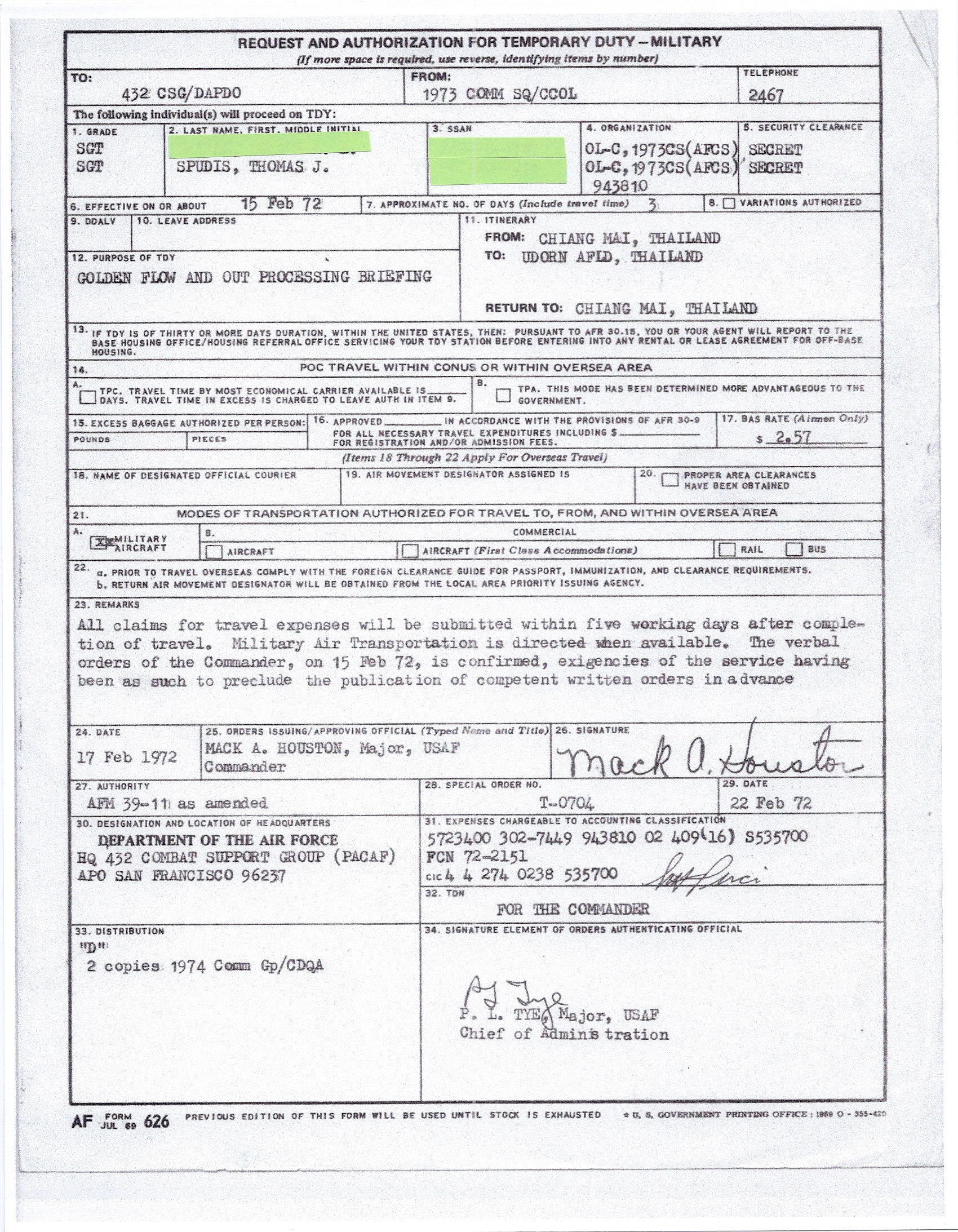
You submit your claim and have several risk factors for contracting hepatitis in service. One of these  may happen to have connotations of willful misconduct- say a failed urinalysis when DEROSing back to the States. After 1971, we were required to pass a piss test that detected opiates (Operation Golden Flow). The idea was to rehabilitate the junkies before we sent them back home. Uncle Sam didn’t want a bunch of druggies being discharged and set loose on the street. They opted to dry them out before setting them free.

At any rate, after assembling all the evidence and say, noting a tattoo in service and/or an STD, the VA examiner tends to “opine” that the Vet had several notable risk factors, and he/she is simply unable to ascertain which one was responsible for the HCV. We all know the rater is supposed to do the BOTD dance and give it to us if two of the three risks are legitimate and incurred in the Line of Duty. VA has decided to change that method in favor of stating that the crystal ball is “too hazy” to get a clear reading and thus it would be rank speculation on the poor rater’s part to advance a theory on service connection. The result? A denial based on a choice to not adjudicate responsibly. The claim goes up to the BVA on appeal and they invariably affirm. This will withstand the CAVC’s scrutiny, too. They tend to defer to the BVA if the reason for denial can be rationalized. This is now starting to come under fire, though

The repair order is a nexus letter that cogently discusses every facet of the risks and ascribes a percentage to each. The jetguns should be thrown in because the Court now recognizes this to be a risk even if VA steadfastly refuses to. The nexus letter will introduce a new facet-a doctor unafraid to speculate.

VA will continue to come up with all manner of crazy new ways to look at established jurisprudence with an eye towards reinventing the interpretation. This is disconcerting for any number of reasons. We don’t pay the OGC to investigate cutting edge law. They are tasked with adjudicating our claims based on established tenets already in existence-to wit: M21-1 and 38 CFR. They have no business running around seeking new meanings for what the definition of “is” is. That’s Bill Clinton’s job. Congress has chartered them to perform a finite procedure. The task is simple and straight forward. VA has been doing this for more than a century without having to resort to speculation. Why this sudden moral quandary and the worry of disenfranchising the Vet? VA certainly never had any moral compunctions about denying us in the past based on squirrelly theories.

Identifying roadblocks to our claims success is an ongoing process. When VA arbitrarily changes a regulation, the Courts will call them on it. When they obfuscate and dissemble, we have to be alert to these ploys and identify them. It is assumed that as soon as we see a trend and find a way to circumvent it, VA will feel emboldened to erect yet another one. I will give them this much. They are industrious little elves with too much time on their hands.

Posted in Fed. Cir. & Supreme Ct., From the footlocker, Important CAVC/COVA Ruling, Tips and Tricks | Tagged , , , , | Leave a comment

DC 7354–THE FINE PRINT

A member sent me an email and stated that he could never qualify for 20% or more under the HCV ratings percentages even though he was very ill. He wondered how any of us ever got above that with the way it’s written. Veterans need to understand that VA writes VAspeak. They run things together and use a lot of ands and ors strategically in ratings descriptions to make some ratings “either…or” ratings and some conjunctive like A+B. So, with that said, let’s look at what is necessary, what is hidden and what it means to you in Dick and Jane speak.

DC 7354 starts with this simple phrase:

With serologic evidence of hepatitis C infection and the following signs and symptoms due to hepatitis C infection:

Nothing here of note except the innocent conclusion that you have to have an EIA or PCR test positively confirming you are infected. You might be surprised that a lot of Vets just assume they have this and file for it. On appeal 4 years later, the BVA remands you for the C&P that the VARO never afforded you and Bingo! No HCV. There are other flavors and sometimes Johnny Vet gets them confused, so VA just puts this in here to CYA.

Nonsymptomatic——————————————o%

Well, this is self-explanatory. If you were puke sick, went through IFX treatment and healed, this is where you may end up. If you somehow survived unscathed, and by that I mean you kept all your mental faculties, VA will be disinclined to pay you. I personally have never met any Vet that came out the other end of the Interferon tunnel with no side effects. VA sees this all the time and that is why we have a 0% in the code.

Intermittent fatigue, malaise, and anorexia, or; incapacitating episodes (with symptoms such as fatigue, malaise, nausea, vomiting, anorexia, arthralgia, and right upper quadrant pain) having a total duration of at least one week, but less than two weeks, during the past 12-month period—————-10%

Here is the first example of either/or of which I speak. You need the first set of circumstances ( fatigue, malaise, and anorexia) intermittantly to qualify. This is one distinct set of requirements. You will need to prove that you are indeed anorexic. A doctor will diagnose you somehow and write it in your records. VA has added two notes at the bottom of DC 7354. Note 1 is a prohibition of pyramiding DC 7312 (cirrhosis) symptoms on top of DC 7354. Note 2 is VA’s definition of “incapacitating episode”. What isn’t written or elaborated on is the definition of “anorexic”. VA uses this as their default definition:

http://www.law.cornell.edu/cfr/text/38/4/112

VA will keep close tabs on you and they always weigh you when you go in so remember that. One of our enterprising  members       ( Ralph) created a “weight loss” simply by packing lead weights into his jeans and boots to VA doctor appointments at the beginning of his claim. He subsequently “lost it” over succeeding months. The base line is established over time (12 months) so you sure have plenty of that. Ralphie is a real joker. He was the first to tell me about the FD&C#2 yellow food dye and black eye shadow tricks.

The other choice is the one most Vets go for.  The 10% requirement states that you must have incapacitating episodes that will require a doctor to insert a note in your medrecs that he is advising bed rest for you due to these horrible symptoms listed. Notice the “and” at the end encompassing RUQP. While no one will have all the listed incapacitating symptoms, it is expected most will suffer a majority of them. If all you report is RUQP and get nothing from the Doc on paper about how rotten you feel, chances are you are going to stay at 10%.

The VA takes great stock in how many days you are incapacitated. Thus, if you let “oh… about 5 or 6 days a month” escape your piehole, do not be surprised when VA says “The Veteran stated he is incapacitated less than a week every month” thus he does not qualify for a 10% rating.” I have read that too many times and the member says “Well, yeah, I guess that’s what I said, but I didn’t know they were that picky.” Veterans, you haven’t seen nuthin’ yet.

 Daily fatigue, malaise, and anorexia (without weight loss or hepatomegaly), requiring dietary restriction or continuous medication, or; incapacitating episodes (with symptoms such as fatigue, malaise, nausea, vomiting, anorexia, arthralgia, and right upper quadrant pain) having a total duration of at least two weeks, but less than four weeks, during the past 12-month period———————————-20%

Again, we see the or dividing the two sets of symptoms. Some Vets end up on prednisone to try to keep an overactive autoimmune system at bay. This “continuous medication” can also be construed as Interferon and Ribavirin because it is being taken for your illness. Any of the medications for cirrhosis like Lactulose do not qualify technically, but you are encouraged to list them all. My theory is that Morphine probably qualifies if it can be said you’re eating it for arthralgia. I had one industrious Vet who stated to his doctor that cinnamon, peanut butter, tomato sauce and garlic made him nauseous enough to throw up. The good doctor wrote this into his records with an admonition that the Vet should try to refrain from eating these items. This qualifies as a diet restriction. He wasn’t lying. If you eat them all at once, vomit happens. Here, again, the Vet is advised to push heavily about how many days he is incapacitated for the record. The magic minimum is 14 days now, but no more than 28. VA will not get anal about proving this yet. They start to require proof of time lost in the form of time cards or your supervisor’s letter stating as much later when you attempt the 40% hurtle. Another VA trick is to say that “The veteran does not mention any time lost so it is assumed he had no incapacitating episodes.” It certainly wouldn’t hurt to document this with pay stubs showing hours worked now. I say this because I sense the VA is on the brink of tightening up the purse strings on money. Congress is soon going to get ugly about how much is spent and everyone is going to suffer. The Department of Veterans Affairs swallows an incredible amount of the budget and it is increasing faster than the National Debt,  so we are in the crosshairs.

Daily fatigue, malaise, and anorexia, with minor weight loss and hepatomegaly, or; incapacitating episodes (with symptoms such as fatigue, malaise, nausea, vomiting, anorexia, arthralgia, and right upper quadrant pain) having a total duration of at least four weeks, but less than six weeks, during the past 12-month period-40%

At this juncture, VA is going to start taking a long hard look at you. Hepatomegaly is the enlargement of the liver. This is something you cannot fake. The gastrodoc will have you lie down and he’ll feel the edge of your ribcage and then discern the liver below it. The more swollen it is, the larger it will feel on palpation. Notice this rating will also require minor weight loss defined as at least 10% less than your heaviest period in the last twelve months. For the mathematically challenged, 10% of 180 lbs. is 18, thus 162 lbs. constitutes what you need. After the red or you will see the incapacitating episodes criteria is increasing. 28 is now the minimum and 42 is the ceiling. As you can see, this is still an either… or ratings proposition as the prior 3 have been. Obviously some symptoms will overlap, but the important one will always be the days lost to this.

Daily fatigue, malaise, and anorexia, with substantial weight loss (or other indication of malnutrition), and hepatomegaly, or; incapacitating episodes (with symptoms such as fatigue, malaise, nausea, vomiting, anorexia, arthralgia, and right upper quadrant pain) having a total duration of at least six weeks during the past 12-month period, but not occurring constantly——————————————–60%

At this stage, VA is really looking under the hood. Over the course of the rising ratings above, there has been mention of weight loss, both stated and silent (anorexia). VA will spring this on you if you do not show evidence of it. Here, at 60% the requirement jumps to substantial weight loss. If you intend to go for the requirements of the first batch, your 180 lb. person will now have to weigh in 36 or more pounds less at 144.  That’s a mighty tall order to accomplish with wheel weights. I went from 165 to 118 in the hospital while VA was playing “Operation” on me. It’s grueling to say the least, but it had nothing to do with my hep. It was all Crohns disease issues and being fed through an IV for 3 months. Going for the second set of issues is simple if you can document those 42 days on paper. Paper as in medical records paper. It makes no difference if they are civilian or VA doctors. Pay stubs are advisable as well. If you are indeed suffering incapacitating episodes, it’s assumed you’re on a first name basis with the doctor and nurse by now.

This last rating is the almost insurmountable hurtle and I cannot emphasize how much VA will do to poke holes in your doctor’s assessment.

Near-constant debilitating symptoms (such as fatigue, malaise, nausea, vomiting, anorexia, arthralgia, and right upper quadrant pain)————————————-100%

Many is the Vet who applies for 100% and is denied. The reasons vary, but the one common denominator is the language employed. The words “near-constant debilitating symptoms” must be physically written into your medrecs. Anything less will not suffice. You, Joe Vet, cannot state this is the case. Only your doctor can do this. I had one Vet state this in his request for increase and the denial stated that he had no supporting medical evidence saying that. We had the doctor write that in an addendum and he had the rating in less than two months. I cheated a little bit by just using the phrase to describe my condition to my doctor. He wrote it in verbatim and I lucked out. I had spotted it in a BVA decision and knew I needed it. I also wrote it down on the QTC form for the P&T exam.

Face it-there are only so many ways you can say this. VA is adamant that it be done exactly like this so do not try to improvise and make yours unique. If you are still working, the odds are 100% you will lose, too. Near-constant pretty much rules out working -even occasionally. One Vet’s wife wrote a supporting letter saying “It’s very difficult for my husband. He can barely work now.” Bad idea. He lost. VA hates to hand out the big ticket ratings. They have a mentality that you need to be at death’s door to get 40%. They also assume you are dumb as a post and pray you won’t visit web sites like this one.

Getting to the 100% rating is an arduous process and requires you to be very sick. You will probably need an ugly liver biopsy and some assessment that you won’t be voting in the 2024 elections. High AST/ALTs (in the 100-200s) are very helpful. Having a doctor who commiserates with your plight is a prerequisite. You sometimes have to go back to him several times to get the letter right because Dr. Bozo wants to say ” The patient is very ill and has episodes that require him to occasionally seek bed rest several hours a day.” It sounds good, but it won’t fly with Uncle Victor. Hopefully this will help you and save you months or years of experimenting with the right phrase to win.

And here, ladies and gentlemen, is a classic example of what happens when you don’t have all the ingredients for the recipe:

http://www.va.gov/vetapp11/Files3/1126591.txt

Posted in General Messages, HCV Health, Introduction-Read these first, Tips and Tricks, Uncategorized | Tagged , , , , | 2 Comments

Quote for the Day

Watching the Republicans and the

Democrats bicker over the U.S.

debt is like watching two drunks

arguing over a bar bill on the

Titanic

Posted in General Messages, Humor, Uncategorized | Tagged , | 1 Comment

BVA– HABCV

Here’s a well-done production by a Pro Se Vet. You can figure this out easily. There is no REPRESENTATION line in there for the attorney of VSO. The judge, like most there at the BVA, is no spring chicken.

Vito Clemente is a seasoned judge and one who has had to remand poorly prepared or outrightly flawed jurisprudence much in the past. Quite a bit judging from this remand decision. His 12 little dwarves who assist him have delved deeply into the meanings and nuances of what HBcAv  and HBsAg actually represent. One problem. Colvin v. Derwinski prevents Vito from ruling in the Vet’s favor. He has to send it back to the VARO chowderheads and, get this, order them to perform no less than 19 separate actions. If in the course of those actions, the VARO should find in the Vet’s favor then they should figure out a rating and send it back up to be reviewed. Rarely would we see such detailed “if…, then…” in a remand instruction unless old Vito had been given many the bum’s rush by the RO in the past.

Back in the days, there were no Australian antigen tests. If there were, the test tubes weren’t available where we were. If you were puke sick, not hungry and you had yellow eyes, you had hepatitis. If you ate a lot of vitamin pills and laid low for a week or ten days and pulled out, you probably had HAV. If you were toast for 6 weeks and came out looking like you’d been drug through a knothole backwards? Probably HBV. As there was no way of testing for HCV, it didn’t make any difference. It was very dirty in Southeast Asia. It still is. Scientists have all but dubbed the entire Indochinese peninsula the Hepatitis Capital of the World. People there have genuine immunity to this in a lot of cases. We should be looking there for the cure.

In the early 70’s the Australian Antigen test became widely available and an active case of HBV would easily be discernible. A negative finding meant HAV. Of course it could equally be said that it might have been Steatohepatitis or Autoimmune Hep. There is no test for AIH other than a liver biopsy that they send out to the AFIP (Armed Forces Institute of Pathology).

In the early 90’s Scientists discovered how to interpret HBV surface antigens, core antibodies, etc. to ascertain if you ever had it and if you still had it. This Vet still had it and had not developed an antibody to combat it. That is what they are talking about in the remand section.

http://www.rapid-diagnostics.org/rti-hepb-viral-comp.htm

Something this pro se Vet is really good at is the English language and English composition. His introduction manages to encompass HAV and HBV as an either/or possibility. This is good because his HAV tests are positive, too, showing prior infection as well as immunity. VA isn’t going to give him doodly squat for HAV, but it shows he was in the vicinity of a lot of hepatitis which is positive evidence. The fact that he’s HBV active is a big plus for SC. The reader will notice he has listed HCV as well in a different request. This is good, too. He’s throwing a lot of spaghetti on the wall in hopes some will stick.

What the Vet needs here is his own nexus from a friendly doctor instead of Dr. V.A. Demento. Only a VA doctor could rationalize that the Vet couldn’t possibly have contracted HCV at the same time he contracted HBV because there was no test for it in 1974. Yet this is what the bozo signed his John Hancock to:

Additionally, it appears that the Veteran was diagnosed with hepatitis C in approximately July 2006. The May 2008 VA examiner has expressed the view that the Veteran may have been infected with hepatitis B and hepatitis C concurrently. He expressed the view that it is less likely than not that the Veteran contracted hepatitis C during service, but the reasoning seems limited to the fact that there was no known test for hepatitis C at that time(in approximately 1974), so that during those years it would be diagnosed as non-A non-B hepatitis.

Vito did not come over on the Nina, the Pinta or the Santa Maria, nor was he born last night.  He’s not going to be taken in by this kind of shenanigan. Issuing a remand much, much longer than the discussion phase of a decision indicates that the VLJ has little confidence in the RO examiner’s ability to stay on track. Much like an ADHD-afflicted adult, Vito is going to take this poor man to task and enumerate each and every thing he wants done and the order in which to do it. Bravo Vito.

http://www.va.gov/vetapp11/Files2/1119127.txt

Posted in BvA HCV decisions, HCV Health, vARO Decisions | Tagged , , , , | 2 Comments