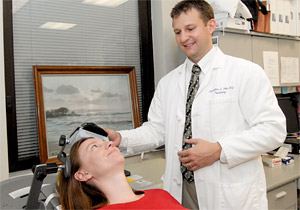
Gynecologist or gastroenterologist?
Who’s doing your IMO?
Recently, when I was backed up with my CAVC claim in March, I received this article and it is an absolute “must read” for do it yourselfer (pro se) claimants. By the same token, budding VA law dogs who browse here would be wise to take a refresher on this important element. This is the upgrade patch from Caluza/Shedden to Hickson in terms of what it adds to the conversation.
Most importantly, this stresses what I try to emphasize in my book– i.e. credibility is a item granted to us at the inception of our claim like a birthday suit. Everybody gets one. How you accessorize it as you progress is paramount to the success of your claim. If you offer lay testimony (sworn or affirmed by oath) that is in conflict with the record, your prior lay testimony, or is inherently incredible like alien abduction, your credibility is gone. Anything issuing from your mouth henceforth is akin to the boy crying Wolf for the umpteeth time. You don’t want that.
The three gals who wrote this are VA attorneys who work for the Board of Veterans Appeals (BVA) and are the same staff lawyers who act as the prosecutor defending the VA’s interests when you appeal. Keep that at the mental forefront while you read it. As such, this vignette is artfully constructed to maintain a façade of respectability. It appears above board and a reasoned discussion on its face. I feel it loses its objectivity when the discussion segues into the VA examiner as actually possessing an open, unbiased mind. As I so often intone, VA examiners/adjudicators et al are a tight bunch that tend to have the military view of you being guilty until proven innocent. This is a precept I am adamant about. I have enough experience after 23 years in receiving mode to make that unbiased assessment.
The article is extremely useful inasmuch as for citations to older CAVC and Fed. Circuit decisions you can use to point the way in your circumstances. Be careful as the history includes the progression of the law and some decisions have been superseded in terms of precedence as well.
The conclusion artfully illustrates the conundrum of investing the VA examiner (as a medical decision-maker) with legal powers (like the adjudicator) to try to separate the wheat from the chaff. This, ostensibly, is the job of the RVSR/DRO/adjudicator. Obviously, there will always be a contretemps between the two as to whose determination of service connection is the most probative and why. As it stands now, the adjudicator wears the pants and has the power to eviscerate the VA examiner’s opinion or ignore it completely. If that adjudicator feels it is so flawed as to be useless or speculative, he/she does have the power to ask for another (given permission from on high). Few do. More often, the flawed decision proceeds to the BVA and has to be remanded for a meaningful IMO. This is another reason why we see so many remands come back from higher tribunals. Shoddy investigative work, coupled with unfamiliarity with the disease/injury etiology, currently seems to be par for the course. Where HCV cases are concerned, its endemic. Virtually all are punted to the BVA due to ignorance of the prolonged presentation of the disease process (thirty plus years).
Now, jack this mentality up on “Provisional” steroids and a “decide now at all costs” mentality will promote nothing more than more of the same-albeit in a greater volume. Cautiousness under pressure that errs on the side of denial to cover one’s own ass (and job) is to be expected. Remember I love Lucy and the donut factory? When it was (wrongly) determined that she could handle the volume on the conveyor belt, they jacked up the speed/quantity and created even more problems.
Veterans are impatient for several reasons. This has been brewing for over 75 years. As for going paperless, the VHA managed it with no apparent loss of patient care at the time. I don’t think that can be said now but the predicate is wholly different (too many in the system with too few doctors to serve them). It would be redundant to plow old ground on this subject, but until VA develops a more nuanced program for claims development that is more inclusive of lay evidence and testimony, whether it is able to be corroborated or not, their accuracy numbers will continue to be in the low forties regardless of what they publish.
As more than one pundit has pointed out, merely denying and transhipping the backlog to the BVA will be unavailing soon. Allyson “in Wonderland” Hickey will simply be drafted again up to Capitol Hill testifying about how they are preparing to “fix” the interminable backlog at the Central Office. Why, I dare say the word “Provisional ” may even be employed. Veterans are not enamored of the idea of being provisioned. We’ve had that experience in the military and are acquainted with the concept. We want durable justice in a timely manner much as an “alleged perpetrator” want a speedy trial. Since the legal concept of Habeas Corpus is not available to us, we ask for the next best panacea- a timely, honest adjudication.
VA casts this in the light of a criminal investigation with many nuanced steps. Documents must be summoned from St. Louis. Character of military service must be ascertained. Intercurrent medical evidence must be examined. Et cetera ad nauseum. Lost in this shuffle is the unmentioned (and illegal) attempts to sniff out any evidence that might be damaging to the Vet’s claim. VA insists this is necessary to protect the system. Seems like a perfectly reasonable scenario until you get down in the weeds and read the majority of the denials. Plagiarism of wording denial from one claim to the next is rampant. In fact, where Hepatitis C cases are involved, character assassination is de rigeur. The library of denial reasons is extremely redundant and the recurring reason is willful misconduct via drugs.
I spent two years in several countries in the SEA theatre of operations. In not one, did I see willful drug misconduct excluding smoking left-handed tobacco. No cocaine, no heroin, no pill-popping or other UCMJ violations. Perhaps the Air Force didn’t suffer that problem but I doubt it can be indigenous to only one or two services. Nevertheless, we see an astounding 85 percent denial rate for HCV- many based on the tarnished premise of drug abuse. Sometimes this is implied by a staycation at the Graybar hotel. Somehow, the mere presence at a detention facility taints one with the HCV sobriquet. Likewise, smoking Mother Nature’s signature herb also tars and feathers Vets. Far away the most common is the “admission” by the selfsame Vet at some point after service that he engaged in this behavior. This is dutifully transcribed by VA workerbees at the VAMC into your records. Think about that in the context of Leshore v. Brown, 8 Vet. Appeals 406 (1995):
“a bare transcription of lay history is not transformed into ‘competent medical evidence’ merely because the transcriber happens to be a medical professional.”
I have assisted many Vets in the preparation of their claims and this one facet rears its ugly head again and again. Most deny ever saying anything of the sort. To test the theory, I mentioned during an intake (blood pressure/pulse/ breathalyzer) at a scheduled VA appointment that I was depressed when asked.
VA Nurse assistant: ” Have you been depressed lately?
Me: “Yes.”
VA: “And this was about…?”
Me: “My lettuce. It’s not growing very well in the coldframe. It’s too cold. I guess you could call it lettuce depression.”
VA: “And have you had any thoughts about hurting yourself or others?”
Me: Yeah. “I’m thinking about ripping it out and starting over in the greenhouse. Gosh. I was positive it could make it in the coldframe. All that work for nothing. You can see how that would be depressing, huh?”
VA: “Ummm. Do you have any guns in your home?”
Me: “No sireee, Bob.” She didn’t specify whether she was talking about toy or rubber band guns nor did I ask her to elaborate.
Sure enough, I’m clinically depressed now according to VA. It’s right there in the records. I’m not a psychiatrist but I have successfully diagnosed myself in VA’s eyes. I bear watching for fear I may harm my lettuce.

One on one with your lettuce
This may explain the plethora of denials in one vein but doesn’t begin to explain the dichotomy of the identical 85% denial rate for bad backs tens years after being in the 173rd Airborne. Unless, and until the VA is prepared to trust us to be honest and truthful in our testimony without summarily denigrating it as worthless, we will be condemned to a rigged judicial system that gives us short shrift. That facet of the equation is never discussed in this tome.


 asknod
 Bethanie Spangenberg
 kcraveiro
 robinhoodesqvetsatty
 Wesley McCauley
 Veterans Claims Help
Re: Veteran’s lay evidence, I’m assuming,this can include research citations submitted even if the veterans has no medical degree but can read. .
We all help you. Tell us the problem. We offer advice. We are not licensed. If we don’t know the answer we call an attorney and ask him. Remember, this is Do IT Yourself Club. You do it. We show you how.
We have all been “receiving” it for years and just want to help as many others as possible perhaps avoid the pitfalls, just paying it forward I guess. As far as I know this would include research citations as I used those during the DMII argument.
How mught you help me with a dilema Im having with the VA??
Welcome and jump into Lake Nod. No snakes in this watering hole.