When you get to the CAVC and you are preparing your defense, the proper thing do is to express every theory of service connection-anything- no matter how far-fetched. It should only be theories advanced in your BVA appeal which behooves you to backtrack and confirm you did so already. There are exceptions to this mentioned below. Be careful.
If the BVA has neglected to address some facet of a claim, this is cannon fodder for a remand. Moreover, if they never analyzed whether there was a reasonable cause to grant TDIU, this too becomes the error. Assuming you are unemployed and plan on continuing in that MOS, the BVA is required to make that determination-even if you are only rated 30%. They can refer you for extraschedular rating to the Director of Comp. and Pen. and sometimes do. Rarely, but they do.
Schroeder v. West 212 F3d 1265 (2000) held that it was VA’s responsibility to consider every possible permutation of your claim no matter how incredible, and discount all the improbable ones. This put a tremendous burden on the BVA. It’s hard enough to get them to consider HCV as a direct cause of Porphyria Cutanea Tarda even though more that a third of us have it. Mostly, they’ll try to drag it over sideways into the Agent Orange Presumptives column of 38 CFR §3.309(e) and say either you were never boots on ground in Vietnam or that it didn’t manifest within one year of leaving the RVN. I filed an either/or as to what caused it but VA refused to even consider the direct cause. According to the Veterans Benefit Manual (2011),
The Federal Circuit’s holding in Schroeder seemed to place the burden on the VA to address all possible in-service causes, even those unknown to and not argued or raised by the claimant. This would mean that a claimant was not precluded from raising and arguing before the CAVC that the BVA should have addressed whether the claimant was entitled to the requested benefits based upon all existing service connection theories.
This was the way matters stood until 2009. Robinson v. Mansfield (2007) reversed this theory and Mr. Robinson strutted on up to the Fed. Circus- and promptly lost.
I have to say that the CAVC tends to be a bit pedantic and down in the weeds. Sometimes this pans out and sometimes not. Here it gave a tremendous haircut to what Vets were beginning to abuse. Claiming alien abduction or eating feces as the reason for HCV is over the top. Allowing an unending parade of new or untried speculative theories after denials was unworkable. This is what the Circus regurgitated:
As a nonadversarial adjudicator, the Board’s obligation to analyze claims goes beyond the arguments explicitly made. However, it does not require the Board to assume the impossible task of inventing and rejecting every conceivable argument in order to produce a valid decision. The question of the precise location of the line between the issues fairly raised by the appellant’s pleadings and the record and those that are not must be based on the record in the case at hand; therefore, it is an essentially factual question. Robinson v. Mansfield F.3d (2009)
This changed the playing field dramatically. From then on we have had to enunciate every possible cause for a disease or injury. This isn’t too complicated for someone from Airborne with blown knees. In the case of HCV, it invokes a whole panoply of risks that do not immediately come to mind.
Remember the barbers on base when you did Tech training or AIT? Think about the razors in the “blue juice” jar sliding down the back of your neck. Many’s the Vet who skips over this on the Risk Factors Questionnaire thinking he never shared a razor. As for toothbrushes, well, I draw the line there. I used to keep a small length of Dental floss in my wallet used to dislodge old water buffalo gristle. I never shared that either.
VA would have you believe that these “events” of sharing razors/toothbrushes would be annotated in your medical records. Therefore the lack of that evidence is positive evidence against the claim. Absence of evidence is not negative evidence as they say up at the Court. The BVA (and VASEC’s henchmen) have learned how to look you in the eye and say it straight-faced without giggling.
Other risks are more obvious. How many of you were exposed, even in passing, to blood of others? VA would say that you needed open cuts to satisfy coming in contact with others’ blood. What of the new face splatter shields that are considered haute couture nowadays where lab technicians draw your blood? If they are worried about getting a speck of HCV-infected blood in an orifice such as the eye, then medical science is admitting the possibility of transmittal. Doesn’t that presumption extend back to the 70s and poor sanitary practices? Exposure to blood in a combat setting is a given everywhere but the M-21. The list goes on.
Consider Squidley’s enigma. He was poked by civilians with EMG needles in Japan and came down with the Nikkon version of HCV-one of the 2s genotypes. Technically he should have checked off on “percutaneous penetrations” akin to acupuncture or unsterile needles. VA cannot claim that the Japanese medical institutions were regularly in the habit of autoclaving their 10 gauge EMG spears after each use in 1982 any more than they (VA) can claim they assiduously scrub out their butt tractor machines after every use in 2012. Otherwise we wouldn’t have Vets with newly diagnosed HCV in Florida winning claims for it.
The trick to all this is to have your Encyclopaedia Britannica of risk factors well-established from Day One. You want this in the claim when you submit-not as an afterthought when you get KO’d in Round 1. VA is the master of words. You will spend more time in appeals trying to rebut vague references to your character than you will actually presenting your strong points. These slams will be artfully constructed like this:
Although the Veteran claims he was exposed numerous times to the blood of his wounded friends when entering Huey choppers, on appeal he has subsequently claimed that it may have been due to air inoculation devices. His VSO representative also says the Veteran spoke of sharing razors. None of this was in the original claim and it now seems the Veteran has changed his story in hopes of monetary gain. For this reason we ascribe little probative value to his lay testimony. A complete review of the service medical records does not reveal any treatment for cuts from a shared razor or reports of exposure to blood or blood products.”
Based on Robinson, it behooves you to get in every possible risk factor. Use good sense, though. Tenuous risks that are not listed should be added. The RFQ is notorious for failing to list jetguns. Enter it under the percutaneous column and list how many times it happened. There is only one saving grace in this. If you were legally unrepresented (pro se) all the way through the BVA decision, your law dog can legally introduce new theories you may have forgotten or overlooked. This is a narrow window in which to get them in and the last one as well. No more will be permitted on subsequent filings, whether it’s you still defending yourself or a law dog who takes your appeal. One exception to this rule is that the Feds will smile down on you yet again if you were pro se at the Court. Again, keep in mind they view all these new possibilities as shots in the dark. In the VA world, you put your chips on the table all at once and they adjudicate it. Even though you can legally drag new ones in at the beginning of your CAVC (and in limited instances, the Fed. Circus) appeal, it looks tacky to everyone involved but you. You’re not a doctor and they are in essence asking you to be Dick Tracy on this. The axiom is the later you bring these theories up, the more it appears you are getting desperate. You don’t want to go there if possible.
As for the TDIU arguments, it is always assumed you seek the highest rating attainable. This isn’t greediness. It’s common sense espoused in AB v. Brown back in 1994. Why take Bent brain for 50% when you have medical records supporting 100%? If VA fails to look at it, they are in error. Rice v. Shinseki (2009) illustrated this perfectly. Here’s the VBM take on it and I couldn’t say it better:
In Rice v. Shinseki, the CAVC held that a TDIU claim is not a free-standing claim for benefits; rather, it involves an attempt to obtain an appropriate rating for a disability or disabilities, either as part of the initial adjudication of a claim or, if a disability upon which entitlement to TDIU is based has already been found to be service connected, as part of a claim for increased compensation. Thus, when the record contains evidence of unemployability, the BVA is required to consider whether a veteran is entitled to TDIU, regardless of whether the claim before it is an initial claim for VA disability compensation or a claim for an increased rating and regardless of whether the veteran specifically raised the issue.
That’s about as close as you will get to the BVA going off the reservation looking for reasons to grant the claim or increase. Most times they put on the blinders and gloss over many of the contentions voiced. They are not required to specifically annotate they looked at all these allegations but simply state generically that they did so. Thus you can get a denial that addresses everything but somehow fails to go into the blood exposure or shared razors. When queried on appeal, VA simply says “Roger that. We discussed that over martinis over at the Army Navy club the day before we gave it the thumbs down. Relax. We considered it. We don’t have to give you a blow by blow description of all our machinations, now do we? We simply have to say we ‘considered’ them.”
Hopefully none of you will need any of this and I’m wasting my time. On the other hand, if it helps only one of you win then I haven’t wasted my time.
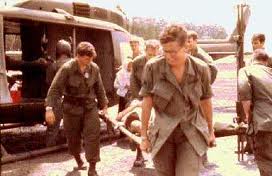
Nope. No blood exposure here. The blood exposure police would have entered it into the STRs.


 asknod
 Bethanie Spangenberg
 kcraveiro
 robinhoodesqvetsatty
 Wesley McCauley
 Veterans Claims Help
Then if using this RFQ; https://asknod.wordpress.com/va-rfq-hcv/ then add your own questions and answer them–in the original claim. Were you ever inoculated with jet-gun medical devices (MUNJIs)? Yes, in boot camp at _____________. Vaccinations are listed in my medical records.
Did you ever receive a haircut from a village barber with hand-clippers or razors? Yes, _______.
The village barbershop was outside and the implements were not sterilized between customers.
Basically, the service medrecs and boot camp photos from the training, may be the only verifiable information.