BVA–§ 1151 FOR IFN TX

This will give you an idea of what you are up against with the VA if you go toe to toe on an §11151 claim.  This Vet did not prevail and would probably have been better served with a real lawyer. The claims are a lot different than a standard claim.

http://www.va.gov/vetapp11/Files5/1145745.txt


Posted in BvA HCV decisions, HCV Health, Interferon claims | Tagged , , , , , , , , , | 1 Comment

BVA–THE EVIDENCE PREPONDERATES AGAINST

Ever had one of those days where everything goes haywire? I hate that when that happens. Here our General from Montgomery has listed everything but ingrown toenails. He has a lot of disabilities judging from what I’m seeing- 34 to be exact. The reader will also note he is unrepresented. This bodes poorly and may explain why he gets no traction.

http://www.va.gov/vetapp11/Files5/1145803.txt

Posted in BvA Decisions, Frivolous Filings | Tagged , , , , , , , , , | 1 Comment

BVA–SHOTGUN TECHNIQUE

This is a unique rating. It’s brand new and the Veteran has listed risks which legitimately could be used to deny him. Here the RO let this go up to the BVA with no endorsement as to which was the culprit. Based on that, the VLJ gives him the Benefit if the doubt. Most excellent .

http://www.va.gov/vetapp11/Files5/1146730.txt

Posted in BvA Decisions, Nexus Information, Veterans Law | Tagged , , , , , , , | Leave a comment

BVA–INDIAN COUNTRY

The last of the 2011 BVA decisions were posted this morning early. I know. I couldn’t sleep or else I’m prescient. Since my Cryoglobulinemia is in Hyperdrive mode, I doubt it’s precognition. My brain feels like a gigantic sticky spider web.

But when I read this one from the wagon-burner Regional Office, I had that “Oh, no. Jez, scroll back to the top and see who was repping her.” I figured she was pro se. Maybe she should have been. No comment.

http://www.va.gov/vetapp11/Files5/1146764.txt

I love the Introduction portion of these decisions. It gives you the low down on what to look for and an inking of what’s in store.

The Veteran served on active duty from January 1984 
to February 1984.

Wow. A whole month! I thought you had to be in for 3 months before you even got a banana. So… the rating denial occurred in February, 2003. Backtrack about eight months to May-June 2002 for the filing date. They were suuuper fast back then. It then tells us she opted for a DRO hearing at the RO in November 2004. Now, Veterans. Notice the next entry- May 2008 and a BVA hearing via videoconferencing. Three years and six months whizzed by from the DRO hearing, subsequent denial, filing of the F-9 and a new hearing. Form 21-4138s should be issued with seat belts. Apparently at this BVA hearing, VA asserts she withdrew her case for Bent brain syndrome.

Two whole months later the BVA denied in July of 2008. This has to be some kind of record or there wasn’t a whole lot of substance to this thing. One thing’s for sure. There was only one month’s worth of SMRs to review. Janey Doe filed her NOA and the CAVC decided she should get another shot at it. It came back to the BVA in December 2009.

She asked for and got several IME’s from different VAMCs. Unfortunately they all said “Dear Jane.”  Of additional interest, I spotted this which means she and her VSO must not have been on the same page.

In her February 2009 informal brief to the Court, 
the Veteran stated that she should have appealed 
the appeal that she dropped, referring to the 
claim for service connection for PTSD.

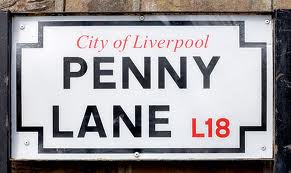
Okay, skip over the denial and let’s move down to the reason she’s headed to Penny Lane.

 The Veteran contended in her February 2002 claim 
that she contracted hepatitis C from contaminated 
in-service air gun vaccinations or dental procedures.  
The Board acknowledges that she had initial dental 
processing to include panorex and panorex screening 
in January 1984, was given vaccinations during service

The dental X rays!  Jetguns! Round up the usual suspects.  Read the SMRs. This is also a good time to go over the risk factors with your VSO officer. I have found it works better if you list the risks at the beginning instead of making them up as you get a feel for the process

In fact, the only evidence that the Veteran contracted 
hepatitis C from jet injectors or dental work during 
service was made by the Veteran during the course of 
the appeal.

Of course, everyones’s idea of risk factors is subjective..

In particular, the evidence indicates that the Veteran 
had blood transfusions before 1992, used IV drugs and 
cocaine, and had high risk sexual activity.

Sometimes VA examiners are narrow minded. They don’t get the big picture

As referenced above, the Veteran reported to two separate 
physicians in December 1999 and January 2000 that she had 
a blood transfusion after her D&C procedure.  However, in 
her March 2003 notice of disagreement (NOD), the Veteran 
stated that she did not have a blood transfusion after her
D&C procedure.  She did not dispute that she received blood 
after cutting her hand.  When directly asked by her 
representative during her November 2004 hearing if she had 
any blood transfusions, she replied that there was no 
hospital record of a blood transfusion.  She did not say 
that she did not have transfusions.  Further, the Veteran 
was also evasive when asked by her representative if she 
knew of any hepatitis C risk factors that she had before or 
after service.  She replied, "We live in a high risk world, 
I don't know, I just know that those [jet injectors and 
dental work] were high risk and I was exposed."  See 
November 2004 RO Hearing Transcript at 4.

Now, before you go jumping to conclusions like I did, you should understand her state of mind

Another September 1987 record indicated that she reported 
IV drug abuse.  A September to October 1987 psychiatric 
report reflected that she had a long history of abusing 
alcohol, marijuana, and other illegal drugs since high 
school.  She reported being sober since 1987 and drug free 
since 1986.  It should be noted that the Veteran has a
 history of treatment for psychiatric disabilities to 
include schizophrenia since 1986, and has been assessed as 
having visual hallucinations and being a poor historian.

Yep. You see that’s how Vets get railroaded into rotten justice. Somebody (her rep.) didn’t gag her before the hearing. Now, keeping in mind that they have decided she has  a horrible memory for events (see poor historian above), they now opt to believe her when she says she had a txfusion after service. This will conveniently prevent her from SC. Smooth move, VA!

The Board concludes that the Veteran's earlier statements
 made to her physicians in 1999 and 2000 that she did have 
a blood transfusion are more credible than her statements 
made after she filed her claim that she did not have a 
blood transfusion.  It is noteworthy that she reported 
these risk factors after her initial diagnosis of hepatitis 
C in 1999 but made no mention of her service, dental work,
 or jet injectors.  Because these records were generated 
with a view towards ascertaining the Veteran's then-state 
of physical fitness, they are akin to statements of 
diagnosis and treatment and are of increased probative
 value.

Here’s one last reason why Jane is not going to be riding in Cinderella’s Coach tonight

The Board finds it significant that the Veteran has changed 
her reports of the circumstances surrounding her 
inoculations with the air gun.  When she initially filed 
her claim, she did not mention seeing blood on others arms 
following the inoculations.  After being asked by her 
representative during her November 2004 hearing if she 
noticed a lot of people with their arms bleeding or cuts 
from the air guns after the inoculations, the Veteran replied
 that yes, in fact there was.  However, later in her 
testimony after being asked by her representative if there 
was an abnormal amount of blood splatter or if she saw 
blood on the equipment, she contradicted her earlier
 testimony and replied that she did not recall.  She 
added that there was nothing unusual about the dental 
work she received and that the dental work was a filling, 
not extraction of a tooth or root canal.  During her May 
2008 Board hearing, the Veteran testified that she saw 
another veteran in front of her with blood dripping down 
her arm while in line for inoculations.  She added, "and 
also, I don't recall, it's been a long time ago.  I don't 
recall though them cleaning those air guns off between 
each veteran."

Now, remember that the Board decided she was a credible historian about the blood transfusions?  “Well, not exactly” as they say over in Hertz car country.

The Board concludes that the Veteran's reports made 
approximately 20 years after her separation from service 
that she saw blood dripping down other veterans' arms 
after receiving inoculations are not credible.

All in all, this is a fast paced story of adventure. Jane and her antagonist-hero  es-husband John snort and shoot their way to new highs with sexual abandon and menage a trois  encounters. Life confronts her with some hard choices which she meets head on. I won’t spoil the ending.

Posted in BvA Decisions, Frivolous Filings, HCV Health | Tagged , , , , , , , , , , , , , | Leave a comment

VA AS A “VETERAN FRIENDLY” ENVIRONMENT

ACTIONS SPEAK LOUDER THAN WORDS

Numerous trees have been sacrificed on the altar of political correctness to iterate and reiterate that the VA is “veteran friendly”. We hear it so frequently that it tends to deflect like water off a duck’s back. While I’m sure that those employed by the VA believe it in its entirety, I’m not sure the PR flacks are getting their point across quite as adroitly as they think they are.

Veteran friendly is a state of mind. Yes, in all honesty, one can say the VA is Veteran friendly in their demeanor. That is where the comparison ends and the distinction begins. Often coupled with the phrase is the expression “non-adversarial”. This is mostly used in the context of a judicial proceeding. Most decidedly, VA is adversarial in subtle ways. VA employees operate on the We, Us, Team concept like unions. Everything is a compendium of commingled effort. There is no I at the VA. Hence, there is no pride of ownership, no satisfaction of  a job well done. The phrase “Too many cooks spoil the broth” is  the more germane metaphor. If an error occurs, the raters will say it was the Development team. The Development team will blame the designated “Doctor/ARNP  who opined the faulty nexus. She/he will blame the mail room guys for delaying the evidence to her, causing her to miss her deadline to submit. And I submit there is a forest of fingers pointing  if the remand rate is 60%. So actions begin to speak louder than words.

In an environment that is decidedly stressful, it becomes an Us versus Them with the Them being Veterans. One would have to live in Zimbabwe to be unaware of the dissatisfaction Veterans feel with the claims process.  This rivalry manifests itself in a “who cares?” attitude that leaves the Vet holding the short straw. VA examiners are so overloaded that they lose sight of the goal. They become automatons and blindly crank out decisions  that even they know are riddled with errors. Their mantra is that it will come back another day and they can fix it then. The high error rate simply becomes a natural default setting. A good week with a 50% error rate would go unnoticed.  VA doesn’t keep track of  dismal prognostication that way. Call it creative statisticalology. This way the PR team can honestly say ” Well, statistics don’t bear this theory out, unfortunately for the Vet. We feel there’s something else at play. Our policy is to grant every benefit to as many as we legally can”. (So don’t watch our actions; read our lips).

When we were in the service there was a legal axiom we understood. The UCMJ held that we were guilty until proven innocent. A good example is Line of Duty (LOD) determinations. If you were in an automobile accident off-duty, you were assumed to be guilty until LOD was stamped in the medical chart. If you were NLOD, any lost time would be added onto your enlistment like being AWOL.  Some of you Mormons might not have known this. Judicially, the assumption of guilt, or to be fair a neutral stance, is far different from beginning with the presumption of innocence. VA examiners operate on this principle. You present your evidence and testimony. VA examines it and looks for anything they can use to deny it. This is a far cry from an impartial process where the evidence is assembled in two piles-for and against. If everything you submit is critiqued like a police detective looking for the smoking gun or a flaw in the alibi, objectivity flies out the window. Suddenly, subjectivity is the order of the day.  Any semblance of it being non-adversarial becomes a coincidence. And then actions begin to sound louder than any words.

The unwritten rule is the operable one in VA  decision making. I’m sure VA employees will all uniformly agree that they are diligently working for the Veteran. I’m sure there were diehards at Ford who extolled the inherent safety of Pintos right up until they were recalled to fix the gas tanks-and perhaps afterwards, too.  This is more a case of indoctrination by word of mouth than by published directive.  For he who shall have borne the battle becomes the patriotic rallying cry. The rubber meets the road in the M-21 manual. It is impersonal and doesn’t care about fair and balanced. It is written by the pooh-bahs who make the rules. The rank and file rater has to follow the book. The book is his Sheppard. He shall not want. Therefore he is blameless. Since it is now virtually computerized, raters input all the variables and could care less what it spits out for a decision. It is what it is.  He didn’t decide it. The book dictated the outcome. Suddenly, a book’s actions are speaking louder than words.

Non-adversarial can and does imply many things. Being excruciatingly polite while saying no is non-adversarial. However, when all the available evidence and testimony point towards service connection,  a denial is hardly non-adversarial. When the facts are twisted and ignored it appears for all the world to be adversarial. When 60% of all decisions that are appealed to the Court are reversed  or vacated for procedural or due process violations, we can safely say that  our “non-adversarial forum” is a misnomer-because actions speak louder than words.

Before we blame our VA raters, let’s look at the system. Fifty years ago, back in 1961, Yale psychologist Stanley Milgrim conducted an experiment to test obedience to authority. Yale students were signed up as test subjects to help do a “scientific study of memory”. They were asked to push a button that delivered a shock to a person in another room who was not visible to them. If the person in the adjacent room missed a question asked by the “tester”, they were ordered by a superior to push the button and “punish” him with the electric shock. What the test subjects didn’t know was they were the guinea pigs in this game. Dr. Milgrim was measuring them to see how far they would go when ordered to in punishing the “subjects” in the other room-no matter how loud the screams.

You ask yourselves, huh? What does this have to do with the VA? Gentle reader, the test subjects are the VA raters. Dr. Milgrim represents the VA hierarchy. The button? Why the M-21, silly. This isn’t what we signed up for.

Posted in All about Veterans, BvA Decisions, General Messages, vA news, Veterans Law | Tagged , , , , , | 3 Comments

EVERYTHING YOU ALWAYS WANTED TO KNOW ABOUT REMANDS

Remands. What are they? Well, let’s learn all about this animal.

re·mand   (r-mnd)

tr.v. re·mand·ed, re·mand·ing, re·mands

1. To send or order back.

2. Law

a. To send back to custody.

b. To send back (a case) to a lower court with instructions about further proceedings.

This gives a whole new meaning to the term “transitive verb”. A remand can only originate from a higher tribunal or Court. The Regional Office is the lowest rung as most know. Here they make the decision. This is why you will see the term Agency of Original Jurisdiction or AOJ. The AOJ can’t remand it because they are the low man on this VA totem pole.When you get denied, you appeal to the Board of Veterans Appeals or the BVA. This is the coat and tie stage. If  the RO stepped on their necktie and failed to do something important (and they almost invariably do) the Veterans Law Judge(VLJ) will remand it back to the RO for a repair order. Some can be very lengthy in their demands. ROs are very slack about throwing these claims together. A good example is a Vet who is on SSD or SSI. The Board will want to look at those records to gauge the reason for the grant. Often there is much to be learned from them. The RO knows this yet regularly allows these appeals to go up without the records. What’s worse, if the Vet doesn’t obtain or submit them to the RO, the VA very well may make no effort to obtain them even when put on notice of their existence. This is the most common error and it continues day in and day out.

Remands occur with regularity and sometimes numerous times, causing horrible delays. It is said that a remand can add a year to your appeal, if not more. The BVA has their own private remand center right there on I Ave. and Vermont NW. The only problem is you need to file a Waiver of Review in the First Instance granting the BVA judge the full authority to fix things without it going back on remand! See my discussion below. I’d say a one-year turnaround on an remanded Appeal to the RO is conservative. With the tremendous new backlog, it will only get worse.

If you lose at the Board, your appeal to the Court will be seen within a year. Most often, if it doesn’t entail a complex legal theory, it will be heard by a single judge. Because BVA judges rely so heavily on the case from the RO for accuracy, many errors finally come to light here. There is a simple reason for this. A Vet’s claim at the Court is invariably handled by a good attorney. The legal representation you got at the BVA was, in all likelihood,  provided by VSOzoom.com. Most good VA lawyers can find a reason for a remand. They might not all be good ones, but that’s not the point. The remand allows the Vet to return to the BVA or AOJ and begin anew.  This allows you, the Vet, another bite of the apple. Now that you know the reasons for your prior necktie party, you can make plans to fix it while it’s being remanded. You are free to submit new and material evidence in the form of that shiny magic nexus paper saying “more likely than less likely that….”

Some claims are remanded with the full knowledge that their chances are worse than snowballs in a warm environment. Others are predicated on documented errors. These are ones that are destined to win. The reason I believe this is simple. No Veteran will fight up to the Court over 5 years only to give up after a second defeat at the AOJ. If we do not see this Vet up at the Court on a second trip, chances are some horse-trading occurred below.

The CAVC will not brook incompetence or stupidity. They do not remand numerous times for follow on errors. They reverse. Reversing a decision results in a one-way remand back to the AOJ. There the VA examiners will arrange for your shiny new rating. It’s a given  after your reversal that they will be granting the highest rating they can legally to prevent this from going back up. Someone puts the message out. Your C-file suddenly looks like a porcupine sprouting little red flags. The VARO Director has it open in a tab online with VBMS 24/7. It’s the first tab open and has an override for the 15-minute time out. Of course, this also happens if you file an Extraordinary Writ with the Court.

On occasion, the claim gets denied at the Court and floats up to the Fed. Cir. Again, here is another place where a remand is very frequent. Reversals by the Feds are rare. If it’s remanded by the Fed. Cir. for a redo, this can get ugly. Protocol demands that it be accomplished much like untying the Gordian knot.  The claim has to go back to the Court so they can put their remand on it. The BVA gets it and does likewise. If you are lucky this may only take a year or two to get back to your AOJ.

Here again, the claim starts over. For nice round numbers, say you filed on January 1, 2000. You go through the whole rigamarole at the AOJ including a DRO review. They finally release it to the BVA in  June 2003. The BVA gets it docketed and the show begins in late 2004. If you don’t get remanded, it would go to the Court and see daylight by 2006. Any remands would add a year+  to this. If you get one at the Court (and you will 65% of the time), back you go to the place where the error was perpetrated. Sometimes that’s the BVA. It’s not always the RO. If it does go back up, it begins a brand new odyssey at the Court. Assuming the denial is sustained by the Court, you can assume another year to get your docket at the Fed. Circuit. This merry-go-round can last for a decade without any remands, but rarely does. Remember, getting a docket is getting a place in line. It isn’t the day you walk into Court.

To add insult to this process, the VA invented a new torture-a RO at the BVA is how I would describe it. The Appeals Management Center or AMC, can be the big  roadblock. If you have given the BVA a waiver of review to the RO, your claim will fall into this black hole for a while if it is deficient. The AMC will attempt to rectify whatever it is that needs the grease. When they have finished trying to grant or deny, they send it back up for another redo with the VLJ. This assumes they deny and issue a SSOC. Even though this is in-house, it can still eat up to a year. About the only thing positive is they rarely lose the evidence. But, with the new National Work Queue, this is less frequent. The AMC is no longer a booming concern unless your Vet’s name is Macklem and the Court has spoken…twice(as well as the Fed. Circus).

Fortunately for us, the Court and the Fed. Circuit do not have these “remand centers” . Justice is not perfect but it is guaranteed to be time consuming. Remands are boogers. This is why my whole strategy I advocate is to get this done at the lowest level. Certainly there is the point of diminishing returns at your AOJ. DRO reviews are time-consuming, and delay the inevitable trip to D.C. if it’s in the cards. In this respect they can be as nasty as remands. I’ve done 4 and won 0.

I have never had a true remand. I suppose my “win” at the BVA in 1992 resulted in a remand for the 0% rating awards. I did get a sweet letter telling me this. To be truthful, I was so overwhelmed at winning 0%,  I was distracted and never absorbed the enormity of the moment then. I’m relatively certain I mailed them a thank you note.

Capture was here

Posted in All about Veterans, General Messages, Introduction-Read these first, Tips and Tricks | Tagged , , , , , | 88 Comments

How many Vets are there?

I was doing my Evelyn Woods speed reading trick through the papers this morning and happened upon what appears to be an error.  I have seen numerous refences to the fact that we are 26+ million in number. Some have put the number as high as 28 million. The article brought me up short because it said we have shrunk to 22 million. Actually, it didn’t take into account we are losing 18 a day to suicide or another statistic that 18 Veterans of WW2 die every day as well. That 18 number sure pops up a lot.

So, what to do to resolve this? Off to Bing, n’est pas? Confusion and old age reign there. The links I found variously say : 23,532,000 million in 9/30/2007

http://wiki.answers.com/Q/How_many_US_veterans_are_there

23,816,000 in 2007

http://answers.yahoo.com/question/index?qid=20081021045451AACvNXT

24,500,000 in 2006

http://uk.ask.com/question/how-many-veterans-are-there-in-the-us

26,000,000 with no date

http://www.chacha.com/question/how-many-veterans-are-there-approximately-in-the-united-states

I’m worried. If no one knows how many of us there really are, how can there be any apportionment of monies for us? Somebody knows but they’re not giving us recent   data.

I’m anal about numbers. Just for shits and grins, let’s assume  a  few other things. The article I’m reading says the government wants to spend $1 billion on a “Veterans Job Corps” over 5 years for 20,000 Vets.  This munificent program will employ soldiers, sailors, marines and airmen to focus on building roads and trails on public lands. Before I crunch those numbers, look how many the President is hoping to employ- 20K. Next, does anyone remember the Civilian Conservation Corps by our peanut farmer President in the 70’s? They insulated hot water tanks and stapled visqueen “storm windows” on houses- all for about $4.00/hr. I know few are alive who remember the Works Progress Administration on the 30’s. Anyway, one billion divided by 5 years is $200 million per year. $200,000,000 ÷ 20,000 Vets = $10,000.00 per Vet per year. In the 70’s, a CCC employee could hope for $7680.00/year before taxes. Inflation says that should be about $16K now. This is 2012 so $10K is a slap in the face-to Vets no less.  Mighty slim pickings as my dad used to say. If you can exist on a salary that small without a mobile zip code then you are amazing.

In the same article it mentions that the budget of the VA is slated (read hoped) to rise 10.5 % from  $126.9 Billion to $140.3 Billion. This $13.4 Billion dollar increase (less the $200 million above) will go to ameliorate the dismal mental health and women Vets’ issues that seem to refuse to behave.

Try as I might, I can find no definitive number for the actual number of Vets who are actually “disabled”. That is a very nebulous term. It could be said a Vet with ingrown toenails who receives compensation (and 0% is compensation) is disabled within the realm of the meaning. Using that as a yardstick, there are possibly 3 million + who might fit the sobriquet. My search kept leading me astray to the Disabled American Vets site which was no help. They did contribute the factoid that 257,000 Vets are 100% disabled as of 2007.  I would appreciate it if one of you fellow Vets out there would tell me the truth. This is 2012. Why is everything on the Internet seven to nine years out of date? Don’t they ask these questions on Census forms? My last one wanted to know whether I had any Indian, black , yellow or blue blood in me. I don’t remember seeing one for “check this box if you are more than ¼ Veteran.”

Getting back to numbers-$126.9 Billion. That’s $126,900,000,000.00 dollars. You want to see something ugly? If there are even 4 million of us disabled, and I err to the high side, think how much they are spending per Vet. That would be $31, 725.00 per.  A large number have small ratings. 10% X12 months is $1.524.00/yr. 20% is $3,012.00.

Bing tells me only 257,000 are 100% P&T as of 2007. Excuse me? What was so important about 2007? Is this one of those mainstream media ploys to blame Bush by showing the numbers are dramatically higher now?  I guess that will surface during the debates. I’ll bump that to 400,000 and extrapolate from there. With the exception of Bent Brain Vets, most of us are married-statistically speaking. A Vet + spouse with no rug rats gets $2924.00/mo. X 12 mos. = $35,088.00/yr. Let’s  just ignore the government is paying us below the poverty line and proceed. 400K Vets X $35,088.00/yr is $14,035,200,000.00 billion dollars. That sure leaves a lot of bucks for hammer toes. In fact, it leaves $112,864,800,000.00 Billion. Apparently it isn’t enough to help the Vets with brain issues and the homeless women vets. That will take another $13.2 Billion. I’ll betting we could go out and buy repos for all the  homeless Vets (men and women)  and hand them the title for less than that.

I asked why my taxes used to be so high years ago. I don’t ask now because I get a ‘bye from my grateful nation. If we are going broke, doesn’t it seem logical to start looking where we are spending every dollar? I certainly do not advocate short-changing Vets. I simply question where and why. Mark my words. You heard it here. I suspect-no-predict that the VA will soon  discover the PTSD pandemic has subsided based on fewer Vets diagnosed with it. Control the doctors’ paychecks and you control the statistics. The same will soon be true soon for homeless Vets. With this red hot,  booming economy we keep hearing about, the rising tide will lift all boats. Homelessness among Vets will become statistically insignificant. God bless America. Onward through the Fog,  ladies and gentlemen. Vote for Oat Willie this fall. Rumor has it he was a Veteran.  And for those of you in Chicago, vote early-and often.

Postscript. Cupcake  figured it out. This is still slightly stale but extremely close. The correct number is 24,699,642 souls.  She rightly extrapolated that we are 8% of the population ( 308,745,538). That percentage has to be an absolute because I have seen it widely bandied about.

Posted in All about Veterans, General Messages, PTSD, vA news | Tagged , , , , | 1 Comment

Fed. Cir–GARDIN v.SHINSEKI–PTSD DOCTORS LEGAL?

There has been much said about the legality of a closed loop for PTSD exams strictly by VHA’s finest. This would seem to be the ammo against.

http://veteranclaims.wordpress.com/2010/09/20/federal-circuit-gardin-v-shinseki-no-2009-7120-usc-5125-diagnosis-of-ptsd-stressor/

I’d say the Fat Lady has yet to sing her aria.

Posted in Fed. Cir. & Supreme Ct., PTSD, Veterans Law | Tagged , , , , , | Leave a comment

SUBCONTRACTING VA CLAIMS– RUH-OH, RORGE!

After reading this article, I can only say it’s obvious why they chose Xerox/ACS. It must give them (VA) great pleasure to find a private company that has the same techniques and lack of motivation. The bottom line will always be money. Veterans are just the fishing lure.

http://www.disabledveterans.org/2012/02/15/is-va-choosing-corrupt-contractor-over-veterans/

Seems the more I dig, the smellier it gets. Veterans deserve the creme de la creme and get the cigarette dregs at the bottom of the beer can. In the interim, we are told we are receiving the gold standard. The majority of our representatives in Congress, with the possible exception of the TEA party, are all sucking this money tit. But I digress. I don’t do politics. There are ample venues for that elsewhere.

Posted in All about Veterans, vA news, Veterans Law | Tagged , , , , , , , | 3 Comments

VA-BEST PRACTICES MANUAL FOR PTSD C&P

I guess all of you’d like to have a peak at the exam you have to go through for PTSD. This is now de rigueur at the VA. No more private doctors cum hunting buddies writing up their nonsense nexus to get you PTSD. Below please find link to 121-page manual on how to see what’s going on under the hood.

No, veterans. The days of the unlimited PTSD rating just based on that airplane crashing in front of you or your buds in the slick in front of you getting nuked by a B-40 are gone. With the new law change, Xanax usage is going to drop dramatically. Veterans formerly diagnosed with bent brain will get new, recycled exams and mark my words. You guys are going to get better by their measurements. That means reduced ratings. If you think this is impossible, you just don’t remember the early seventies and all the “personality disorders” some of us suffered. We came home and discovered to our relief that it was nothing more than antisocial personality, avoidance personality, passive aggressive tendencies, ritual compulsions, dysthemia- all minor little peculiarities fortunately.

Read this manual to find out how the VA shrinks are going to look at you under the microscope. It’s dry but there is a wealth of info in there.  You simply can’t  live without it  if you plan on filing.  Consider it getting a peak at the process ahead of time. You may not want to file.

http://www.avapl.org/pub/PTSD%20Manual%20final%206.pdf


Posted in All about Veterans, Gulf War Issues, PTSD, Tips and Tricks, vA news | Tagged , , , , , , , | 2 Comments