On the subject of Mrs. Clinton’s recent blood clot in her brain …
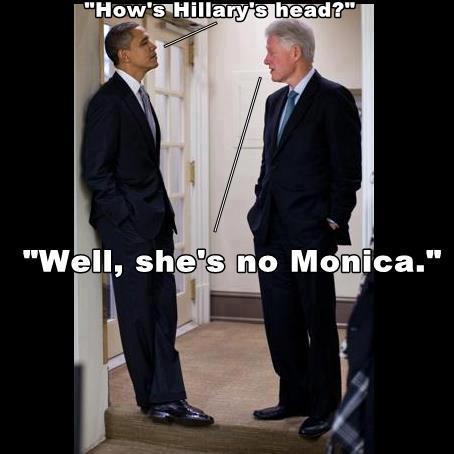
It’s facepage. What can I do? Unfriend him?
On the subject of Mrs. Clinton’s recent blood clot in her brain …
It’s facepage. What can I do? Unfriend him?
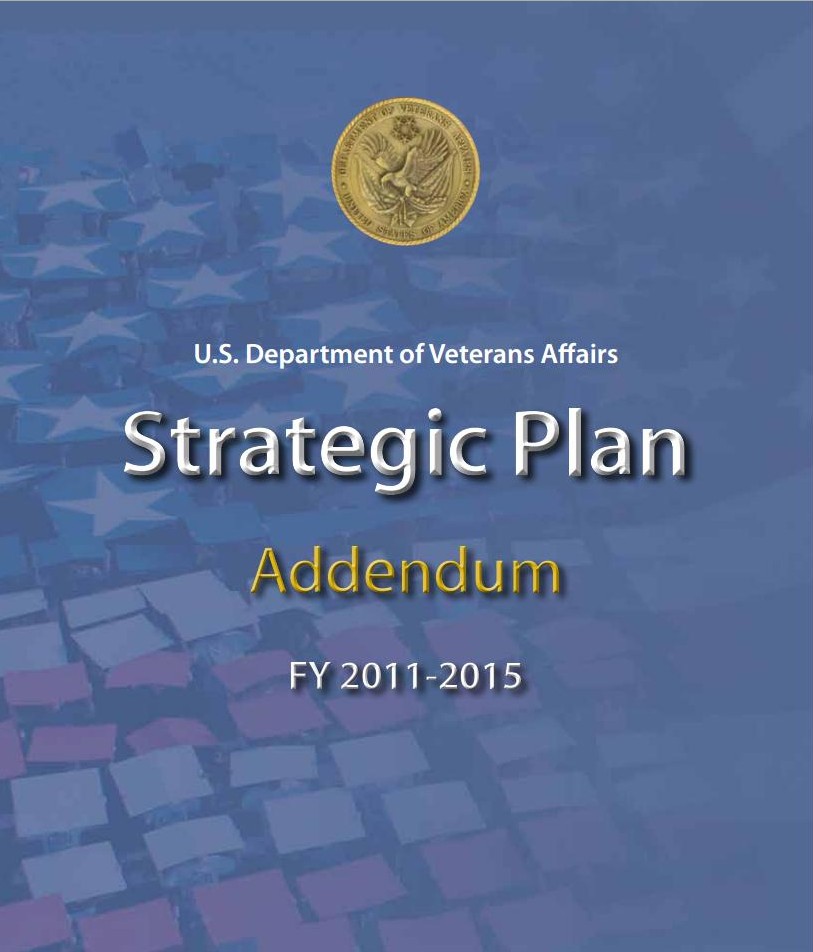
Holy ICARE, Batman. (ICARE= VA’s Core Values: Integrity, Commitment, Advocacy, Respect, Excellence).
I wish to thank my sister site Vet’s Network (not to be confused with Friends of Peggy) and a Vet self-described as “Disabled”for finding this one. What it points out is twofold. First, it is an addendum as in “Oops. We screwed up and need to amend it because it is no longer operational in its original iteration”. Second, because it was issued in August 2012 and tries to go back and explain 2011’s screwups and shortcomings by re-characterizing them, it’s an apology. Perhaps calling it a Strategic Plan to Deflect Criticism would be more appropriate. What could be simpler? The Russians used to call this Revisionist History. Every several years they’d airbrush out all the undesirables from historical photographs and reinvent how it all transpired. They can do that. VA cannot. Re-characterizing the snot on your nose as hair gel rarely works.
The next issue that is becoming even more apparent and more complicated by the minute is this insane desire to assign acronyms to everything. The ICARE above is just the tip of the iceberg. Go to the VAMC and you are now greeted with PACT (Patient Accountability and Compassionate Treatment or some such hooey)-as in we have made a pact with you to deliver service and pretend we care about you. The use of the abbreviations grow faster than Pinocchio’s nose. Soon we’ll need a VA cast of characters to comprehend what used to be ordinary things like Doctor or Nurse. They will morph into MDPs or Medical Delivery Personnel. Flu shots will be SMIAC (Strategic Medical Injections (to) Avoid Contagion. You can get my drift. Weekend warriors of the latest fray in Iraqistan may soon be FNGs (Former National Guardsmen).
This rush to acronyms is nothing more than a bald attempt to make it appear VA is doing something-anything- to fix their problems. STAR reviews by VAOIG. APGs (Agency Priority Goals) to prove they are aware and on it. In fact, the Strategic Plan even has a list of all these at the end of the program to keep us abreast of their obfuscation efforts.
VA has a plan for everything. If they don’t and discover as much, they assign twenty gomers to analyze and write it up. They cut down X number of trees and publish it. Soon everyone is aware of the repair order and it will be classified WGA (Won’t Happen Again). And yes, the inevitable acronym as well. I compare it to firemen in a forest fire rushing from tree to tree putting each one out without regard to the larger conflagration engulfing them. In their minds, the important job is identifying that there actually is a tree on fire and that they have orchestrated the fix. That the raging inferno has not been extinguished is immaterial. The important consideration we and Congress overlook is that there is a plan to fix it that is soon to be implemented. Relax. All in good time. We are simply too impatient and judgmental.
The mantra is “All in good time” (2015) and mo’ acronyms, baby. You may address your concerns and any really catchy acronyms you have to :
I’m sure they just can’t wait to hear from you. OOPS is pronounced exactly as it appears (as in loops). That is an oversight and will be changed as soon as they come up with another catchy new acronym and the money to print their new stationary.
Veterans everywhere would be remiss if they didn’t thank the VA for saving more money. Always one to squeeze the proverbial penny, the VA is at it again. This time they switched from Mapquest to Bing to determine the distance between two points.
After five years, a claim is substantially protected against being reduced. So why not Travel Pay? The distance between my house and American Lake is now being measured like an F-15 flight plan. Cars don’t enjoy this luxury. It suddenly dropped to $17.25 from $27.05 for years. I got fed up and complained but no one ever called me back. Then I got mad. They called and explained that they had been illegally paying me too much but did agree it was truly $21.25. Unfortunately for Vets, there is a $6.00 per head/ per trip “tithe” (deduction from reality) for VA’s bonus fund. Only after four visits in a calendar month do you finally get a bye on it. There is no refund for the lost $18.00. You are simply not dinged $6.00 for any subsequent trips that month. The remuneration rate is still 41.5¢ a mile. At 13 miles to a gallon, I burn 4.84 gallons with $21.25 being offered. This makes no remuneration for wear and tear. Sounds like a govt. program to me.
By taking that $6.00, what VA does is reduce the remuneration below the cost of getting there because gas here in the United Soviet Socialist Republic of Washington is just below Hawaii’s. This I don’t understand. Oil comes from Alaska. Alaska oil is happy oil. The happy oil is refined here. Gas costs $4.00 a gallon. Go to Pennsylvania. Oil comes from Kuwait. Oil is refined in Louisiana. Oil is sold in Pittsburgh for $2.90.
With all the high crimes and Veterans fraud being exposed, the VA should be able to fund the whole US government for a day on what it saves.

Bing! The sound of money leaking out of Vets’ pockets. They should rename it bling.
The U.S. Preventive Services Task Force (USPSTF) is a group that makes recommendations to primary care physicians about preventative care. For example, they grade health screening tests with A , B, C, or D. They recently made a controversial recommendation on the CDCs HCV testing for the birth-cohort. They gave HCV screening for drug users and transfused patients, “B” offer service; they gave screening the birth cohort, a “C”.
Clinicians may provide this service to selected patients depending on individual circumstances. However, for most individuals without signs or symptoms there is likely to be only a small benefit from this service.
The Infectious Diseases Society of America has protested the “C” on their website and in a strong letter.
An estimated 75% of HCV-infected persons in the United States were born between 1945 and 1965 and that cohort has an HCV prevalence (4%) that is more than five-fold higher than persons
born in other years. The prevalence of HCV infection in this birth-cohort is similar to the prevalence among persons with a transfusion before 1992(6%), which is one of the groups for
whom you gave a “B” grade for screening (3-5). Therefore, the magnitude of the overall health benefit is comparable for both populations and both should have the same ranking of “B”.
The military cohort is completely ignored by both Unfortunately, public comments are now closed. HCV testing should be inclusive for all populations who were vaccinated prior to 1992. The millions of jet-gun delivered vaccinations and other unsafe injection practices are the elephants in the rooms.
Note: For HIV however, the USPSTF recommends that everyone ages 15-65 be tested.
UPDATE: 3/19/15 HCV testing is now rated “B” by the USPSTF. (LINK)
The much-vaunted ‘Take us into 2015 and go paperless” Veterans Benefits Management System crashed and burned under a light load in December. Response time for queries or filing acknowledgement sank to new lows as RVSRs howled in frustration. AFGE shop stewards have thrown down the gauntlet and demanded action. “The brothers and sisters are being crucified for no production on claims and they’re getting flak for being the bottleneck in the backlog” said an unnamed AFGE member in the parking lot of the Portland VARO. “You have to understand the pressure we’re under to solve this”. He continued when pressed “I can put in my query and still go get coffee and some cookies out of the machine in the time it takes to pull down info from another VARO. It’s like dial-up in 1994. You feel like you’re in the twilight zone, you know?”
Member LawBob Squarepants sends us this interesting blast from NEXTGOV that apparently raises eyebrows (and hair) everywhere but VA.
I find it revealing that VA is IT-challenged after all the millions Billions thrown at this:
I’m not even going to ask how much money it costs to strip down a brand new Cadillac and prep it for a demolition derby. Now for the pièce de résistance extraordinaire. I laughed so hard I choked on my coconut.
Ooooooohhhh. Purple highlight for blowing bubbles. Lets see if we can follow this. It’s slow. The more VSRs that use it, the slower it goes. If you hook up even more raters to it, presumably it’ll go even more slowly with degraded performance. They knew it six months ago and sat there in Orlando singing CFR karaoke, sipping wine, sampling cheese and watching ice carving. Oh, and the Gen. Patton lookalike for $50 K. I almost forgot him. Gen. Nero Claudius Caesar Augustus Germanicus fiddled while VBSM burned.
We are living in strange times. VA fears us. Read on.
In 1976, access to VA personnel was phenomenal at Seattle’s Smith Towers. When denied for a VA loan at 25 and single, I marched down with my boss and we sat down with Doug. I didn’t call first. I just decided to go down there. We went up to the sixth floor and got off at VARO #346. The secretary went and fetched him. He was the guy who did loans. Pretty simple, huh? We made a grand bargain. If I got married instead of just cohabitating with Cupcake #1, he would approve it. I called him back at his number several months later and he even remembered me. I brought in a copy of the marriage license and we were good to go. And VA thought they could improve on a system like that.
In 1989, you could still walk in to the Seattle VARO (in the new Jackson Federal Bldg.) on the 11th Floor and meander all over the place. The VSO’s were right across the hall. My VSO rep. and I sashayed in there one day in 1990 without so much as a by your leave. It was one big happy family (and still is in my book). VSOs are waaaaaaay too close to VA folks- like people who marry their first cousins. Yeah. disgusting, huh.
In 1994, the commercial counter look became the norm. No more unsupervised trips down the hallway. Incredibly, after this security upgrade, lost records became more prevalent instead of less. This would be like outlawing assault weapons and discovering there were even more than you ever dreamed of after enacting the ban-and no one was turning them in (the guns-or the records for that matter).
On my last trip in 2011, they had moved the desk downstairs to the ground floor on 1st Avenue and hired ex-NFL linebackers for security. You cannot get to the 11th floor. A representative comes down to talk to you. I went up for the Travel Board Hearing and was escorted to and fro by Mr. Clean in a uniform with a .40 Glock. My walker must have struck fear in their hearts.
LawBob Squarepants’ take? The usual, humorous rejoinder:

Peut-être zee rateurs, monsieur?
It’s official. Cupcake has spoken. I am leaving the Nod command post and transferring my flag to the Castle cabin Sunday to Thursday. As some may know. the reason I survived to mature my hepatitis C virus stateside is due solely to one person in my mind. But for the artful and speedy return to the USAID hospital at LS-20 Sam Thong, I would have bled out. The pilot to whom I owe so much augured in the day after I was released from the hospital for hepatitis on 22 February 1971. I never got a chance to say thank you.
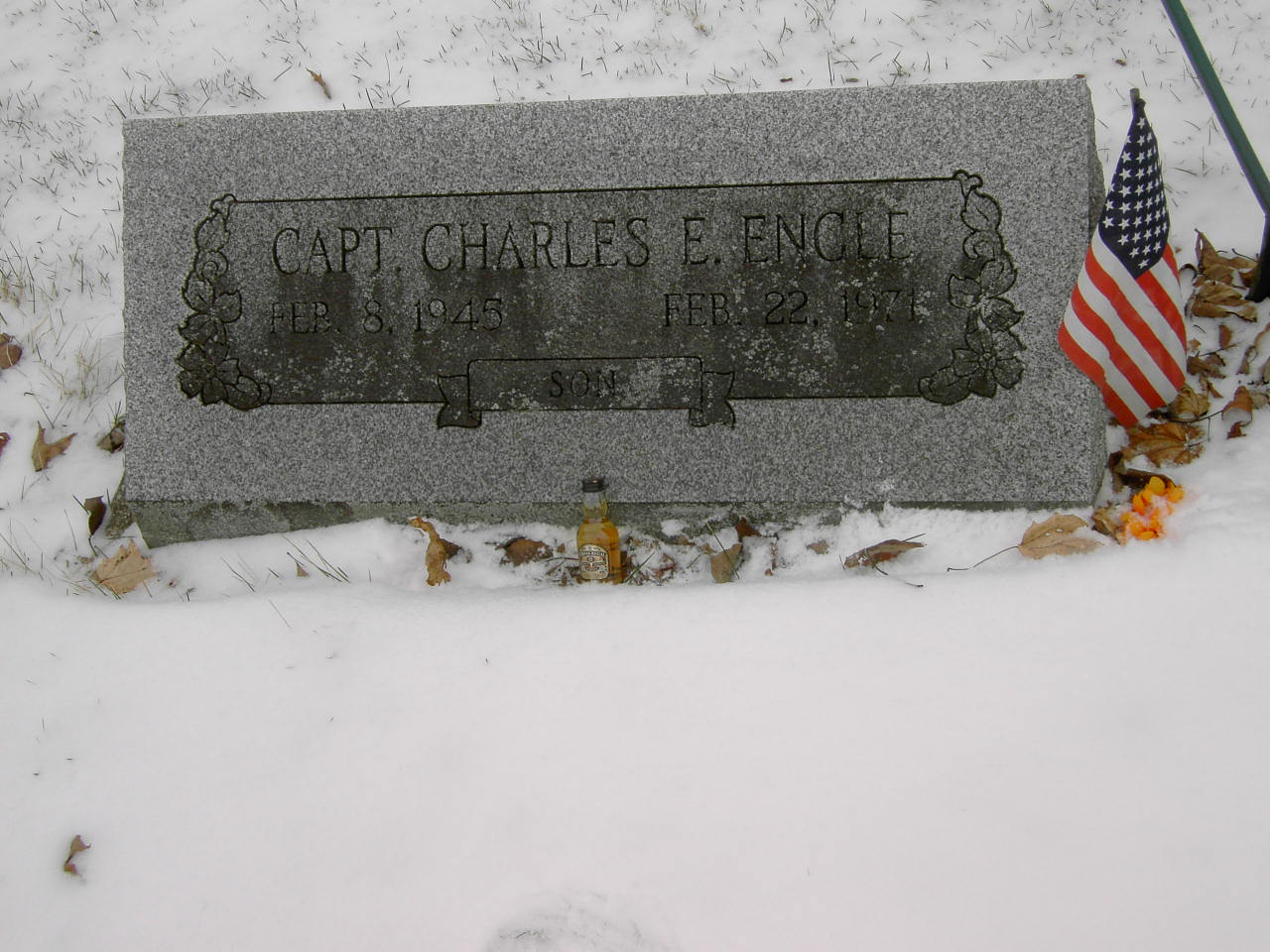
I discovered his demise while working on my claim in 2008. He’s buried in Winchester , Indiana at Fountain Park Cemetery several miles up the road from his homestead in Carlos. A last salute to an old, long-lost friend will fit in nicely with my to-do list before I punch out. I’ll probably need to refuel the Chivas bottle and add a Singha, too. Join me in Magnet, Indiana for what will probably be a memorable occasion.
Gee. I remember this. In the Air Force when you were the poor O-2 wearing the slats and screwed up, off to Thule AFB, Greenland it was. They must have had a lot of openings up there in Air Force Purgatory Then came Vietnam and a new dumping ground. Nowadays the government makes few efforts to rehabilitate you unless… you’re talking about the VA. Well hello? This article reveals a few fell on their swords but the proclivity to swat your hand and promote you now that you have been “reformatted” is still rampant at the VA. I surmise Tonya Deanes is either well-connected politically or has much pulchritude that is artfully and subtly exposed (displayed?)when she is in danger. As for the musical chairs between Service Center managers with backlogs running 3 years like Ulrike at Oakland, what could be more natural than a posting back to VACO on Vermin Ave. This list is far larger than her but Vets get the idea.
Once you pass the dirty fingernails stage at the VA and graduate to a salaried tenure as a professional outside the GS-system, your future isn’t as clouded. Minor professional mismanagement is overlooked and you simply “get over it” and move on. After all, VA has a lot invested in you and cannot keep replacing all those inept employees for minor discrepancies like Orlando. A few sacrificial lambs-yes-but not the whole kit and caboodle. Continuity in how to obfuscate is at a premium and the HR krewe are in high demand.
Thus, we award January’s A.E. Neuman Award to Alice Muellerweiss for duty above and beyond and also award her the Sword of Disembowelment with oak leaf cluster for taking the bullet meant for Tonya.

Onward through the fog to 2015.
Ah, yes. Member and latest winner in the VA lottery Tombo, now proudly sporting close to a 200% rating sends us this priceless study in personality.

An old Navy pilot sat down in Starbucks still wearing his old Navy flight jacket and ordered a cup of coffee. As he sat sipping his coffee, a young woman sat down next to him. She turned to the pilot and asked “Are you a real pilot?”

He replied, “Well, I’ve spent my whole life flying planes, first Stearmans, then the early Grummans…. Flew a Wildcat and Corsair in WWII, and later in the Korean conflict, Skyraider and Cougars.. I’ve taught more than 260 people to fly and given rides to hundreds, so I guess I am a pilot, and you, what are you?”

She said, “I’m a lesbian. I spend my whole day thinking about naked women. As soon as I get up in the morning, I think about naked women. When I shower, I think about naked women. When I watch TV, I think about naked women. It seems everything makes me think of naked women.”
The two sat sipping in silence.
A little while later, a young man sat down on the other side of the old pilot and asked “Are you a real pilot?”
He replied “I always thought I was, but I just found out I’m a lesbian.”
Veterans justice just took another hit on January 4th. Cerise Checo, a young lady with a mobile zip code, was informed that her legal help was amateurish and she was being denied her right to appeal to the CAVC due to being time-challenged.
Let’s see what she did wrong. You don’t have to be specific as you do on a Form 9 regarding why you feel your denial was unjust. Check. If you’re homeless you should be accorded some considerations above and beyond other folks. Check. You should obtain good legal help when you go to the Court seeking redress. Check. The law says you have to file your Notice of Appeal within 120 sunrises and sunsets after the BVA decision. Checkmate.
Cerise violated that one premise after she missed her NOA cutoff date. Her choice of legal help was off kilter or something is extremely amiss. The gentleman, Mark R. Lippman, Esq., made some crucial errors during his oral presentation. When you present your legal arguments to the Court, you don’t “guess” anything. You’re a lawyer. There is no guesswork. Either Cerise’ homelessness was was the causative factor or it wasn’t…
Checo v. Shinseki (2013)
It appears the Court was sitting there with parted lips and bated breath just awaiting a statement From Mark that were it not for the wobbly wheel on Cerise’ shopping cart, she would have made it to the Post Office with time to spare. Being homeless is bound to tug at the heartstrings and I have no doubt she had a leg up at the Court already with this. However, if you don’t give your leagle beagle sufficient information or excuses, things can go horribly awry as they did here. I find it almost impossible to believe that Mr. Lippman, who has eighteen years of experience, could step on his necktie in front of Judges Hagel, Lance and Schoelen. The only other explanation would be what happened to me when I met my DAV rep (an hour late) at the Seattle VARO about ten minutes before showtime.
Unlike attorneys, VSOs have certificates of attendance proving they were present and accounted for at a CFR symposium. There is no test afterwards to see how well you assimilated the knowledge. Since attorneys are not in the same class as VSOs and actually are schooled in the art of law, this predicament rarely occurs. In fact, Ms. Checo was nowhere near 625 Wagonburner Lane NW for this hearing. More’s the pity. Perhaps she could have illuminated everyone on the untimely filing. Knowing how professional Mr. Lippman is, there has to be another logical explanation for how one could appear before the Court utterly unprepared and bereft of excuses to proffer for Cerise’ inexcusable lack of timeliness.
Checo supra
I suspect Mr. Lippman agreed to take this case because he felt compassion for her. Hell, who wouldn’t? I also suspect that by being homeless, Cerise was extremely hard to get in touch with. It may be that Old Mark beat feet from sunny Cal. to D.C. as a stopgap measure without any input from her assuming his legal staff would forward it to him there. On arrival, he had no ammo to fight with and found himself powerless to defend her tardiness. Regardless, this has caused him to lose face- something he can ill afford. Your name is your stock in trade in this business. No self-respecting law dog wants to be painted as a buffoon- and most certainly not before the Court.
The Court issued this as an order. It is not an opinion as there was no decision on the merits of her claim. The order was simply a legal device to announce their intention not to grant equitable tolling. I feel an important milestone for Veterans was missed. This would have been a giant leap for homeless Vetkind if he (Lippman) had been suitably armed and dangerous. Gen. Revered Leader was apparently willing to let it slide because trashing homeless Vets at the Court never plays out well on the six o’clock news. I’m sure he told Will Gunn to moonwalk backward faster than Michael Jackson ever did and keep a low profile. VA isn’t doing to well down at the Court of Public Opinion these days. The last time I checked it was Backlog-985,000, VASEC-2015 (maybe).
Ego te absolvo, Mark.



 asknod
 Bethanie Spangenberg
 kcraveiro
 robinhoodesqvetsatty
 Wesley McCauley