HCV RISK FACTORS SUBTLY INCREASED

HCV breeding ground

HCV breeding ground

As we read all BVA decisions regarding HCV studiously to see if we can find new techniques for success, we often spot new trends. VA is never blatant about hepatitis risk factors. To the contrary, they tend to discount risks everyone in the medical community feel are glaring. Witness the hard time they are having relinquishing the idea that HCV should somehow be listed in your 1960s STRs when in fact it was not medically identified until 1989. 

Which is why I was shocked when reading this decision. Here, in black and white, is a new risk factor being discussed as if it has been around for years. Vietnam-era Vets are twice as likely as their civilian counterparts to have HCV. Actual in-country Vets, with boots on the ground, are 66% more likely than just the “Vietnam-era” Vets. We know this and it’s been rather common knowledge for almost a decade but the VA has never acknowledged it legally. In fact, their Risk Factors Questionnaire (RFQ) is woefully incomplete and reads more like a risible “fat chance” list than any cutting-edge, medical investigative tool.

Continuing to insist that the earth is demonstrably flat in 2013 has more adherents compared to doctors who consider the RFQ to be a useful tool for ascertaining where you got the bug. One thing that provides us endless entertainment is the idea that alcohol or marijuana are risk factors for HCV. When called on it up at the Court of Appeals last year, the Judge asked the Secretary (on remand) to please explain in detail just how and why booze and pot cause HCV. I haven’t seen that one come back up the ladder yet. My pet theory is that if you became extremely trashed or hammered (while stoned) you might fall down in a puddle of infected blood. Perhaps sharing a bottle of Scotch or a joint transmits this not-so-hardy virus via the saliva. VA can be so vexing and vague sometimes when it comes to denials. Perhaps this is why we end up appealing more often than not.

Here’s the phrase that caught my eye:

In December 1990, the Veteran had an abnormal liver function study. In March 1991, he had a normal liver function study. The Veteran was diagnosed with chronic hepatitis in June 1991; it was noted that its etiology was not yet determined. In April 2001, he underwent a hepatitis C risk factor screen and denied undergoing a blood transfusion prior to 1992, using intravenous drugs, exposure to blood, hemodialysis, having tattoos and/or body piercings, using intranasal cocaine, abusing alcohol, having an unexplained liver disease, having an unexplained abnormal ALT (SPGT) value, and being a Vietnam era veteran. He did not answer in the affirmative to any risk factors for hepatitis C. In April 2005 and July 2010, he tested positive for hepatitis C. The first element of a service connection claim is satisfied. Hickson, 12 Vet. App. at 253.

As an aside, look at this incisive, nuanced timeline and the dates.

December 1990- Hepatitis (NOS) problems detected

March 1991- No hepatitis problems. Immaculate recovery

June 1991- Chronic hepatitis now apparent with no known etiology and no attempt to make any effort to find out who,what, where, why and when.

TEN YEARS GO BY…

April 2001- Somebody at VA decides to investigate how he got HCV even though he has not been diagnosed with it. (Anybody see a problem as to why you would investigate why someone has a disease they aren’t even diagnosed with yet?)

FOUR MORE YEARS GO BY…

April 2005- Someone decides to ascertain if he actually has HCV

July 2010- Someone decides to confirm this is still the case

Even money says they tested him for it in 2001 and never told him he was infected. This would be the VA Dick Tracy scenario. If he files, we’ll test him “officially” and declare him ill.

So we now have a new, recognized risk to add to our list. With the avalanche of new information coming out at the CDC and other medical research outfits, it’s apparent that the VA’s RFQ is as outdated as yesterday’s newspaper. VA still clings desperately to the “plausible but highly improbable” theory and the antiquated belief that HCV can only survive  outside the body for a few hours. Which brings up the burning question of why dirty toilet seats in gas stations are not on the list.

One other fact that is mentioned here is grossly inaccurate.

The Veteran’s STRs are negative with regard to liver problems, including a diagnosis of or treatment for hepatitis. The earliest diagnosis of abnormal liver function is December 1990, three years after separation from active duty. Significantly, the Veteran denied having risk factors for hepatitis C in April 2001. Further, in June 2009, the RO requested the Veteran identify any risk factors that applied to him and he did not identify any in his July 2009 response. No risk factors were documented in his STRs. The Veteran has not made a specific assertion as to why he believes that his hepatitis C is related to service. The second element of a service connection claim, medical or lay evidence of an in-service incurrence or aggravation of a disease, is not met.

Our Vet here would have been hard-pressed to opine on his infection vector in 1990-or any time. Need we explain to the VA that they constantly remind us we were raised by wolves with absolutely no medical training?  As for the specific denial of risks in April of 2001, I might point out that VA had no printed RFQ form in existence at the time. Here again we see the “No HCV in 1968 STRs is proof he never had Hep” logic. Any discussion of risks in April of 2001 would have been oral and recorded in VISTA medrecs. It might be a good time to do some sleuthing and find out what is really in the VHA records.

Be careful if you find yourself in one of these denial predicaments. Analyze VA’s arguments and you will see the defective logic, the “cart-before-the-horse” proof  and an attempt to find the Veteran at fault for why he lost.  Remember also, that in 1991,  Caluza, Hickson and Shedden had not been decided. A Vet would have been clueless that he/she needed the three Hickson elements to prevail.

My relatives celebrating Dad's graduation from Medical school.

My relatives celebrating Dad’s graduation from Medical school.

Posted in BvA HCV decisions, HCV Risks (documented) | Tagged , , , , , , , , , , , , , , , , , | 3 Comments

BVA– THROUGH AND THROUGH GSW ≠ HCV

FROM THE STAR SPANGLED BANNER

scVARO IN BALTIMORE MARYLAND

Through and through GSW to head? Check. (decision here)

Here, service treatment records show that the Veteran was treated by the 95th Evacuation Hospital in Vietnam in July 1972 for a gunshot wound sustained to his head in a confrontation in the local village. Records reflect left occipital entrance and exit wounds, with no palpable cranial defect. There were neither bony nor metallic fragments, nor bone chip nor fracture. The wound was debrided, irrigated copiously, and closed primarily with nylon. Records reflect units of procaine administered, as well as V Cillin K. His stitches were removed later that same month. The small wound had healed nicely; the larger wound was slightly infected, and iodine was applied and the wound was left open to air.

Transfusion? Check.

While there is no documentation of any blood transfusion in active service, the Veteran has credibly testified that he spoke with his sister at the time of the incident; and relayed having received a few pints of blood in the treatment of his combat wound. The Board finds that the Veteran is competent to testify on factual matters of which he has first-hand knowledge and which are corroborated by other evidence in the claims file. Washington v. Nicholson, 19 Vet. App. 362 (2005). The Board further finds no reason to doubt the credibility of the statement, which has been consistent throughout the appeal.

Nexus? Check and check.

In September 2008, the VA physician indicated that, after a careful review of the Veteran’s medical records, no traditional risk factors were identified. The physician noted that the Veteran described a history of receiving multiple injections while serving in Vietnam; and opined that this was the most likely cause of the Veteran’s chronic hepatitis C. In support of the opinion, the physician reasoned that there have been cases described as occurring in this manner.

and

In November 2010, the Medical Director of the Division of Infectious Diseases at the University of Maryland School of Medicine, who was the Veteran’s former VA treating physician, noted that the Veteran had denied ever using intravenous drugs, and that he had no other high-risk behaviors that would indicate the source of his infection. The Veteran reported the gunshot wound to the head, and that he was uncertain whether or not he received a blood transfusion as part of the management of his injuries. The Veteran also received vaccinations via the multiple use nozzle injector during his time in active service. The Medical Director opined that, given the lack of other risk factors and the progression of the Veteran’s disease to decompensated cirrhosis, and the fact that he underwent medical treatment for a gunshot wound and received vaccinations via a multiple use device in active service, it is more likely than not that the Veteran acquired hepatitis C during his active service. The Medical Director also noted that the Veteran’s decompensated cirrhosis suggested a remote infection.

Okay, what’s wrong with this picture? Why is he fighting this at the BVA? He has all the elements needed to win at the RO and yet he’s getting the bum’s rush. Oh. VA’s nexus-probably by a bedpan changer, says uh-uh.

Moreover, the Veteran underwent a VA consultation for chronic hepatitis C in May 2005. At that time he adamantly denied using intravenous drugs. He also reported one occasion of a sexually transmitted disease (gonorrhea) at age 22; and reported having two sex partners in the past ten years, and that protection was used. The Veteran had received a tattoo in 1986, and he claimed that the needle and inks were sterile. He also reportedly shared razors in his household. His past medical history included polycythemia, and the Veteran denied having units of blood removed. He also reported a gunshot wound to his head in Vietnam; and indicated that there was blood present at the time, and that he was transferred to a hospital. The diagnosis in May 2005 was chronic hepatitis C; and a VA nurse practitioner indicated that the origin of infection was vague, and opined that it may have been handling of the wound (sic) in Vietnam.

Well, that all seems mighty vague. If you have the IQ of a goat or work for the VA as a “VA examiner”, that’s pretty much the conclusion you’ll come to. Fortunately for Johnny Vet, he had a VLJ with a modicum of intelligence who didn’t need chicken entrails or tea leaves to figure it out. Too bad it only took 7 years. The poor guy’s liverbox is running on empty and his VARO in Baltimore is minutely parsing the meaning of vague. Notice the 2005 date. This is important. He filed in 2006 and the VA used this as the reason to deny. however, he refiled in 2008 and they are still using outdated info to continue a prior claim denial. That’s a Bozo No-No. Here’s how that one played out:

VA treatment records show that the Veteran screened positive for hepatitis C in April 2005. In February 2006, the Veteran stated that he had never done drugs; and that he may have had a blood transfusion when he was shot in Vietnam. He also indicated that he may have contracted hepatitis C through shots that the Army gave, or through needles used in the hospital.

Based on this evidence, the RO concluded that there was no current diagnosis of hepatitis C; and no evidence that this could have occurred in active service.

Where do they find these “VA examiners”? Is there a special medical school where VA trains them?

This explains why our Silver Queen Leigh is having so much trouble with her claim there. They’ve been fighting for two years just to get the C-file to find out if she, too, is being vague.

Her attorney just filed a Writ Of Mandamus to extricate the C-file from the RO. About time.

Posted in BvA HCV decisions, HCV Risks (documented) | Tagged , , , , , , , , , , , , , , , , | Leave a comment

BVA–BITCHSLAP BACKFIRES

download (2)download (3)

It’s one thing to denigrate a Vet and say you don’t trust his word. It’s another thing entirely to say you don’t give credence to a combat Vet as evidenced by his CIB and the George Washington coupon. Or worse. Simply don’t give any opinion at all and deny him until he dies. In this case, the evidence is pretty dispositive for at least several risk factors- the very least being the punji stick. 

38 USC 1154(b) accords us the presumption that, having been in combat, we can actually be trusted to tell the truth. How that works is beyond me. Seems if you joined up in the first place, your commitment to your country was pretty much assumed. Nevertheless, if you were in combat, your word is golden. Unless, of course, you were one of those drug addicts from the Vietnam debacle. Anything they say is suspect from the get go.

Johnny Vet’s wife has picked up the flag and continues to charge across the field, oblivious to the carnage around her. I commend her for her fortitude. This decision exemplifies the propensity of the 58 ROs to deny any HCV claims unless your evidence is airtight. 5 alibis, three nexus opinions and several buddy letters are the bare minimum when your spouse finds herself fighting the BVA. Having no input on the Georgia Dept. Of Vet affairs win/loss record, I hesitate to say whether she is adequately represented.

Face it. Erectile dysfunction and PTSD didn’t kill her husband. Winning the HCV claim is going to be the lynchpin in her DIC claim because that is what this is about ultimately. Shoot. She almost deserves a Bronze Star for putting up with this crap.


Posted in BvA HCV decisions, DIC | Tagged , , , , , , , , , , , , , , , | Leave a comment

BVA–MISSED IT BY THAT MUCH

download

Missed it by 96 days, sir.
Nobody told me.

VA has the ugly habit of taking back with the left hand that which they shook hands on with the right. Our Johnny Vet out of Houston here, had a little problem. He got the VA notice of “We’re taking it all back, hoss” about two years after he got it all. Somehow this doesn’t surprise us here. The law is dispositive on this. Once the magic ten years is past, your rating is inviolate. Granted, VA began their retraction procedures in August 2010-within the window to legally divest Johnboy. However, they dawdled too long and didn’t get around to it until June 21, 2011. Johnny was golden at 0001 Hours on March 15, 2011-96 days previously.

This further  illustrates why they teach basic mathematics now at ASPIRE training in Baltimore. A rater’s got to know his limitations. Seems with all the fancy computer doodads now, the old M-21 alarm would go off and scream “Danger! Danger! Protected rating date approaching!”

Under VA law and regulations, service connection for any disability that has been in effect for 10 or more years will not be severed except upon a showing that the original grant was based on fraud or that military records show a lack of the required service or character of discharge (38 U.S.C.A. § 1159; 38 C.F.R. § 3.957). The 10 year period is computed from the effective date of the finding of service connection to the effective date severing service connection. The Court of Appeals for Veterans’ Claims (Court) held that this same protection from severance applies to awards of Section 1151 compensation. Hornick v. Shinseki, 24 Vet. App. 50, 56 (2010) (holding that the Section 1159 protection from severance of awards of “service connection” in effect for 10 or more years also extends to awards of compensation under Section 1151 that have been in effect for 10 or more years).

ROBBIE

Posted in 1151 claims, BvA HCV decisions, Tips and Tricks | Tagged , , , , , , , , , , , , | 1 Comment

BVA– NO SHIRT, NO SHOES, NO HEP, NO DICE

download

One of the prime ingredients for a compensable rating is actually having a disability. Apparently they don’t teach that to the DAV National Service officers in Chicago. Johnny Vet marches into the BVA armed with little more than an extra 50 pounds strapped onto his belly that wasn’t there too awfully long ago. Being overweight does not a Hepatitis rating make. Try this one on for size

Somebody needs to explain how the CFRs work to the NSOs. Being as it’s Chicago, they could actually be dead but still capable of voting and helping Vets. Come on. We’re talking Chicago here. Stranger things have happened as we all know. Where did you think the term “setting a president” came from?

Which brings to mind the burning question-can you teach dead NSOs new tricks?

At a VA examination in December 2010, the Veteran reported that he had not had any symptoms of hepatitis C or any incapacitating episodes. H indicated that he was not currently being treated for hepatitis C. No abdominal abnormalities were noted on physical examination. The finding was hepatitis C, currently stable, normal liver function tests. A VA examination in September 2011 noted that the Veteran was well-nourished, with no visible stigmata of chronic liver disease. The abdomen was nontender. The examiner noted that since January 2006, all liver function tests had been normal, including the most recent test in March 2011. It was stated that there was no fatigue, malaise, anorexia, vomiting, arthralgia, or right upper quadrant pain. The examiner stated that the Veteran had gained 50 pounds over the past three to six months. The examiner diagnosed hepatitis C.

And the 50 lbs. of extra weight has what to do with the HCV? This is called slamming the Vet. Has anyone checked him for DM2 secondary to HCV?

Posted in BvA HCV decisions | Tagged , , , , , , , , , , , , , , , , | Leave a comment

BVA–DR. BEN CECIL STRIKES AGAIN

FROM THE HEAVENSGATE RO

sc

 IN ST. PETERSBURG, FLORIDA

Here’s a good one from the good St. Peter’s RO. The Vets down there are starting to get it. Stay away from the VSO bars and you can win.  Duh. This Vet did it all himself and he must have been reading my book. He got three nexus letters and sure enough, the VA managed to sandbag one of them. What they really screwed up was their very own opinions. The VA examiner was looking for Hep in all the wrong places. They had so many risk factors to choose from that they were inundated with input like an ADD kid.  Which one do I choose? Which one do I choose? On the other hand, the VHA opiniongiver became so discombobulated, he went down the speculative path and sank that one.

Dr. Cecil is beginning to realize the enormity of phraseology. For years, he has been providing excellent letters. The VA just keeps upping the bar on what they will accept (except for their own VA examiners). One “maybe”, one “possibly” or even one “could have” and the nexus is as useless as used toilet paper in VA’s eyes. Even if it is well-reasoned and probative, any wishy-washy language sends it to the showers.

The recipe is enunciated over and over in my book and on my site. This man either figured it out for himself or read up on the technique here at Asknod or Hadit.com. He sure didn’t figure it out at Peggy’s Pink Site. They teach how to file-not how to win.

Posted in BvA HCV decisions, Jetgun BvA Decisions | Tagged , , , , , , , , , , , , , , , , | 1 Comment

FLYING FOR VEGETABLES

Corn and airplane flight 006

The Flight Crew

Community fundraising and flying go together like peas and carrots. And what could be more fortuitous than the added bonus of finding a new recipient for zucchini squash. Our illustrious Navy Vietnam Veteran (two tours), pilot Tom H., has acquiesced to accepting a wheel barrow or two of squash and  cucumbers. It’s a good thing. The Food bank shuts the doors and pulls down the shade when they see me in the distance now. I planted too many again this year and can never bring myself to end their lives.  My neighbors are usually the first to begin shunning me. They’re fair-weather friends in June for strawberries and again in August when the tomatoes come in. Call it what it is- the zuke days of July. I get it.

Corn and airplane flight 011

Gunsight Pass. Click once to magnify. Put cursor on area you want closeup of and click again.

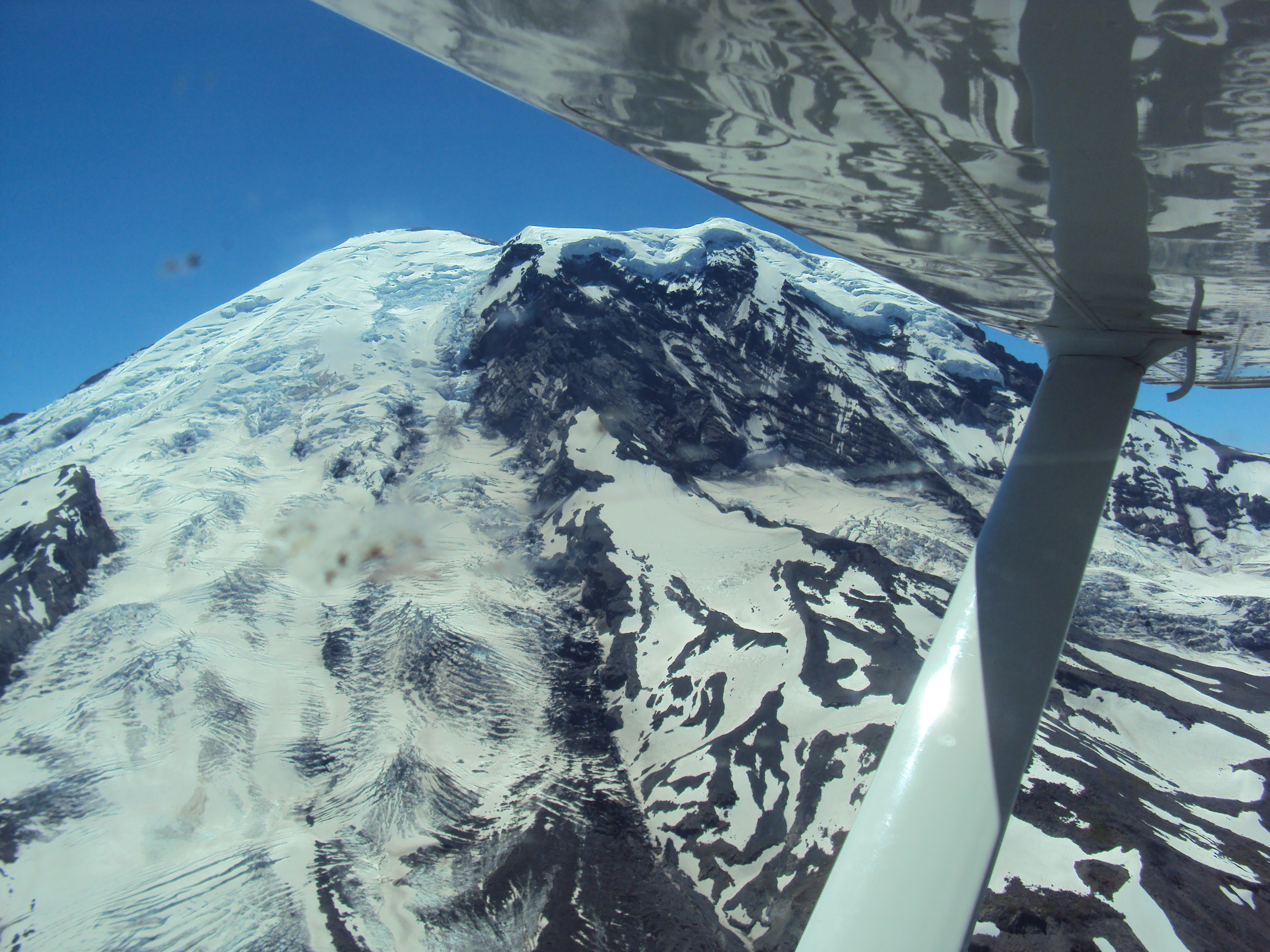
After a breathtaking trip through Gunsight Pass up in the Olympic Mountains (above), Grandson Connor, Son in Law BJ and I convinced Tom to buzz the whole neighborhood where we live. After we stampeded the cows, we were off to the other mountains- the stuff of legends. Although many may not be acquainted with Mount Rainier, scarcely anyone alive is oblivious to the name Mount Saint Helen’s and her 1980 temper tantrum. It blew a cubic square mile of itself into the atmosphere May 18, 1980 and destroyed untold hundreds of square miles around it. To this day, much below still looks like a moonscape.

Corn and airplane flight 020

Glacier on eastern flank of Mt. Rainier @8,300′ ASL

Corn and airplane flight 025

Mt. St. Helen’s from the north. Note steam from active fumarole.

Here’s a closeup of the new dome inside the caldera:

Corn and airplane flight 028

And then we buzzed the ‘hood again. A good time was had by all and Conner will now probably decide to be an airline pilot instead of a forensic dinosaur hunter. I don’t blame him. It’s a disease to want to fly like a bird. An incurable one too, I might add.

Corn and airplane flight 033

Clicking twice on any of these pictures will magnify them. They’re rather high resolution and eat up storage bytes but what the hey. This is a top drawer tour. Tom was caught out on rather short notice and apologized for no Perrier Jouet champagne and Morel mushrooms on lightly toasted, 7-grain toast points. We graciously forgive him. Truth be told, I don’t think Conner noticed.

Posted in Humor | Tagged , , , , , , , , , , , | 1 Comment

BVA–WHEN THE BOARD HAS TO “RIZZO” THE SPECIALIST

FROM THE DAVID KORESH MEMORIAL

sc

VARO IN WACO, TEXAS

We discussed the seminal Rizzo finding several days ago. Here’s a classic example of why. VA once again, after a five year remand, tries to sub a gynecologist for a hepatitis expert but got caught by the newbie Acting Veterans Law Judge who is very studious and upright on procedure. 

As such, in April 2009, the Veteran underwent a VA examination to determine the etiology of his hepatitis C. The VA examination was performed by a physician’s assistant. In the examination report, the physician’s assistant stated that the case was discussed with the gastroenterology staff of the Dallas, Texas VA Medical Center and the University Texas Southwestern Medical Center specializing in hepatitis. Although the RO scheduled the Veteran for a VA examination and obtained a nexus opinion, it failed to schedule the Veteran for a VA examination with a “specialist in hepatitis C,” as requested in the December 2008 Board remand.

What part of “schedule the Vet for an exam with a specialist in HCV” is confusing?.And say, look at that. They capitalized the V in Veteran. It’s about time. We don’t get no respect.

Posted in BvA HCV decisions | Tagged , , , , , , , , , , , , , , , , | Leave a comment

BVA–NEW SECOND QUARTER DECISIONS RELEASED TODAY

Sure enough there are 352 HCV decisions now posted for 2013. BVA put them up this afternoon.

Posted in BvA Decisions, BvA HCV decisions | Tagged , , , , , , , | 2 Comments

FOOTLOCKER–MY OLD FRIEND THE U-17

U-17

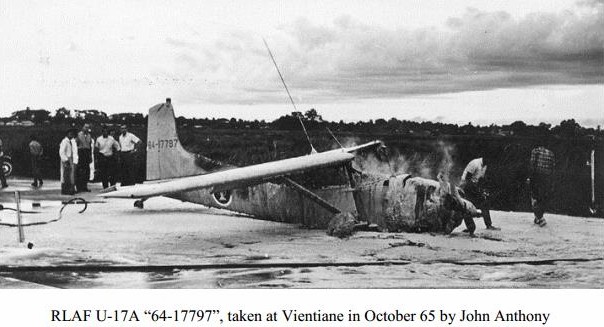
Air America buffs will remember the venerable  U-17, none of which were ever in Laos, of course. And even had some FNG inadvertently become disoriented and landed up country, they were all suitably designated as official USAF Inventory. Well, most of them, anyway. Rumor had it that old Bob Tyrell, the Air Attache  at the US Embassy in Vientiane, had a few salted away here and there  with the Laotian Erawan on them. Nobody’s perfect. You could never be too rich, too thin, or have enough unmarked air assets.

I bid on an auction item at the Flavors of Fall celebration last September wherein we raise funds for our Community Civic Center every several years. I managed to “storage wars” my way through to a winning bid. I paid far too much but it all goes back to the community so it’s well-spent. Former Navy Carrier Pilot Tom H.  had graciously offered his Cessna 180 for a several hour tour of Mt. Rainier and St. Helen’s  south of us. I didn’t know he was a snow bird, so when I called to collect on my bid, I found him holed up in Arizona. We reconnected several days ago and tomorrow is the official sightseeing day. My grandson Conner has no clue we’re going up, so this should be a good show and tell. News and film tomorrow evening at 6.

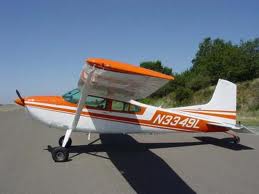
Something bit me when I thought back on the Cessna model number so I looked it up. Sure enough, Tom’s Cessna 180 is virtually the same aircraft as a U-17 in which I spent many hours during the war. It was one of those mismarked aircraft like the one below that Col. Tyrell spent so much time denying he owned. I thought they belonged to USAID or USIA. In the back of my mind, the fact that an Air America PIC (pilot in charge) was at the helm didn’t make me blink an eye. Nothing was as it seemed anyway. You generally don’t ask a lot of questions when your ID is bogus and you aren’t really there. Besides, the Agency for International Development delivering M-79s and lots of 40mm with a side of rice seemed perfectly normal in 1970.

imagesThe Cessna 185 (below) was technically the U-17 but the difference in nomenclature is  virtually unnoticeable. The 180 has one less far rear window and is slightly shorter with less cargo space :

images (1)

Here’s the 180:

1954 C-180A N3143C 001

Fond memories of a loyal workhorse that always got us home. It  will seem strange to be back in a taildragger. The last time I was in one was 1971. Vets can see how they got their name. The third wheel was in the back rather than tricycle style. If you caught a brisk crosswind when landing, you might do what was called a ground loop which usually damaged the aircraft. It’s hard to control any aircraft when you’re spinning in a circle at 70 knots on the ground. Some of the Lima sites we landed at were pretty rough. It was not unheard of to rip the back wheel off. You saw a temporary stick tied to some until they could be flown down to Udorn for a repair job. Pilatus PC-6 Porters were the worst.

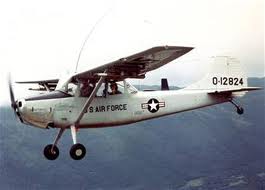
We also flew in the U-17’s baby brother, a (just barely) two seater with the pilot and passenger inline rather than tandem. This was the Cessna O-1, another taildragger:

images (2)

The 0 in the tail number declared that it was “obsolete” although this was a newer “E” model. We gave a lot of these to the guys with the three-headed Elephant on their planes. They were really short-handed so we flew them for them too.  That’s what friends do for friends, right?

images (3)

Royal Laotian Air Force
Erawan aircraft insignia

Posted in From the footlocker | Tagged , , , , , , , | 1 Comment