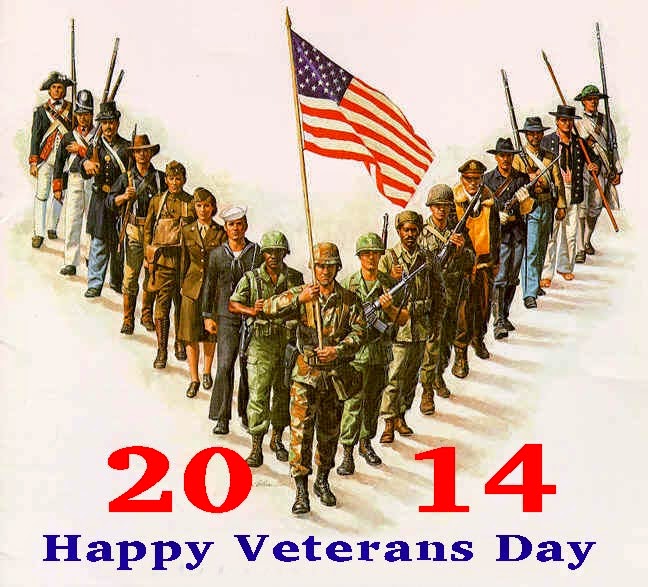
My hubby’s late brother served in Vietnam in the Army Corps of Engineers. After the war, he worked in construction operating heavy equipment–hard work. He ALWAYS took Veterans’ Day off. To celebrate, he went to his favorite bar and enjoyed himself among his buddies. He felt it was his due. (Then back to work the next day to support his family.) Hope all vets are enjoying something pleasant today!
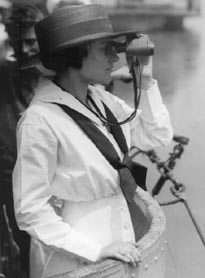
A yeoman (F) on Submarine K-5 gazes through her binoculars. (80-G-1025873)
The VA has an overview of the history of the observation; the impetus was World War I. Women played a broader role in this war. Interestingly, the Naval Act of 1916 let women in. Its”vague language relating to the reserve forces did not prohibit women.” So women, who were prohibited from joining the armed services, were able to enlist as yeomen. For more information, this article makes for good reading. The Nineteenth Amendment to the United States Constitution, giving women the right to vote, wasn’t passed until 1920 (August).
The BBC has a wonderful site about WWI from the British perspective. How did WW1 change the way we treat war injuries today? is just one interesting guide.
Blood transfusions were a big change but the science of them was very new:
Top: First World War blood transfusion apparatus. Below: the Thomas splint introduced in 1916. Pictures BBC/ Getty and Wellcome Images.
The British Army began the routine use of blood transfusion in treating wounded soldiers. Blood was transferred directly from one person to another. But it was a US Army doctor, Captain Oswald Robertson, who realised the need to stockpile blood before casualties arrived. He established the first blood bank on the Western Front in 1917, using sodium citrate to prevent the blood from coagulating and becoming unusable. Blood was kept on ice for up to 28 days and then transported to casualty clearing stations for use in life-saving surgery where it was needed most.
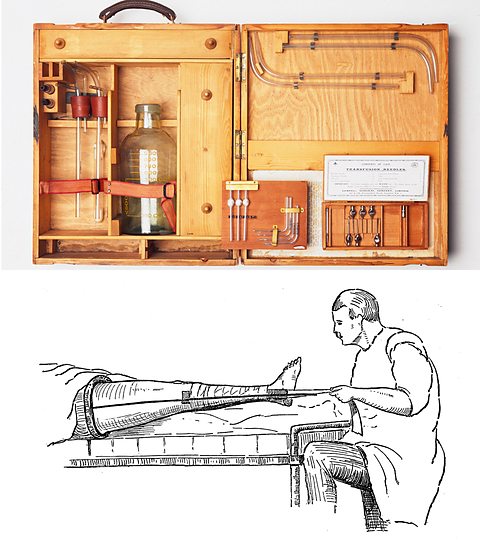
The history of military blood transfusions, those life-saving procedures with unintended and sometimes tragic consequences years later, is an ongoing area of interest at ASKNOD. Apparently WWI is where the learning began for military doctors.


 asknod
 Bethanie Spangenberg
 kcraveiro
 robinhoodesqvetsatty
 Wesley McCauley
