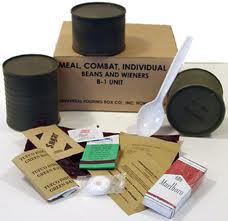
In our continuing search for risk factors for HCV, we come across some novel concepts. It seems some have been plagiarizing from the same playbook. It is established fact that a chemical-2,4 D 2,4,5 T-cannot, in and of itself, create an RNA virus out of whole cloth. The DAV knows this and if they had been supervising Mr. Cigarette Vet more closely, they could have prevented him from looking like a complete moron. The North Koreans invented the concept of “Minders” to keep people on track and prevent aberrant mental conclusions.
The Board adds that at times during the appeal period, the Veteran has also asserted that his hepatitis C disability could also be due to his presumed exposure to Agent Orange while serving in Vietnam during the Vietnam Era. See 38 C.F.R. § 3.307(a)(6)(iii) (2012). Because the Veteran’s hepatitis C is not listed among the Agent Orange-related diseases enumerated in 38 C.F.R. § 3.309(e), medical nexus may not be presumed as a matter of law. However, notwithstanding the inapplicability of the Agent Orange regulations, the Board is obligated to fully consider the Veteran’s claim. See Combee v. Brown, 34 F.3d 1039 (Fed. Cir. 1994). As such, on remand, the VA examiner should also specifically address the relationship, if any, between the Veteran’s hepatitis C disability, and his presumed exposure to Agent Orange in Vietnam.
However, this diagnosis is right out of the ball park.
The Veteran has a current diagnosis of hepatitis C, and he contends that this disability is directly related to his period of active duty service. In particular, the Veteran asserts that his hepatitis C was caused by in-service exposure to blood products, and/or from eating “C rations” out of metal cans. With respect to in-service blood exposures, the Veteran states that he was administered airgun vaccinations in each arm using needles shared by many servicemembers. He also states that he came in direct contact with other servicemembers’ blood while transporting wounded soldiers off the battlefield during his combat operations in Vietnam. See the November 2012 hearing transcript, pages 25 and 26. At this time, for the purposes of this appeal, the Board finds no reason to doubt that the Veteran indeed ate C rations from metal cans in service, or was exposed to blood products in the ways he so describes. Notably, the Veteran also has a history of intravenous (IV) drug use. Although the Veteran indicated at the November 2012 hearing that he only shared needles on one occasion in March 1971, the Veteran’s ongoing treatment records document more recent instances of IV drug use and needle sharing. Indeed, an August 5, 1988 VA Progress Note indicates that, at the time, the Veteran had been injecting cocaine intravenously daily, and that he admitted to sharing a needle with someone about one year prior. A subsequent VA substance abuse treatment program (SATP) note dated October 12, 2005 identified the Veteran’s history of drug use dating back to 1972, when he would “IV cocaine and heroin while in Viet Nam.” The report indicated that the Veteran quit heroin but continued to use cocaine when he separated from service, and stopped IV use after fifteen years.
It also appears he was exposed to other servicemember’s blood while sharing syringes for IVDU. Giving the benefit of the doubt to the Veteran, Acting Veterans Law Judge S. Heneks will remand the claim for HCV back to the VARO for more development. I hate drugs. They make you forget what you said about drugs in prior discussions.


 asknod
 Bethanie Spangenberg
 kcraveiro
 robinhoodesqvetsatty
 Wesley McCauley
 Veterans Claims Help
Ouch, he stepped squarely on his tongue. Lesson to be learned.