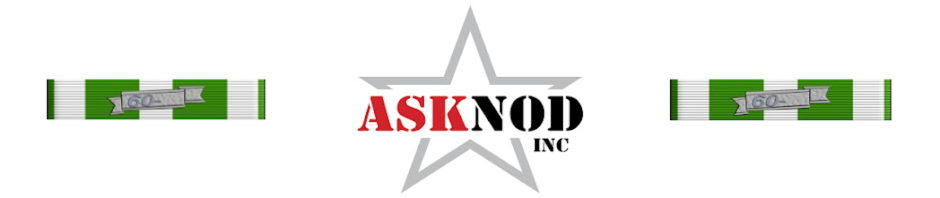
Milo J Hawley has been a VLJ for as long as I can remember. He is not very forgiving of stupidity, be it the VA or the Veteran. If you arrive in his class without your homework or if its prepared incorrectly, you fail. No ifs, ands, or buts.
This motor city Vet has a lot going against him. By all rights, he should lose. God looks out for idiots like him as you will see here.
The Veteran’s service treatment records indicate treatment for sexually transmitted disease. In addition, the record appears to indicate that the Veteran obtained a tattoo while in service. In addition, the Veteran admits to in-service intranasal cocaine use and intravenous drug use.
In this case, there are three opinions which indicate that the Veteran’s in-service IV drug use was the likely cause of his hepatitis C. As noted above, Dr. Campbell stated that the Veteran’s remote history of IV drug abuse and alcoholism resulted in a cirrhotic liver, hepatitis C, and impending liver failure. Dr. Campbell also noted that the Veteran used IV heroin and many other intravenous drugs during military service. M. Kretschmer stated that the Veteran admitted to using intravenous heroin and other [il]licit drugs as well as abusing alcohol during his term of duty and that he most likely contracted hepatitis C at that time as he denied other risk factors for contracting the virus. The May 2009 VA examiner first opined that the Veteran’s hepatitis C was as likely as not acquired during service as sexual activity is likely a mode of transmission of hepatitis C virus and then opined that it was likely that any one or all of the following, sexual activity, IV drug use and cocaine, could have been a transmission of the hepatitis C.
The Board notes that the RO continued the denial based on the May 2009 VA examiner’s opinion noting that the examiner noted that it would be a mere speculation to state one cause of transmission of the hepatitis C as they all could transmit the hepatitis C and it was difficult to delineate which one caused the transmission. The Board emphasizes that the criteria is whether it is “at least as likely not” that the Veteran’s hepatitis C was the result of the Veteran’s service. The term “at least as likely as not” means that the weight of medical evidence both for and against a conclusion is so evenly divided that it is as medically sound to find in favor of that conclusion as it is to find against it. In this case, the May 2009 VA examiner’s opinion in essence is that it is at least as likely as not that the Veteran’s hepatitis C was the result of sexual activity; that it is at least as likely as not that the Veteran’s hepatitis C was the result of IV drug use; and that it at least as likely as not that the Veteran’s hepatitis C was the result of cocaine use.
Mr. Kretschmer’s opinion was based on an inaccurate factual premise and is not probative. Although Mr. Kretschmer stated that the Veteran denied other risk factors for contracting the hepatitis C virus, there is evidence of other risk factors including in-service high-risk sexual activity and a tattoo.
In this case, both physicians seem to indicate that the veteran’s cirrhosis was caused by either hepatitis C or alcoholism. Stated another way, the VA examiner appears to opine that it is at least as likely as not that the veteran’s cirrhosis was caused by hepatitis C, and that it is at least as likely as not the veteran’s cirrhosis was caused by alcoholism. Thus, the Board finds that the competent medical evidence both for and against a finding that the Veteran’s cirrhosis is related to the hepatitis C is also in a state of equipoise. Accordingly, reasonable doubt is resolved in favor of the Veteran. 38 U.S.C.A. § 5107(b); 38 C.F.R. § 3.102.
VLJ Hawley has smelled the “speculation coffee’ and wants no part of that. If he subscribes to it, he will be dodging the bullet and passing the buck up to the Court. The BVA has noticed that recently everything speculative headed that way seems to have a rubber band attached to it and they come back faster than they depart. Instead, he does a probative analysis and finds the error is nothing more than good old benefit of the doubt. He doesn’t care if some of the risks are willful misconduct. The important fact is that the good is equal to the bad, so there is no need to don sackcloth and rub ashes on your forehead. Mere speculation does not have to result in an “nondecision”. You simply pronounce the magic incantation “equipoise” and grant the sucker.
This speculation phenomenon will run its course as we all find a way around it. VA will undoubtedly find a new trick in the next year and that will become the latest rage until it, too, fades away. Recognizing these ploys is easy. Counteracting them without a prolonged delay will always be the challenge.
http://www.va.gov/vetapp11/Files3/1124905.txt


 asknod
 Bethanie Spangenberg
 kcraveiro
 robinhoodesqvetsatty
 Wesley McCauley
 Veterans Claims Help